Drift Legends 2 Tips: The Complete Guide to Better Drifts, Cars, Combos, and Career Progression
When I first started playing Drift Legends 2, I made the same mistake that many new players make: I treated it like an ordinary racing game. I pushed the accelerator as hard as possible, aimed for the shortest racing line, and assumed that reaching the finish quickly would guarantee a good result. It did not take long to discover that speed alone means very little here.
Drift Legends 2 rewards controlled oversteer, clean transitions, long drift chains, and the ability to keep a car sideways without hitting a wall. A slower driver who maintains a stable combo can easily outscore someone who rushes around the track and crashes at every difficult corner.
The current game offers more than 50 cars, 12 tracks, five career leagues, daily events, offline play, online multiplayer, and global competition. It is available as a free-to-play game across mobile and PC storefronts, making it much easier to jump into than many full-price racing simulators.
These Drift Legends 2 tips cover the basics of controlling a slide, choosing cars, earning credits, improving drift scores, entering online competition, and avoiding the progression mistakes that cost me the most time.
I. Introduction to Drift Legends 2
A. What Is Drift Legends 2?
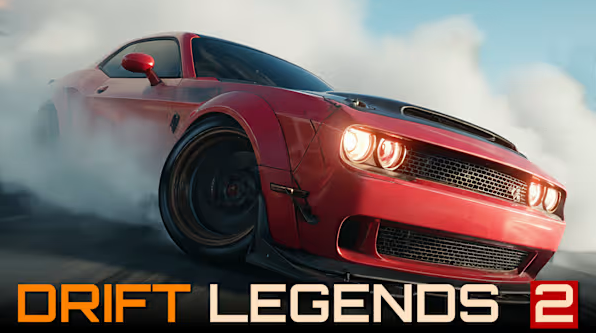
Drift Legends 2 is a free-to-play arcade drifting game developed by Black Fox Entertainment. Instead of asking players to win conventional races through lap time alone, it places much more emphasis on drift angle, speed, control, and continuous scoring.
The physics are approachable but not completely effortless. Cars break traction easily, yet keeping them at a useful angle requires careful throttle input. Every vehicle also behaves differently, so moving from a lightweight Japanese coupe to a heavy American muscle car can feel like learning the controls again.
B. Why It Is Popular in 2026
The game has stayed relevant because its 2026 updates expanded online functionality, added tracks, introduced more achievements and prize cars, improved server capacity, and increased the number of players allowed in multiplayer rooms.
It also benefits from being available on phones and ordinary PCs rather than requiring expensive racing hardware. The official PC version is designed for controllers and lower-spec computers, while mobile players can use touch or tilt-based controls depending on their device and preferred setup.
C. Overview of the Free-to-Play Experience
You can download Drift Legends 2 without paying and progress by completing career events, replaying races, earning credits, unlocking cars, and participating in daily or weekly competitions.
Advertisements and optional purchases remain part of the experience on some platforms. Paid car packs and credit bundles can accelerate garage growth, but learning to maintain a clean drift remains more important than simply owning the most expensive vehicle.
My advice is to play several leagues before spending money. Until you understand the scoring system, you will not know whether a new car actually solves your problem.
II. Core Gameplay Mechanics
A. How to Drift in Drift Legends 2
To start a drift, approach a corner with enough speed, steer toward the turn, and use either throttle or a short handbrake input to break rear traction. Once the car begins rotating, countersteer and adjust the accelerator to hold the angle.
The key is not to keep steering fully in one direction. Strong steering starts the rotation, but smaller corrections maintain it. If you continue holding maximum steering, the car may spin or slide toward the inside wall.
Begin with medium-speed corners. They provide enough time to feel how steering, throttle, and momentum interact.
B. Perfect Drift Combo and Multiplier System
Drift points increase while the car remains sideways. Speed, angle, duration, and clean control all contribute to the score. Maintaining a continuous slide builds the combo multiplier, allowing later points to be worth more.
Traditional career events can build the active drift multiplier toward 5x. Vehicle-specific point multipliers may also exist separately, depending on the car and version. Colliding with walls, leaving the track, or straightening the car for too long causes the active chain to fall.
Do not chase maximum angle immediately. A stable 3x or 4x chain is usually worth more than briefly reaching 5x before crashing.
C. Handbrake vs. Accelerator Drifting Techniques
The handbrake is useful for starting a slide quickly, especially before tight hairpins. Use a short tap rather than holding it. A long pull removes too much speed and may leave the car almost stationary in the middle of the corner.
Throttle drifting is smoother. Ease off the accelerator before turning, steer into the corner, and apply power as the rear begins to move. More throttle generally increases rotation, while reducing throttle lets the tires regain some grip.
I use the handbrake to initiate awkward corners and throttle control to manage everything after the initial rotation.
D. Maintaining Speed and Optimizing Angle
A drift needs enough speed to continue, but excessive speed pushes the car toward the outer wall. The ideal approach is to enter with momentum and then use small throttle changes rather than keeping the accelerator fully pressed.
Watch the front of the car, not only the rear. The front wheels tell you where the vehicle will travel even while the body is sideways.
A moderate angle that follows the track is better than an impressive-looking angle that sends you into a barrier. The score only matters when the drift survives.
III. Controls and Settings Mastery
A. Drift Legends 2 Controls Breakdown
The basic control layout includes steering, acceleration, braking, and the handbrake. Mobile versions may provide touch buttons, tilt steering, or alternative layouts, while PC supports controllers and keyboard input.
Controller steering usually feels more precise because an analog stick allows gradual inputs. Keyboard controls can still work, but tapping left and right is safer than holding a direction continuously.
Wheel support is not a standard advertised feature, so players should not expect the same native wheel experience found in dedicated driving simulators.
B. Manual vs. Automatic Transmission Tips
Drift Legends 2 is primarily designed around automatic transmission. Some versions do not provide a normal manual gearbox option, which means the game chooses gears for you.
This simplifies the learning process but occasionally creates frustrating situations when the car shifts during a drift or fails to stay in the ideal power range. You cannot always fix this through gear selection, so your main tools are entry speed and throttle timing.
Lift the accelerator briefly if the engine feels trapped in the wrong part of the rev range, then reapply power smoothly.
C. Steering Sensitivity and Brake Settings
Begin with medium steering sensitivity. A very high setting makes the car rotate rapidly but also magnifies every small mistake. A low setting feels stable, although it can make quick transitions difficult.
Change one setting at a time. Complete several practice laps before deciding whether the adjustment helped.
Separate brake-balance or advanced brake-tuning options are not consistently available across versions. Most players will gain more from improving button timing than searching for a perfect technical setting.
D. Customizing Controls for Precision
Position the handbrake where it can be pressed without releasing steering. On mobile, enlarge important buttons if your version allows interface adjustment and keep acceleration separate from the steering area.
Avoid placing controls too close together. Accidentally pressing the foot brake while trying to use the handbrake destroys momentum.
Once a layout feels comfortable, stop changing it every few races. Muscle memory develops only when the buttons remain in predictable positions.
IV. Car Selection and Class Strategy
A. Best Cars for Each Class
There is no single best car for every event. Career races can restrict participation by league, class, country, production era, engine type, aspiration, or drivetrain.
Build a varied garage instead of spending everything on one high-level vehicle. You need cars that satisfy different entry requirements, not merely one car with an impressive score multiplier.
Older class-based versions use D, C, B, A, and S categories, while current storefront descriptions emphasize Beginner, Amateur, Professional, Expert, and Elite career leagues.
B. D-Class Pick: Enoshima Warrior MK.13
The Enoshima Warrior MK.13 has traditionally been considered one of the strongest D-class options. It combines useful power with predictable rear-wheel-drive behavior and can maintain long slides once you learn its throttle response.
However, it has commonly been associated with a paid Beginner car pack rather than being a basic free unlock. The current Steam pack also includes the GRX W30 EVO, Enoshina Senshi, and Raven Marathon.
Do not purchase the pack only because one old tier list calls the Warrior the best. Test free cars first.
C. S-Class Leaders: Sakura RSX and Griffin Motors WRS
The Sakura RSX has historically been the most important free S-class recommendation because it can be earned through career progression. It gives free-to-play players a competitive late-game option without requiring a premium pack.
The Griffin Motors WRS sits at the premium end of the collection and is included in the Legendary car pack. Its handling and scoring potential make it attractive, but it is not required to learn advanced drifting.
A clean Sakura run will outperform a poorly controlled Griffin run.
D. Rear-Wheel Drive vs. All-Wheel Drive
Rear-wheel-drive cars are usually the easiest vehicles for learning traditional drifting. Their rear tires lose traction under power, allowing you to steer with the accelerator and maintain a natural slide.
All-wheel-drive cars can feel faster and more stable, but they may require stronger initiation and different throttle timing. Their front wheels continue pulling the car forward, which can reduce rotation or suddenly straighten the vehicle.
Start with rear-wheel drive. Try all-wheel drive after you understand countersteering and weight transfer.
V. Engine and Build Tuning
A. Turbocharged vs. Naturally Aspirated Cars
Turbocharged cars deliver strong power but may feel less predictable if power arrives suddenly during a corner. Apply the accelerator progressively rather than jumping from zero to full throttle.
Naturally aspirated cars tend to respond more directly. That predictable response makes them comfortable for learning long bends and transitions.
In many versions, aspiration is a characteristic of the selected car rather than a component you can freely replace. Choose a vehicle whose power delivery suits your style instead of assuming you can rebuild its engine.
B. V6, V8, and Rotary Options
V8 cars usually provide enough torque to keep the rear tires spinning, but their additional weight can make direction changes slower.
V6 cars often offer a useful balance between power and manageable handling. Rotary-powered cars can feel lighter and more eager to rev, rewarding players who preserve momentum.
These labels also matter for event eligibility. Keep at least one reliable car from several engine categories so a themed race does not block your progress.
C. Inline-4 Beginner Recommendations
Inline-four cars are good beginner choices because they usually produce manageable power and do not overwhelm the rear tires instantly.
They teach you to carry entry speed instead of relying entirely on horsepower. When the engine has less torque, poor lines become more obvious because you cannot simply power out of every mistake.
A controllable starter car is more useful than a powerful machine that spins whenever you touch the accelerator.
D. Japanese vs. German Drift Cars
Japanese cars often feel light, responsive, and easy to rotate. They are ideal for technical tracks with repeated direction changes.
German cars may feel heavier and more planted, which can help on wider corners but requires earlier preparation before transitions.
Neither region is automatically superior. Choose Japanese cars for agility and German cars when you prefer stability, then test how each specific vehicle behaves rather than trusting the badge alone.
VI. Event and Race Strategies
A. Time Attack and Lap-Based Challenges
In time-limited events, start scoring immediately. Do not spend half the event building speed for one perfect corner when several smaller drifts can begin raising the multiplier.
Lap-based events reward consistency. A strong first lap means little if the second lap ends against a wall.
Use the opening lap to establish a safe rhythm, then become more aggressive after learning how the selected car handles each corner.
B. Score Targets and Themed Events
Score-target events end successfully once you reach the required number of points. The fastest way to win is usually to create one long controlled chain rather than dozens of disconnected slides.
Themed events may restrict vehicles by origin, engine, decade, class, or drivetrain. Check the requirements before buying a car.
Purchasing a vehicle that unlocks three upcoming events is better than purchasing one that can enter only a single race.
C. Car Class Restrictions
Do not sell or ignore lower-class vehicles after reaching a stronger league. Earlier cars remain useful for restricted competitions, daily challenges, and achievement objectives.
Keep at least one car that you enjoy in every major category. Familiarity matters because event restrictions often force you away from your usual vehicle.
A broad garage prevents you from becoming stuck when the next event requires a completely different type of car.
D. Winning Events Efficiently
Before entering, check the target score, track layout, vehicle restriction, and reward. Use Practice Mode when the circuit is unfamiliar.
During the race, prioritize multiplier protection over raw speed. Once the target is reached, avoid unnecessary risks unless the event rewards leaderboard position.
You do not need to set a world record every time. A safe victory unlocks progression just as effectively.
VII. Currency and Resource Management
A. Fastest Way to Earn Credits
Career completion provides a steady early income, while daily and weekly events can offer stronger rewards once you have suitable cars.
The fastest farming method is usually the shortest event you can complete reliably with a high multiplier. A longer event is not automatically better if crashes regularly ruin the score.
Compare credits earned per minute rather than only looking at the reward displayed at the finish.
B. Replaying Races for Credit Farming
Completed races can be replayed for additional credits. Choose an event with a track you know well and a car that can clear the target without constant restarts.
Do not grind the hardest available race merely because it offers a larger payment. A simple event completed three times may earn more than one difficult event that takes several failed attempts.
Repetition also helps develop track knowledge, so credit farming can double as practice.
C. Removing Ads and Real-Money Purchases
Some versions sell advertisement removal, credit packs, and additional car bundles. Epic and Steam storefronts list optional packs, while the mobile editions include in-app purchases.
Advertisement removal can be reasonable for players who spend a lot of time in the game. Buying credits is less valuable because credits can be earned through normal play.
Never purchase a premium car before confirming that it can enter the events you currently need to complete.
D. Avoiding Pay-to-Win Pitfalls
Current PC marketing describes Drift Legends 2 as having no performance-based pay-to-win customization. At the same time, paid car packs still exist, and older versions gave certain premium cars strong built-in scoring multipliers.
The safest free-to-play approach is to focus on career rewards, daily prizes, and free late-game cars such as the Sakura RSX.
Paid vehicles may expand your choices, but they do not replace throttle control, track knowledge, or multiplier management.
VIII. Upgrade and Progression System
A. Understanding the Upgrade System
Storefront descriptions are not completely consistent about performance upgrades. Current Steam and Epic pages state that customization is visual-only, while some other platform descriptions mention tuning or performance upgrades.
Check the garage interface on your own platform before planning an upgrade build. On versions without mechanical tuning, progression comes through unlocking stronger cars, reaching higher leagues, and improving player skill.
B. Engine, Tire Grip, and Suspension
When mechanical tuning is unavailable, engine output, grip, suspension behavior, and weight distribution are fixed characteristics of each vehicle.
That makes test driving essential. Two cars with similar displayed power can behave completely differently when sideways.
Do not assume that cosmetic tires change grip. On current PC listings, wheels and tires are presented as visual customization rather than performance components.
C. Gear Ratio Optimization
A normal adjustable gearbox is not a standard feature across Drift Legends 2 versions. The automatic transmission handles gear changes, leaving you to manage speed through throttle and braking.
To compensate, enter tight corners slightly slower so the car does not shift awkwardly in the middle of the drift. On wide bends, maintain enough power to prevent an unwanted upshift or loss of momentum.
Your “gear tuning” is effectively choosing the right car for the track.
D. Unlocking Cars and Permanent Progress
Progress through career leagues to unlock tracks, events, achievements, and secret or reward cars. Daily and weekly competitions can also provide cosmetics or premium vehicles.
Spend credits where they open new content. A car that satisfies several event restrictions is a better permanent investment than an expensive cosmetic change.
Garage variety is the real progression system because every new vehicle gives you access to different races and handling styles.
IX. Tips and Tricks for Beginners
A. Build a Broad Garage Early
Buying a varied selection of cars is useful, but do not interpret that advice as buying everything immediately.
Look at upcoming events and identify which categories are missing from your garage. Add one useful car at a time.
Prioritize differences in origin, engine, era, drivetrain, and league. Four nearly identical Japanese rear-wheel-drive cars may be fun, but they will not help when an event requires an American V8.
B. Use the Accelerator to Turn Mid-Drift
Throttle is not only for gaining speed. During a drift, it changes how quickly the rear rotates.
More power usually pushes the rear outward and increases the angle. Reducing power lets the car regain grip and tighten its path.
When the car is sliding too far toward the outside wall, ease off instead of making a huge steering correction. Throttle control often fixes the line more smoothly.
C. Experiment with Every Corner Type
Hairpins, long sweepers, S-bends, and narrow urban corners require different initiation methods.
Use the handbrake for tight turns, lift-off rotation for medium corners, and throttle-controlled slides for long bends.
Do not force the same technique everywhere. Practice each track until you know where to brake, where to lift, and where the car can remain sideways through several connected turns.
D. Practice Angle and Throttle Control
Use Practice Mode without worrying about rewards. Choose one corner and repeat it until you can control the entry, midpoint, and exit.
Try the same corner at different speeds. Then change the amount of throttle used during the slide.
This teaches more than repeatedly restarting a career event because you can focus on the mistake instead of the final score.
X. Advanced Drifting Techniques
A. Throttle Control and Brake Timing
Advanced drifting is about making small adjustments early. A gentle lift before the car reaches the wall is better than heavy braking after the line is already lost.
Use the foot brake to reduce speed while keeping the vehicle balanced. Use the handbrake to create rotation.
Pressing both without a clear reason often removes too much momentum and ends the drift chain.
B. Drift Chains and the 5x Multiplier
To build a 5x combo, start with a safe corner and maintain enough angle to keep points flowing. Transition quickly into the next turn without driving straight for too long.
Once the multiplier is high, become slightly more conservative. The value of protecting the chain increases as it grows.
A short correction is acceptable. A wall collision that removes the multiplier is not.
C. Avoiding Walls and Multiplier Loss
Leave a small safety margin between the car and the barrier. Driving close to walls may look impressive, but Drift Legends 2 punishes contact heavily.
Look toward the exit of the corner rather than staring at the obstacle. Your steering naturally follows where your attention is focused.
When a collision appears unavoidable, straighten the car and brake. Losing part of a chain is better than crashing and losing all of it.
D. Mastering Sideways Control
A controlled drift has three phases: initiation, balance, and exit.
Initiation creates the slide. Balance holds the angle through countersteering and throttle. Exit gradually straightens the vehicle while preserving enough speed for the next corner.
Most beginners focus only on initiation. Advanced players spend more effort controlling the middle and preparing the exit.
XI. Gameplay Modes and Features
A. Single-Player Career Mode
Career mode takes players through five major leagues, beginning with entry-level events and progressing toward Elite competition.
Each stage introduces stronger cars, higher score targets, more difficult tracks, and narrower eligibility rules. Progression also unlocks vehicles and additional chapters.
Do not rush into the next league with only one suitable car. Complete extra events and strengthen your garage first.
B. Multiplayer and Ranked Modes
Current versions include cross-platform online racing, ranked duels, cooperative or team challenges, casual rooms, global leaderboards, and voice chat. Recent updates increased lobby capacity to six players in supported online modes.
Start in casual rooms before ranked competition. Online players punish inconsistent drift chains much more severely than career score targets.
Use multiplayer to study lines as well as compete.
C. Offline Challenges and Daily Events
Offline mode allows players to practice, progress through supported events, and chase scores without an active internet connection.
Daily, weekly, leaderboard, and online features naturally require connectivity. Prepare for this before traveling or playing somewhere with unreliable service.
Offline sessions are ideal for learning tracks and testing cars. Return online when you are ready to submit competitive scores or claim rotating rewards.
D. Formula Drift-Style Competition
Drift Legends 2 borrows the spirit of judged drifting rather than conventional circuit racing. Angle, speed, control, and style matter more than simply crossing the finish line first.
It is not a licensed recreation of Formula Drift rules, but the focus is similar: a clean, committed slide can be more valuable than raw lap speed.
Approach each corner as a scoring opportunity, not merely an obstacle on the way to the finish.
XII. Customization and Cosmetics
A. Customization Options
Players can personalize cars with paints, liveries, wheels, tires, license plates, and other visual elements.
These options give each garage more personality without requiring players to understand a complicated mechanical workshop.
On current Steam and Epic descriptions, customization is explicitly cosmetic and does not provide performance advantages.
B. Paint Jobs and Liveries
Use contrasting colors that make the car easy to identify during online events. A detailed dark livery may look good in the garage but disappear on a night track.
Some liveries and cosmetic items are earned through events, achievements, seasonal competitions, or leaderboard rewards.
Check limited events regularly because their rewards may not remain available permanently.
C. Visual Upgrades and Personalization
Wheels, tires, plates, and paint do not need to match a real drift build. This is your chance to create something recognizable.
However, avoid spending all early credits on appearance. Unlock the cars needed for career progression first.
Cosmetics become more enjoyable once your garage is financially stable and you are no longer saving for essential event vehicles.
D. Showcasing Your Drift Build
Online rooms, leaderboards, screenshots, and replay videos provide opportunities to show customized cars.
A memorable build combines a consistent color theme with a car you can actually control. A beautiful vehicle that crashes in every corner will not leave the impression you intended.
The best showcase is a distinctive car completing a clean, uninterrupted drift chain.
XIII. Platform Availability and Performance
A. PC, Android, and iOS
Drift Legends 2 is available on Android and iOS, as well as Windows through Steam, Epic Games Store, Microsoft Store, and Google Play Games on PC.
The Steam version launched on June 5, 2025, while the mobile and Epic releases have their own earlier release histories. All major versions continued receiving updates into 2026.
B. Graphics and Car Physics
The game offers detailed 3D cars, visible damage, smoke effects, individual engine sounds, and different handling characteristics for each vehicle.
Its physics sit closer to arcade drifting than a professional simulation. Cars are intentionally easy to slide, although controlling those slides still requires practice.
Players seeking strict tire simulation may find it too loose. Players seeking quick drifting action will probably adapt much faster.
C. Free Access and Advertisements
The base game is free, with optional in-game purchases and advertisements depending on the platform.
PC storefronts offer advertisement removal, credit purchases, and car packs as separate add-ons. Mobile monetization may differ by region and device.
Try the free experience first. The game provides enough opportunity to decide whether removing ads or purchasing additional content is worthwhile.
D. Cross-Platform Progression
Cross-platform multiplayer and cross-platform competition are officially advertised. Cross-platform progression or shared save data is not clearly confirmed.
Do not assume that a garage created on iOS will automatically appear on Steam or Android. Cross-play means players can compete across platforms; it does not necessarily mean purchases and career progress transfer.
Confirm account-linking support inside the current version before spending money on multiple platforms.
XIV. Player Experience and Community Tips
A. Common Beginner Mistakes
The biggest mistakes are entering corners too fast, holding the handbrake too long, using full steering constantly, and chasing extreme angles before learning control.
Another common problem is spending every credit on one favorite car. Career restrictions eventually force players to use other categories.
Finally, do not restart after every imperfect corner. Learning how to recover a damaged drift is part of becoming consistent.
B. Skill Floor and Progression Curve
Starting a slide is easy. Maintaining one through several corners without losing speed is the real challenge.
The early leagues teach basic control, while later events demand longer combinations and more specialized cars.
Progress may feel slow when you first reach a new league. Return to earlier tracks, farm credits, and practice transitions rather than assuming the new events are impossible.
C. Community Strategies and Builds
Community guides are most helpful for car recommendations, track routes, achievement conditions, and controller configuration.
Treat old tier lists carefully. Updates may change event structures, rewards, or car availability even when the underlying handling remains similar.
Use community advice as a starting point, then test the car yourself. A popular vehicle may not suit your preferred steering style.
D. Leaderboards and Seasonal Rewards
Weekly leaderboards reward players who combine strong car multipliers with clean, repeatable runs.
Do not submit the first successful attempt and stop. Watch where the multiplier falls, identify weak corners, and repeat the track with one improvement goal.
Seasonal and special events have also introduced prize cars, wheels, liveries, plates, and achievements, giving experienced players reasons to return.
XV. SEO and Keyword Integration Strategy
A. Related Keywords for Drift Legends 2 Tips
Useful related phrases include Drift Legends 2 beginner guide, how to drift in Drift Legends 2, best Drift Legends 2 cars, Drift Legends 2 credit farming, Drift Legends 2 multiplayer, Drift Legends 2 car classes, and Drift Legends 2 controls.
These are semantic keyword candidates, not guaranteed high-volume terms. Search volume should be confirmed with a current SEO research tool before publication.
B. Semantic Keyword Placement
Place the main keyword in the title, introduction, one major heading, and conclusion. Use supporting phrases only in sections that answer the matching question.
For example, “best Drift Legends 2 cars” belongs in the car-selection section, while “Drift Legends 2 credit farming” belongs in the currency section.
This improves relevance without making the guide repetitive.
C. Avoiding Keyword Stuffing
Do not repeat “drift legends 2 tips” in every paragraph. Search engines and readers both understand natural alternatives such as “drifting guide,” “beginner strategy,” “the game,” and “car-selection advice.”
The page should focus on solving player problems. Thorough explanations create stronger topical relevance than mechanical keyword repetition.
Write for the player first, then review the page for missing search terms.
XVI. Content Optimization for Search Engines
A. Meta Title and Description
A suitable meta title is:
Drift Legends 2 Tips: Cars, Combos and Beginner Guide
A suitable meta description is:
Master Drift Legends 2 with tips for controls, drift combos, car selection, credit farming, career events, multiplayer, and 5x multipliers.
Keep the title descriptive and avoid filling it with several versions of the same keyword.
B. Image Alt Text and Internal Links
Good alt text explains the image, such as “Sakura RSX holding a long drift in Drift Legends 2” or “Drift Legends 2 career league selection screen.”
Do not use meaningless alt text like “drift game racing best tips free download.”
Useful internal links could point to car tier lists, controller guides, drifting-game comparisons, credit-farming articles, and multiplayer setup tutorials.
C. Structured Data and FAQ Schema
Use Article structured data with accurate author, headline, image, publication date, and modification date fields.
Visible FAQ questions could include:
Is Drift Legends 2 free?
Does Drift Legends 2 support offline play?
What is the best beginner car?
Does Drift Legends 2 have cross-play?
Can PC and mobile progress be shared?
Do not add rating data or platform claims that are not visible and verified on the page.
XVII. Future Updates and Roadmap
A. Potential New Cars and Events
Black Fox Entertainment has continued adding tracks, prize cars, achievements, liveries, wheels, online improvements, and special-event groups.
New cars and rotating events are therefore realistic expectations, although the developer has not published a complete long-term roadmap listing every future addition.
Treat leaks and community wish lists as speculation until they appear in an official update.
B. Community-Requested Improvements
Common requests include better wheel support, clearer cross-save information, more control customization, improved transmission behavior, additional tracks, and more transparent explanations of car multipliers.
Performance balancing between free and paid cars also remains important for competitive trust.
Quality-of-life improvements may help the game more than simply adding another batch of expensive vehicles.
C. Long-Term Developer Support
Updates through 2026 show continued support for multiplayer, servers, achievements, cars, cosmetics, performance, and bug fixes.
That does not guarantee unlimited development, but it suggests that Drift Legends 2 is still being maintained rather than left in its original mobile state.
Players should follow official storefront update notes for confirmed information instead of relying on outdated beginner guides.
XVIII. Conclusion
Drift Legends 2 deserves attention because it makes drifting easy to begin without making high-level scoring completely effortless. You can start sliding within minutes, but building a 5x multiplier, carrying it through several corners, and avoiding every wall takes genuine practice.
My most important Drift Legends 2 tips are to begin with a controllable rear-wheel-drive car, learn throttle steering, use the handbrake sparingly, protect your multiplier, and build a varied garage instead of spending everything on one vehicle.
The game has some limitations. Automatic transmission can be frustrating, performance-tuning information differs between platforms, and paid car packs complicate the free-to-play balance. Even so, skill remains visible whenever two players use the same track and one maintains a much cleaner line.
Whether you are playing offline on a phone, working through the PC career, or entering cross-platform multiplayer, improvement comes from repetition. Learn one corner, then one track, then one car. Eventually, the moment when the rear begins to slide stops feeling like a loss of control. It starts feeling like the beginning of the run.