Anime Vanguards Value List Guide: Trading Values, Units, Skins, Familiars, and Fair Trade Tips
If you are searching for an anime vanguards value list, you are probably at the point where the game is no longer just about clearing stages and rolling for cool units. You are starting to think about trading, rerolls, shiny units, evo versions, limited items, familiars, skins, and whether that offer in your trade window is actually fair. I have been there too. At first, every rare-looking unit feels valuable, but once you start comparing real trades, you realize the market has its own logic.
The tricky part is that Anime Vanguards does not have one official value board. The official wiki clearly says value lists are unofficial, so every price you see should be treated as a community estimate. That does not mean value lists are useless. They are actually very helpful. But you should use them as a guide, not as the final law. A unit’s value can move because of demand, rarity, shiny status, evo status, stats, updates, and simple player hype.
This guide is written from a player’s perspective. I will explain how the Anime Vanguards value list works, what makes a unit expensive, how trading unlocks, which unit categories matter, how skins and familiars affect value, how to read live prices, and how to avoid losing value in bad trades. The goal is not to blindly memorize numbers. The goal is to understand why certain trades are good, why others are risky, and how to protect your best items.
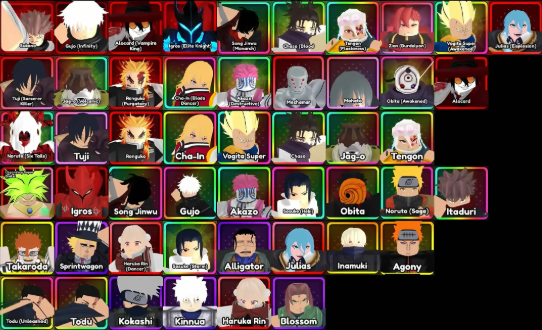
I. Anime Vanguards Value List Overview
An Anime Vanguards value list is a community-made trading guide that estimates the market price of units, skins, familiars, bundles, stats, and special items. Since there is no official list, these values usually come from community trading activity, value teams, Discord discussions, completed trades, demand tracking, and reroll-based comparisons. Some sites use rerolls as the main reference point, while others compare values through battle pass pricing, gems, or their own internal market scale.
Trading values matter because they help you avoid getting lowballed. Without a value list, a player can make a trade look huge by adding ten low-demand items to your one rare unit. The trade window may look full, but the total value can still be terrible. A value list gives you a quick way to compare whether both sides are close in price.
Values are usually calculated by looking at several things at once. Shiny units trade higher than normal versions because they are rarer and visually more desirable. Evo units trade higher than standard units because they require extra effort or materials. Shiny evo units sit near the top because they combine both upgrades. Stats also matter, especially for high-stat or max-stat units. A max-stat rare unit can be worth much more than a normal copy, while a common unit with average stats may not move much at all.
II. Trading Basics and Requirements
Trading in Anime Vanguards unlocks at level 50. Both players need to meet this requirement before they can trade. This is important because newer players sometimes get baited into outside-game “deals” before they even unlock trading. If you are not level 50 yet, do not trust anyone asking you to arrange a trade outside the official system.
To open the trade window, use the in-game trading feature after you unlock it, select the player you want to trade with, send a trade request, and wait for them to accept. Once both players are inside the trade window, each side adds items and reviews the full offer. Take your time here. Check names, shiny status, evo status, skins, stats, and item type before confirming.
Trade rules and restrictions matter a lot. Generally, trading focuses on unobtainable limited units, skins, familiars, and gamepass-type items such as bundles, VIP, battle pass items, and storage-related value. Limited units that are still obtainable may not be tradeable yet, and not every regular unit can be moved freely. Always confirm inside the game before assuming something is tradeable.
III. Unit Value Categories
Shiny evo units are usually the most expensive category. They are rare, hard to obtain, and attractive to collectors. When a unit is both shiny and evolved, its value rises because it represents several layers of effort and luck. This is why names like Shiny Divalo or Shiny Legendary Super Brolzi often sit very high in value discussions.
Evo units are the next major category. A non-shiny evo version can still be valuable if the unit is popular, limited, or useful in gameplay. Evo status shows that the unit has been developed beyond its base form, which usually makes it more desirable than a standard copy.
Standard units are lower in value unless they are limited, rare, or needed for a future evolution. Some standard units can still trade well if players expect their value to rise later. Stat-based units are a separate lane. High-stat or max-stat units, such as high-stat Birb-style units, can trade above normal because collectors and performance-focused players care about perfect rolls.
IV. Top-Tier Unit Values
The highest-value shiny evo units are usually the ones that combine rarity, demand, and strong name recognition. Community lists commonly place units like Shiny Divalo, Shiny Legendary Super Brolzi, Shiny Octopus, Shiny Soburo, Shiny Koguro, Shiny Seban, Shiny Isdead, Shiny Diogo, Shiny Saiko, Shiny Monkey King, and Shiny Rogita among the more valuable trade pieces. Exact numbers vary between sites, but the pattern is consistent: shiny evo versions dominate the top end of the market.
Best-value evo units are often the non-shiny versions of the same popular characters. Legendary Super Broly or Brolzi-style units, Divalo, Octopus, Soburo, Koguro, Rogita, Monkey King, Saiko, Isdead, and Diogo usually attract attention because players recognize them and know they can be useful trade anchors.
The most sought-after standard units are usually limited units that are no longer obtainable or units tied to a future evolution path. Meta and rarity both affect value, but they do not always move together. A unit can be strong in gameplay but low in trading value if too many people own it. A rare unit can be expensive even if it is not the best unit in the current gameplay tier list.
V. Key Unit Values by Popular Characters
Divalo is one of the big names in Anime Vanguards trading. Normal Divalo already has solid value, but Shiny Divalo is in another league because it carries rarity, prestige, and collector demand. When people talk about high-end trades, Shiny Divalo is usually one of the first examples mentioned.
Broly-style units are another major trading category. Legendary Super Broly, Legendary Super Brolzi, and Shiny Legendary Super Brolzi can all hold strong value depending on the current market list. Shiny Legendary Super Brolzi is especially attractive because it combines a recognizable character theme with shiny evo rarity. Even when value lists disagree on the exact number, this type of unit usually remains a premium piece.
Octopus, Soburo, and Koguro are also important. Octopus often appears as a strong value reference, while Soburo and Koguro can move depending on update timing, rarity, and demand. Rogita, Monkey King, Saiko, Isdead, Diogo, Seban, Gazelle, and similar units may sit below the absolute top, but they are still useful trading assets if demand is healthy.
Lower-tier and farm units usually trade for much less. That does not mean they are useless in gameplay, but farming value and trading value are different things. A farm unit that everyone can obtain easily will not trade like a rare limited shiny, even if it helps clear stages.
VI. Skins, Suits, and Cosmetics
Skins have their own market. Some skins are cheap because many players own them, while others become expensive because they were event-limited, difficult to obtain, visually popular, or tied to high-demand characters. A skin can increase a unit’s appeal, but not every skin automatically makes a unit valuable.
Fire cosmetics and fire-trim units are a good example of style affecting trade interest. Some players trade for looks as much as power. If a cosmetic version stands out visually and is hard to get, collectors may pay more for it even if the unit itself is not the strongest in the meta.
Limited and event skins can rise after the event ends, but this is not guaranteed. If a lot of players claimed the skin, supply stays high and value may stay modest. If the skin was rare, good-looking, and attached to a popular unit, it has a better chance of holding or increasing value. Skins affect unit value most when rarity and demand line up.
VII. Familiars and Stats
Familiars are another tradeable category that can be easy to overlook. Some familiars are common add-ons, while others hold real value because they are limited, rare, or useful with certain setups. A familiar does not always trade like a top unit, but the right one can help balance a deal.
High-stat and max-stat units are important because stats give extra value to units that already have demand. A max-stat copy of a premium unit can trade higher than a normal-stat version because performance-focused players want the best possible roll. High stat copies also appeal to collectors who like owning “clean” or optimized units.
Stats influence value more when the base item is already desirable. A max-stat copy of a low-demand unit may not suddenly become expensive. A max-stat copy of a rare shiny evo unit, though, can become much more attractive. Rare familiars work the same way: rarity helps, but demand decides whether people actually want to pay.
VIII. Bundles and Special Items
Anniversary bundles can hold strong trade value because they are limited-time and often include desirable items. If a bundle contains rerolls, cosmetics, shards, or exclusive rewards, it may become a flexible trading asset. Bundles are often easier to understand than obscure units because players can quickly see what they contain.
Seasonal and event bundles work similarly. A Christmas, Halloween, anniversary, or special update bundle may gain value after it leaves the shop, especially if it includes unique cosmetics or tradeable rewards. But if too many players bought it, the value may not rise as much as people expect.
VIP, storage, battle pass, and other gamepass-style items can also trade well because they represent convenience or premium value. Miscellaneous items are harder to price, so check multiple value tools before accepting them as “adds.” A trade full of random low-demand items can look big but still be weak.
IX. Tier List and Meta Synergy
The gameplay tier list and the trading value list are related, but they are not the same thing. A unit can be S-tier in combat and still have average trade value if it is easy to obtain. A rare limited shiny unit can be expensive even if it is not the strongest option for current stages.
S-tier and A-tier units usually have better liquidity because players want them for both gameplay and trading. That makes them easier to move in fair trades. B-tier and C-tier units can still have value if they are limited or collectible, but common low-tier units usually need shiny status, good stats, or some other rare feature to become attractive.
Farm units and low-value meta units are tricky. Some are useful because they help with farming, but they may not sell well if everyone already has them. If your goal is trading profit, focus on demand, rarity, and liquidity, not only damage output.
X. Market Trends and Live Prices
Prices change over time because the Anime Vanguards market is alive. When a new update drops, new units may spike because everyone wants them. After the hype fades, prices can fall. When a limited unit becomes unobtainable, its value may rise if demand stays strong.
Demand indicators and liquidity are just as important as raw value. Demand tells you how many players actually want the item. Liquidity tells you how easily you can trade it away. A high-value item with low liquidity can be hard to move. A slightly lower-value item with high demand may be better if you want fast trades.
Tracking live values means checking updated value lists, trade calculators, Discord trade channels, community posts, and recent completed trades. Do not rely on one outdated screenshot. Prices spike when a unit gets buffed, becomes unobtainable, appears in a popular video, or gains new evolution value. Prices drop when a unit returns, gets nerfed, becomes over-supplied, or loses hype.
XI. Trading Strategy and Tips
The easiest way to avoid losing value is to slow down. Never accept a trade just because someone says, “This is fair, hurry.” Good traders do not rush. Check the value list, compare demand, look at the item details, and ask yourself whether you could trade the items away later.
What should you hold? Hold rare shiny evo units, high-demand limited units, event skins with low supply, valuable familiars, and items that may become harder to find. What should you sell? Consider selling overhyped new units, items likely to return, and low-liquidity pieces that look expensive but are difficult to move.
Building a roster for trading means keeping tradeable assets, not just gameplay units. Rerolls, bundles, VIP, storage, skins, familiars, and popular limited units can all help you make better offers. Also, the outline says “rooster,” but in trading terms, what you really want is a strong roster of liquid assets.
Best practices for fair trades are simple: compare both sides, check demand, avoid last-second changes, confirm the exact unit version, and never trade outside the official system. If a deal sounds too good to be true, it usually is.
XII. Value Calculator and Tools
A value calculator helps you compare trades by adding up both sides. This is useful when a trade includes several units, skins, familiars, or bundles. Instead of guessing, you can enter each item and see whether the total value is close.
When reading value info, look beyond the number. Check rarity, demand, liquidity, trend, and whether the item is stable, rising, or dropping. A high number with falling demand can be risky. A stable item with strong demand may be safer even if the listed number is lower.
There are many myths in trading. One myth is that every shiny is automatically a huge win. Not true. Shiny status helps, but demand still matters. Another myth is that old items always rise. Also not true. Some old items are forgotten and hard to trade. Real market value comes from what players actually want right now.
To avoid scams and unfair trades, use official trade windows only, double-check every item before confirming, avoid pressure trades, and be careful with “middleman” claims unless the community has a trusted verification system. Most scams happen when players rush or trust someone too quickly.
XIII. Frequently Asked Questions
What is the most valuable unit in Anime Vanguards?
Shiny Divalo is often treated as one of the most valuable units on community value lists. Shiny Legendary Super Brolzi, Shiny Octopus, Shiny Soburo, Shiny Koguro, Shiny Seban, and other rare shiny evo units are also high-end trade pieces.
What is the minimum level to trade?
You need to be at least level 50 to trade, and the other player also needs to be level 50 or higher.
Can Limited Units be traded?
Unobtainable limited units are generally tradeable, while limited units that are still obtainable may have restrictions. Skins, familiars, and gamepass-type items can also be tradeable depending on the current rules.
Do shiny and evo units trade for more rerolls?
Yes. Shiny and evo units usually trade for more because they are rarer and harder to obtain. Shiny evo units are often among the most expensive items because they combine both value layers.
How often is the value list updated?
Community value lists may update daily, weekly, or after major patches. Values can change quickly after new units, balance changes, returning events, or market hype, so always check fresh sources before making a big trade.
The anime vanguards value list is one of the best tools you can use if you want to trade seriously, but it should never be treated as an official rulebook. Anime Vanguards values are community-made, and different sites may disagree. The smartest players compare several sources, check demand, and think about whether an item is easy to trade before accepting any deal.
If you are new to trading, reach level 50 first, learn the trade rules, and start slow. Shiny evo units, rare limited units, high-stat copies, skins, familiars, bundles, VIP, storage, and battle pass items can all matter in the market. But value is not only about rarity. It is about rarity, demand, timing, liquidity, and trust. Trade carefully, protect your best items, and never let someone pressure you into a deal you do not fully understand.