Royal Kingdom Reviews — My Honest Breakdown as a Player Introduction to Royal Kingdom Game Review
Hey there — I’ve been playing Royal Kingdom for a good while now, and I figured I’d write up a full-blown, no-fluff review. I’m not a game journalist — just another player trying to build a kingdom, solve match-3 puzzles, and find out whether this game is worth the time (or money). If you’re curious whether Royal Kingdom lives up to the hype (or the ads), this is me being real.
ntroduction to Royal Kingdom Game Review
A. Game Overview: Match-3 Puzzle with Kingdom Building
At its core, Royal Kingdom blends the familiar match-3 puzzle gameplay (think aligning tiles, triggering boosters, clearing levels) with a kingdom-building overlay. Instead of just clearing level after level, you’re also unlocking districts, building up the “Kingdom,” and following a story about a royal family under threat. The match-3 action gives you coins, potions, or resources that translate into building progress and kingdom upgrades.
B. Developer: Dream Games, Ltd
Yes — this is from Dream Games, Ltd., the same studio behind Royal Match. Royal Kingdom feels like their “next-gen” match-3 experiment: more features, more story, more polish (on paper).
C. Review Purpose and Methodology
I wanted to go through it like a regular (or slightly committed) player — play many levels, try both free-to-play (F2P) and small-spend pathways, test boosters, check pacing, and see how well the kingdom-building ties into the core puzzle gameplay. I also read through lots of community feedback (forums, Reddit threads) to see recurring complaints, praises, and general sentiment.
D. Game Release and Current Status
Royal Kingdom saw a global launch on November 21, 2024 after a soft-launch period. As of late 2025, it’s still receiving updates, and the install base seems significant (many millions, judging from reviews, ratings, and download indicators).
E. Review Date and Version Information
I’m writing this in December 2025, using version (as of last update) that many users currently have. So the feedback here reflects the relatively current state — with recent updates applied.
Gameplay and Core Mechanics Assessment
Let’s crack into how the gameplay actually feels: the good, the rough, and the meh.
A. Match-3 Foundation Review
1. Core Gameplay Loop Explanation
You swap nearby tiles to match three or more of the same symbol — simple in theory, but the game layers in boosters, powerups, and objectives (clear X tiles, remove obstacles, collect items, etc.). That’s classic match-3 fare, but here, each win gives you coins/potions that feed into the kingdom-building side. It gives the puzzle a purpose beyond “just another level.”
2. Tile Matching Mechanics
Matches generate boosters if you hit certain patterns (like 4-in-a-row, L/T shapes, 5-in-a-row, etc.). These boosters (rockets, bombs, “rainbow” balls, etc.) are powerful — when used well, they can turn a nearly lost board into a win.
3. Objective-Based Level Design
Each level comes with objective constraints — like clearing certain tiles, breaking obstacles, or reaching a target score within limited moves. That keeps the gameplay interesting early on, and adds variety beyond generic “match-3 until done.”
4. Move-Limited System
As with many mobile match-3 games, levels are capped by a limited number of moves. Add in limited “lives” or energy systems (for lives/attempts), and the pacing — especially later — gets throttled.
5. Gameplay Accessibility Rating
Early levels are very approachable: casual, no pressure, fun. Good for beginners, or if you just want a relaxing session. As you progress, though — expect the difficulty to climb steeply (we’ll dig into that in a bit).
B. Level Progression and Difficulty
1. Early Game Friendliness
Absolutely: the first dozens (or hundreds) of levels feel fair, even generous. Easy matches, boosters drop often, and you get a satisfying flow of rewards and kingdom-building progress. Good onboarding.
2. Mid-Game Complexity Increase
Once you hit a “middle” area (maybe several hundred levels in), levels begin to get trickier — more obstacles, bigger objectives, fewer moves, and tougher tile distribution.
Many players mention this shift: it’s manageable early, but gets noticeably grindy.
3. Late-Game Challenge Assessment
Here’s where it gets rough. Levels demand many boosters/combos, sometimes rely on luck (good tiles + favorable spawn), and the margin of error becomes tiny. Without spending on boosters or extra moves, many users report frequent failures or multi-day grinding for a single level.
4. Boss Battle Mechanics
The “Kingdom” side sometimes feeds into “boss-style” levels (or special events) where the puzzles are tougher and the stakes higher. That adds a bit of flavor — but sometimes feels more like “pay or retry a lot.”
5. Difficulty Spike Feedback
From my experience and community feedback: where the game transitions from “fun” to “frustrating” tends to be unpredictable. Some moderately advanced levels suddenly feel almost impossible without luck or paid boosters.
C. Power-Up and Booster System
1. In-Game Power-Up Creation
Matching 4 in a line → Rocket (clears row/column)
Forming L/T shape → Bomb / Dynamite (area explosion)
Matching 5 in a straight or special arrangement → Rainbow/Electro Ball (color-clear effect)
These feel familiar if you've played match-3 games, and help add strategy beyond “just match anything.”
2. Power-Up Effectiveness Rating
When you get them, they’re great — satisfying to trigger, visually nice, and often level-saving. Early game, I had fun stacking combos and clearing obstacles.
3. Combo System Mechanics
Combining two boosters (rocket + bomb, bomb + color-clear, etc.) triggers bigger effects — huge tile clears, obstacle wipes, and often solves a board in one move if used smart.
4. Booster Types Overview
Generous variety: rockets, bombs, bombs with area effect, color-clear balls, etc. It adds variety and strategy, especially useful in later, harder levels.
5. Strategic Usage vs. Random Application
Here’s the kicker: in many hard levels, it feels like you need boosters/combos to win — RNG-heavy. Skill helps, but if the board doesn’t drop the right tiles, it becomes a “wait or pay” experience.
Graphics, Animation, and Visual Design
Let’s talk about how the game looks and feels — aesthetics matter in a puzzle game that’s supposed to be fun.
A. Visual Quality Assessment
1. Graphics Fidelity Rating
Royal Kingdom is polished — vibrant colors, smooth animations, appealing art style. The match tiles, backgrounds, kingdom buildings, all look clean and appealing on both newer and mid-range devices.
2. Animation Quality Review
Explosions, booster effects, level clear animations — all feel satisfying. It gives that “reward feedback” feeling that makes match-3 games addictive.
3. 3D Models and Rendering / Character Animation Excellence
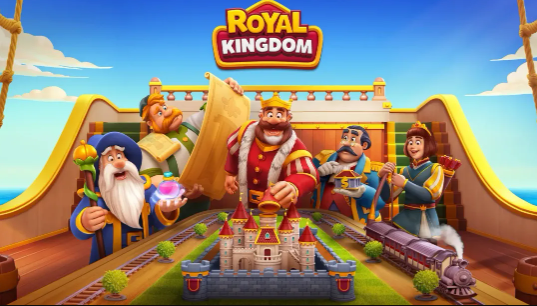
Because the game blends puzzle + kingdom building + story, there are character portraits (king, princess, etc.) and kingdom UI that lean into a cartoon-royal aesthetic. It’s charming, light-hearted, and adds personality beyond plain tile-matching.
4. Visual Effects Evaluation
Power-up explosions, tile-clears, level success animations — they feel fun, flashy, and often give that dopamine pop of “yay, I nailed it.” Especially nice for casual play or short sessions.
B. Artistic Style and Theme
1. Royal Fantasy Aesthetic
The game leans into a whimsical-royal vibe: castles, royals, magical boosters, kingdom districts. That helps it stand apart from more generic match-3 fare — and gives players a sense of “progress” beyond just levels.
2. Color Palette and Vibrancy
Bright, saturated colors — makes tiles and boosters visually distinct. Helps both gameplay clarity and visual appeal.
3. Cinematic Presentation Quality
While not a graphically heavy 3D game, the little touches (character art, UI panels, building animations) give a polished, “mobile-game-but-nice” feel.
4. Kingdom-Themed Asset Design / Visual Consistency
The building theme, district unlock visuals, kingdom overlay — they feel cohesive. It’s not just a “puzzle game with boss fights,” but “puzzle + kingdom simulation,” and that blend is reflected visually.
Story and Narrative Review
Yes — Royal Kingdom tries to give narrative weight. Here’s how that plays out (and sometimes falls flat).
A. Story Quality Assessment
1. Character Development Rating
You meet a cast: King Richard (new ruler), his daughter Princess Bella, a Wizard, a Grand Duke, etc. They attempt to bring some flavor and world-building into an otherwise casual puzzle game — which is commendable.
2. Narrative Depth Evaluation
Honestly? It’s light. The story exists more as a backdrop — a reason to build the kingdom, unlock districts, and have a sense of progress. It doesn't become super deep or emotionally engaging (at least not early on).
3. World-Building Excellence
The idea of a kingdom under threat from a “Dark King” / “Dark Witch,” rebuilding districts, expanding territory — it gives a neat framing device. For a match-3 game, it’s more storytelling than many.
4. Plot Progression and Pacing
Story segments seem to be sprinkled around building progression or level milestones — but you mostly “feel” the story in glimpses, not long arcs. It’s more “casual narrative” than “epic tale.”
5. Story Integration with Gameplay
This is where it works: the kingdom-building and puzzle clearings feed into each other. You clear a puzzle → get resources → unlock parts of your kingdom / story progression. It gives purpose beyond “just solve puzzles.”
B. Main Characters Analysis
King Richard: The new main ruler — reliable, royal, and the anchor for the kingdom’s survival. Good central figure for the plot.
Princess Bella: Adds youthful energy, adventure vibes — helps soften the royal seriousness.
Supporting Cast (Wizard, Grand Duke, Craftsmen, etc.): They flesh out the kingdom society, but given the game’s scope — none are deeply developed. Still, their existence helps the “kingdom feels alive” vibe.
Antagonists (Dark King, Dark Witch, etc.): Provide a villainous thread, stakes, and context for why the kingdom needs rebuilding — a simple but effective “evil forces” setup.
C. Narrative Structure
It’s not super deep or complex, but for what it is — a match-3 + casual game — the narrative works. It gives occasional flavor, some small motivation spikes, and enough context to care about building the kingdom (even if you don’t go super far into the lore).
Emotional Impact & Replay Value: modest. I didn’t get chills or heavy drama, but the story + kingdom build gives a nice sense of progression that keeps me coming back at least for a while.
Kingdom Building and Progression System
One element that tries to lift Royal Kingdom above a “just puzzle” game is the kingdom-building/progression side.
A. District Development Review
As you clear levels and accumulate resources (coins, potions, building materials), you unlock and build districts — from smaller buildings to larger structures in your “kingdom.” That adds a sense of ownership and growth beyond solving puzzles.
Visually, building things and seeing districts unlock adds a satisfying progression feel — especially in early-to-mid game.
However, as you progress far enough — unlocking higher-tier districts gets slower, and progression feels more gated or grind-or-pay heavy.
B. Resource Management System
There are multiple currencies/resources: coins (common), potions/other resources (less common), and occasionally premium/boosters for special needs. The balance between easy-to-get and hard-to-get is decent early on, but later resource scarcity becomes glaring.
Gold / coins usually come from winning match-3 levels; potions/resources from certain milestones, events, or district completions. Seems fair initially.
C. Progression Feel and Pacing
Early game: smooth and rewarding. I immediately felt like building my kingdom, clearing puzzles, unlocking new things.
Mid-game: slows down a little — more difficult puzzles, resource demands rise, district unlocks cost more.
Late game: things get slow unless you're willing to spend or wait. Building new districts becomes a grind, and many of the fun bits feel gated behind harder puzzles or resource demands.
In short: a fun progression curve — but longevity and pacing hinge a lot on whether you’re okay with grind or small spending.
Monetization and In-App Purchase Analysis
We need to talk about the money side — because that really shapes the long-term experience.
A. Pricing Model & Free-to-Play Viability
Royal Kingdom is free to download and play. That’s nice, and for casual players who just want to dip in every once in awhile — that’s viable. Some user feedback praises that initial accessibility and relatively generous free-to-play mechanics.
However, to progress fluidly in mid-to-late game, many players end up needing to rely on in-app purchases (extra boosters, extra lives, “power-ups,” etc.). Several honest reviews call out that without paying, progression becomes slow or stuck.
B. Pay-to-Win Assessment
The issue: certain levels seem designed in a way that luck (or purchases) significantly boosts success probability. So while skill helps, sometimes you're effectively gambling on tile drops or buying your way out of trouble.
For players who don’t spend, it often becomes repetitive — replaying levels many times, waiting for lives, or getting stuck on hard levels unless buying boosters.
C. Monetization Aggressiveness & Ads
Multiple reports / reviews from players call out misleading advertisements: ads that depict dramatic “save the king / dramatic rescue” events, but the actual gameplay is mostly match-3 + kingdom building. That disparity frustrates many.
Some even call the game “copycat” or “scam-like,” because it borrows heavily from its predecessor (Royal Match) in mechanics, presentation, and sometimes the whole feel.
So if you’re sensitive to heavy monetization or misleading ad promises — that’s a downside you need to know about.
Difficulty Balance and Fairness Review
For a puzzle-kingdom game, how “fair” or “balanced” the difficulty is — especially relative to boosters/spending — greatly impacts enjoyment.
A. Level Difficulty Assessment
Early levels: fair and fun. Skill + booster + strategy usually suffice.
Mid-to-late: many levels lean heavily on boosters or random tile drops; luck plays a big role. Skill only gets you so far.
Some levels feel almost impossible without boosters or many retries — especially those with layered obstacles, limited moves, or tight objectives.
B. Obstacle Design: Tiles, Blockers, Boss Mechanics
Locked tiles, chained blocks, multi-layer obstacles, and “boss / Dark-King / fortress” levels introduce extra challenge. Some are fun. Some — especially the fortress or “Dark Kingdom” levels — feel frustratingly RNG-heavy or “boosters needed.”
For many players, especially F2P, those levels become a wall where progression stalls unless willing to spend or grind hard.
C. Balance Between Skill and Luck
Early on, mix is fine — skill matters.
Later: luck, randomness, boosters — they become dominant. It shifts from “puzzle” to “combo-or-boost.” If the boosters don’t drop, you may end up repeating stages endlessly.
In short: the balance gradually shifts from fair to “tilt + RNG + pay or retry.” For casual players, that can be a mood-killer.
Comparison: Royal Kingdom vs. Royal Match
Because Royal Kingdom comes from the same devs and carries similar vibes, it’s worth comparing to Royal Match — its spiritual predecessor.
A. Core Gameplay Differences
Royal Match: Match-3 + simple castle/house renovation mechanics. Focus is on rooms/house restoration puzzle after puzzle.
Royal Kingdom: Match-3 + full “kingdom building,” narrative, character cast, district unlocks, and a broader “world” setting. More ambitious in scope.
B. Features and Content Comparison
Kingdom expansion, story overlay, character avatars/roles are new in Royal Kingdom. That gives more “game” beyond just puzzles.
But with added scope comes added expectations — and added potential for grind, paywalls, or imbalance, which many players feel more strongly here than in simpler predecessors.
C. Visual & Aesthetic Comparison
Both games have polish; Royal Kingdom leans more into a cartoon-royal fantasy style, with more elaborate visuals for kingdoms, characters, and UI. That’s a nice upgrade if you like the “royal makeover + puzzle” combo.
D. Monetization & Value Comparison
Royal Match was generally perceived as more balanced early on, but even it had monetization. Royal Kingdom, with more breadth, arguably increases the pressure: more boosters, more complex levels, and more temptation to spend.
If you disliked how Royal Match handled spending/ads — be cautious. Royal Kingdom amplifies those aspects.
E. User Reception & Sustainability
Royal Kingdom seems to have hit strong download and revenue numbers early (over 40 million installs, many user ratings), which shows there’s demand.
But early cheers are mixed with growing complaints about difficulty spikes, ads vs. actual gameplay mismatch, and paywalls. The long-term sustainability may depend a lot on how devs balance updates, difficulty, and fairness.
User Experience and Accessibility
As someone playing the game across devices, I’ve got some thoughts on how accessible and user-friendly it feels.
A. Ease of Learning
New players get a smooth start — the tutorial and early levels are intuitive, easy to grasp, and forgiving. Good onboarding.
Gradual introduction of mechanics (boosters, power-ups, building) helps avoid overwhelming early experience.
B. Device Compatibility & Performance
From my experience: runs smoothly on a mid-range phone. Graphics aren’t super high-end 3D, so even older devices handle it without major issues.
The UI is clean, animations are smooth, menus are easy to navigate. For casual players, that’s a plus.
C. Performance & Stability
I didn’t experience major crashes or bugs in my time playing. Loading times were reasonable, and frame rate seems stable.
That being said — when levels get harder, sometimes the “waiting for lives / ads / energy refill” timers can feel intrusive.
Retention and Long-Term Engagement
Being a mobile game with many levels, events — can Royal Kingdom keep you engaged long-term?
A. Content Update Frequency & Freshness
The developers seem to push updates: new levels, new districts, events, etc., which helps prevent the game from feeling stale.
That said — the pace of progression (especially late-game) slows down for F2P players. Without purchasing boosters or resources, it becomes harder to keep advancing.
B. Replay Incentives & Events
The kingdom-building aspect, district unlocks, and periodic events give something to chase beyond “just next match-3 level.”
For casual or semi-dedicated players, there’s potential for long-term enjoyment (especially if you enjoy the building / progression vibe).
C. Appeal to Casual & Hardcore Players
Casual players: good early experience, calming visuals, manageable daily play sessions. Great if you want “puzzle + chill.”
Hardcore / competitive players: the late-game difficulty and monetization might frustrate — partly because success becomes increasingly tied to boosters or luck, not just skill.
Pros and Cons Summary
What Royal Kingdom Does Right
Engaging match-3 gameplay loop with a purpose (kingdom building + story)
Visually polished, bright, and appealing graphics + animations
Easy to pick up — good for beginners and casual players
Kingdom progression + building adds sense of growth beyond puzzles
Frequent updates, events, and fresh content help retention
Early game feels accessible even to F2P players
Where It Falls Short (or Could Improve)
Difficulty spikes later — often feel reliant on boosters or luck
Monetization pressure: many levels hard to beat without spending or many retries
Ads / marketing vs. actual gameplay — some users feel misled by promotional trailers or ads that promise more “kingdom saving” drama
Grind can become repetitive, especially if stuck waiting for lives or resources
For dedicated players: long-term progression often feels gated unless paying or heavily grinding
Community Feedback & Player Voices
Because I don’t just trust my own playthrough — I also checked what others are saying online. There’s a mix.
“I’ve been playing the game for several months … the game has gone from tough but doable to basically a non-fun aggravating mess. I can go several days without beating a level … surprise surprise I’m one move too short … and can’t extend play because I’m 10 coins short.”
“Yes — after you get to a certain level you have to buy items to have the ability to keep clearing levels.”
Others complain about forced powerups or RNG dominance:
“Several times while playing I’ll end up spending a lot of lives on one level … feels like my skill … doesn’t matter if you don’t get any luck with power-ups.”
These echo the issues I saw — difficulty spikes, push toward purchases, RNG dependence.
On the flip side, some players still enjoy the experience, especially early on; one review site praises the “satisfying dual-gameplay loop” of puzzles + kingdom building.
So yeah — the community seems split: those who enjoy and pace themselves vs. those who feel stuck, frustrated, or pushed toward spending.
Final Verdict and Recommendation
Who Should Try Royal Kingdom
Casual players who enjoy match-3 puzzles + light building / progression and don’t mind slow pacing.
Players who like aesthetic polish, bright visuals, and a “play-at-your-own-pace” vibe.
People who just want a fun time, don’t mind occasional monetization, and can enjoy early and mid-game for free.
Who Should Be Cautious
If you dislike RNG-heavy progression, frequent paywalls, or difficulty spikes — might get frustrating.
If you want a more skill-based game rather than “match + luck + boosters.”
If you dislike aggressive monetization or feel misled by hype— you might be disappointed.
My Overall Rating (as a Player): 6.5 / 10
It’s a decent match-3 + kingdom building game. Great for casual play, decent at first, visually nice, and fun for a while. But it loses points for late-game pacing problems, monetization pressure, and reliance on boosters / luck.
If you go in with realistic expectations — treat it as a casual time-killer rather than a “serious game” — it’s worth a try. But if you expect a fair, balanced, long-term challenge without spending, you might feel let down.
Closing Thoughts
Royal Kingdom isn’t a terrible game. It’s got charm, polish, and a nice hybrid of puzzle + kingdom-building that delivers some fun. For what it is — a free-to-play mobile match-3 with extra bells & whistles — it’s often enjoyable.
But like many games in this space, it carries the weight of monetization design, RNG dependency, and difficulty curves that can grind down your enjoyment if you push too hard (or too far without spending).
If you’re just looking for casual match-3 fun, want to build a cute kingdom, and don’t mind the occasional grind or booster — give it a shot.
If you’re more hardcore, expect fairness and balance — you may want to play, but don’t overinvest.
At the very least: take your time. Don’t rush. Don’t let the boosters or ads dictate your fun. And if you start feeling like you’re doing more work than playing — maybe take a break.