Age of Ashes: Dark Nuns — The Player’s Big, Practical Guide to Classes, Builds, Dungeons, PvP, and Daily Progress
A. What Age of Ashes: Dark Nuns is
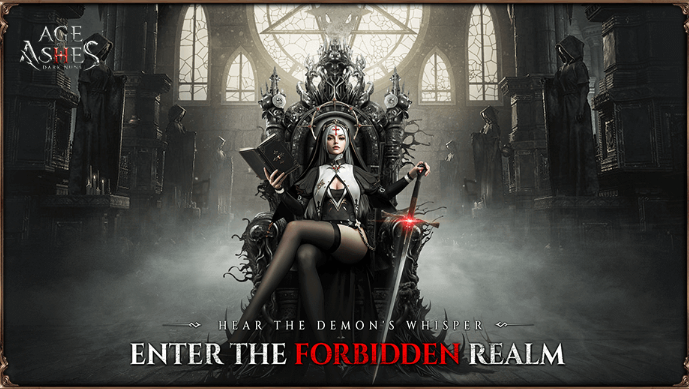
Age of Ashes: Dark Nuns is a dark-fantasy exorcism MMORPG that leans hard into “religious horror meets demon invasion,” with a big open-world MMO structure (quests, dungeons, raids, progression systems) and a very mobile-MMO-friendly combo of auto-pathing + auto-combat when you’re grinding, but manual play when the game actually wants you to dodge mechanics or stop getting slapped by bosses. BlueStacks describes it as a dark-themed MMORPG focused on a “chosen nun exorcist” in a devastated world of cursed locations and demonic warfare.
The Google Play listing sells the same fantasy: you play as a “Black Nun,” the world’s sun has been “turned to ashes,” demons flood the land, and you’re the chosen one doing the exorcism tour through creepy zones like hospitals, bell towers, churches, and graveyards.
B. Setting overview: post-apocalyptic world + demon invasion + the “Dark Nuns” order
The vibe is basically: “the apocalypse already happened—now you’re cleaning it up.” The game’s official store description leans into the idea that a once-sacred monastery protected the world, a catastrophe struck, and darkness spread everywhere, forcing a chosen nun into the role of purifier/exorcist.
If you’re into grim zones and heavy atmosphere, this is the kind of MMO that wants you walking through ruined, haunted places with a constant sense that something’s about to crawl out of the floorboards.
C. Platforms, global launch, and who this is aimed at
This game is aimed straight at two player types:
Mobile MMORPG grinders who like steady daily progress, gear score climbing, and co-op dungeons.
Action-RPG fans who don’t mind auto-play for chores but want manual combat for bosses/PvP.
You can play it on:
Android (Google Play)
iOS (App Store) (the developer has it listed in Apple’s ecosystem, and third-party iOS trackers show an iOS listing under the global name).
PC via emulator (BlueStacks)
Cloud play via now.gg (play in a browser without local install).
II. How to Download and Play
A. Downloading on Android and iOS (Google Play, App Store, APK, now.gg/cloud)
Android (official): The cleanest route is Google Play. You’ll get updates normally and avoid the “random file” risk.
iOS (official): Search the App Store listing in your region. Availability can vary by region, but the title exists in Apple’s ecosystem under the publisher listings and iOS trackers.
APK / third-party stores: Yes, you’ll find it on third-party stores and APK pages, but treat those as “only if you truly can’t access the official store in your region.” The risk isn’t just malware—it’s also outdated builds and annoying update friction. (If you go this route, only use reputable installers and double-check you’re not installing a modified package.)
Cloud play (now.gg): If you want to test the game quickly (or your phone is a potato), now.gg hosts a browser-play option.
B. Playing on PC via emulators (BlueStacks, MuMu, etc.)
BlueStacks has a dedicated page for running the game on PC, which is usually the easiest “mobile MMO on PC” setup: bigger screen, smoother input, less phone overheating.
My player opinion: if you’re the kind of person who plans to grind for weeks, PC emulator is the comfort move. You’ll do more daily content simply because it’s less physically annoying.
C. Account creation, server selection, and first login tips
First login is where most people accidentally sabotage themselves:
Pick your server like you’re picking your ping for life. If the game offers region servers, choose the one closest to you. MMO latency isn’t just “laggy.” It can turn boss dodges and PvP into pure suffering.
Don’t rush past settings. The default camera and skill layout might feel “fine” for five minutes and then miserable at level 40 when fights get busy.
III. Story, World, and Atmosphere
A. Dark-fantasy lore: ruined cities, cursed hospitals, haunted towers, monasteries
This game is clearly proud of its set dressing. The Google Play description calls out dungeons in places like hospitals, bell towers, altars, churches, and graveyards, and pushes the “dark world” presentation heavily.
BlueStacks also highlights cursed hospitals and haunted towers in its beginner guide description—basically confirming the game’s “religious horror dungeon tourism” identity.
B. The “Chosen Nun” and the Church vs demons conflict
The narrative hook is simple and familiar (in a good way): the world is falling apart, demons are everywhere, and you’re the chosen exorcist nun who’s supposed to restore balance.
That premise is doing two jobs:
It gives you a reason to go everywhere and cleanse everything.
It supports the MMO structure where every zone has a new “evil source” and every dungeon is a themed exorcism.
C. Cinematic presentation and overall tone
The Google Play listing explicitly mentions Unreal Engine and “cinematic visual effect” positioning, plus a large main storyline claim.
Real player translation: the game wants to look premium, and it’s banking on atmosphere to keep you playing even when you’re doing the usual MMO loop.
IV. Core Gameplay Systems Overview
A. MMORPG structure: questing, dungeons, raids, large-scale battles
Under the horror aesthetic, it’s still a familiar mobile MMORPG loop:
main quest → unlock systems → gear treadmill
repeatable dungeons for materials
co-op dungeons/raids for better drops
PvP modes and guild content as the “endgame glue”
BlueStacks describes it as a “straightforward MMORPG structure” with class selection, gear upgrades, open-world exploration, and solo/multiplayer combat.
B. Auto-play and when manual combat is recommended
Auto is great for:
open-world kill quests
traveling/quest turn-ins
routine farming sessions
Manual matters for:
boss telegraphs and dodge timing
dungeon mechanics (traps/puzzles)
PvP (auto gets you farmed)
BlueStacks explicitly calls out that dungeons include traps/puzzles/bosses and often require manual play for dodging and timing.
C. Progression pillars: levels, gear, skills, class advancement
This game’s growth is basically four stacked layers:
Level (unlocks content)
Gear (raises raw power)
Skills (defines combat identity)
Advancement systems (the “late game” multipliers that usually include titles, upgrades, and class progress)
V. Classes and Roles in Dark Nuns
A. Class list and combat roles
The most consistent “previewed class list” referenced in guides includes five classes:
Sorcerer
Dragon Knight
Soul Slaying Officer
Divine Warrior
Demon Hunter
And the roles broadly map like this (player-style, not spreadsheet-style):
Sorcerer: ranged AoE DPS / wave clear
Demon Hunter: ranged DPS with mobility/burst feel
Dragon Knight: frontline bruiser/tank vibe
Divine Warrior: durable melee (beginner-friendly)
Soul Slaying Officer: mobile melee DPS / hit-and-run
B. Brief class fantasy + playstyle
Sorcerer: You want big AoE, fast clears, and satisfying screen explosions. According to BlueStacks, it has the strongest AoE and is great for clearing groups.
Demon Hunter: Ranged pressure with mobility—usually a “kite and punish” feel, and BlueStacks notes it’s one of the ranged options.
Dragon Knight: The classic “I walk into danger and don’t die” class fantasy.
Divine Warrior: BlueStacks straight-up calls it the most beginner-friendly due to durability and straightforward melee gameplay.
Soul Slaying Officer: High mobility, quick combos, hit-and-run tactics—BlueStacks calls it the most mobile class.
C. How future awakenings/advancements might work
The game follows the typical mobile MMO pattern where early class choice defines your core identity, and later systems deepen the kit via skill upgrades, gear sets, and likely class progression paths (even if exact “awakening” naming differs by version/region). At minimum, you should expect: bigger numbers, more complex rotations, and more content expecting role specialization.
VI. Which Class to Choose (Beginner Advice)
A. Easiest classes to start with
If you want the least stressful start:
Divine Warrior if you like melee and want survivability.
Sorcerer if you like ranged AoE and easy farming speed.
Why? Because early game is all about consistency. Dying slows everything down.
B. Best for solo vs party play
Solo-friendly: Sorcerer (fast clear), Divine Warrior (safe), Demon Hunter (kiting).
Party-focused: Dragon Knight (frontline value scales in co-op), plus any class once you reach content where roles matter more than raw stats.
C. Recommendations for PvE, PvP, and mixed content
PvE grind focus: Sorcerer / Demon Hunter
PvP focus: Soul Slaying Officer (mobility), Dragon Knight (frontline pressure), Divine Warrior (durable brawler)
Mixed content: Divine Warrior is the “I don’t want to regret my pick” class, especially if you’re new.
VII. Combat, Skills, and Builds
A. Basic combat flow: combos, dodging, CC, ultimates
This is the core rhythm you’ll live in:
Start combo (gap close or ranged poke)
Apply CC or debuff (if your class has it)
Dump main damage skills
Dodge telegraph
Ultimate when the boss is locked down or during your burst window
Auto-play handles steps 1–3 okay in open-world. It usually fails at steps 4–5 when bosses start punishing lazy positioning.
B. Skill trees, respec options, and build identity
Mobile MMOs almost always let you reassign skills at some point (either free early, paid later). Even if respec is limited, your “build identity” typically comes down to:
burst vs sustained damage
AoE vs single-target boss focus
mobility/evade vs face-tank
PvE rotation vs PvP control
My advice: build for PvE first until you’re farming efficiently. PvP builds are expensive, and you don’t want to PvP with half-geared stats anyway.
C. Example early-game builds (PvE focus)
These are “practical starter templates,” not final builds:
Sorcerer (PvE)
Priority: AoE damage skills + cooldown reduction tools
Rotation: AoE clear → reposition → AoE clear
Stat lean: damage + crit (once available), then survivability
Divine Warrior (PvE)
Priority: sustain/defensive skills + cleave tools
Rotation: pull mobs → AoE/cleave → defensive skill when HP dips
Stat lean: HP/DEF early, then damage once gear stabilizes
Demon Hunter (PvE)
Priority: mobility + single-target burst for elites
Rotation: poke → burst → kite → repeat
Stat lean: attack + crit, but don’t be glass early
Soul Slaying Officer (PvE)
Priority: mobility + fast combo chain
Rotation: dash-in → combo → disengage → re-enter
Stat lean: balanced offense with enough HP to survive mistakes
Dragon Knight (PvE)
Priority: control + frontline stability
Rotation: engage → control/taunt → team survives → repeat
Stat lean: HP/DEF first, damage later
VIII. Gear, Stats, and Power Progression
A. Gear rarity, set bonuses, and upgrades
Most mobile MMOs follow this loop:
Replace gear often early
Start caring about set bonuses mid-game
Endgame becomes “optimize sets + upgrade materials + min-max stats”
B. Key stats and what they actually do
You’ll usually see some version of:
ATK: your raw damage scaling
DEF/HP: your mistake buffer (especially for melee)
Crit rate / crit damage: your DPS ceiling
Speed/haste equivalents: how often you act / cast
Accuracy/resistance equivalents: PvP relevance (control fights)
The trick: stats matter more when your rotation actually uses them. If you’re dying to mechanics, more DPS doesn’t help.
C. Best early and mid-game gearing routes
Player routing that tends to work:
Use story gear to push story
Farm early dungeons for set basics
Upgrade weapon/primary gear first (biggest immediate gains)
Start building your first “real set” once drop quality stabilizes
Only then worry about perfect rolls
IX. PvE Content: Dungeons, Raids, and Exploration
A. Story dungeons and exorcism instances
The game emphasizes “exorcism dungeons” heavily and implies a large quantity of dungeon content.
Expect story dungeons to teach:
basic mechanics
telegraphs
and “this is when you stop autoing”
B. Co-op dungeons and raid mechanics
Co-op content typically demands:
a frontline who can hold boss attention
DPS who can burst during safe windows
supports (or just players who bring utility) to reduce wipes
BlueStacks notes dungeon traps/puzzles and bosses that often require manual precision.
That’s your cue: co-op bosses are not “watch auto-play and snack.”
C. Exploration: side quests, hidden chests, rare spawns
If you want efficient progression, exploration is usually:
worth doing early for first-time rewards
worth skipping later if it’s low ROI
worth revisiting when you need a specific material or event objective
X. PvP and Large-Scale Battles
A. 1v1 and battleground-style PvP
In these games, PvP usually has two realities:
Early: “gear score wins”
Later: “gear score + class matchups + skill timing wins”
If you’re getting deleted, it’s usually not because you’re “bad.” It’s because your build is still PvE-oriented or your stats are behind.
B. Cross-server battles and siege-style features
Mobile MMOs love cross-server competition because it keeps queues alive and gives whales someone to fight. If you’re an F2P player, your best move is to treat cross-server PvP as:
a reward source
not your main identity
unless you’re willing to grind hard enough to keep up.
C. PvP build prep
prioritize survivability first (dead DPS is zero DPS)
build control resistance / anti-burst if available
learn your class’s “escape button” and use it early, not at 5% HP
XI. Guilds, Social Features, and Co-Op Play
A. Why guilds matter
Guilds are how MMOs gently force you into long-term retention—because once you’re in a guild:
you get more rewards
you do guild events
you feel responsible for showing up
B. Party tools, friends lists, communication
Even basic party finder saves time. This is not a solo RPG masquerading as an MMO—late game almost always expects co-op.
C. Social play = late-game acceleration
If you want faster progression:
join an active guild early
don’t wait until endgame
The earlier you get guild rewards and co-op clears, the faster your gear stabilizes.
XII. Leveling, Farming, and Daily Routine
A. Leveling path: main vs side quests
The standard efficient path:
Main quest until you hit a gate
Side quests / dailies to break the gate
Dungeon farming when gear becomes the limiting factor
Repeat
B. Best farming spots
Usually:
open-world grind spots for EXP
dungeon loops for gear/materials
event zones for limited currency
C. Daily/weekly priority list
If you only have limited time, prioritize:
daily rewards / login
your highest value dungeon entries
guild tasks
time-limited events (because they disappear)
XIII. Events, Rewards, and Monetization
A. Login rewards and rotating activities
Mobile MMOs always run rotating events to keep players logging in. Treat events like “bonus progression,” not your whole plan.
B. In-app purchases and gacha/loot systems
Expect typical MMO monetization:
convenience bundles
cosmetic options
progression packs
C. F2P viability and pay-to-win feel
The honest F2P reality in most mobile MMOs:
You can progress and enjoy the story and dungeons.
You will not outspend whales in PvP unless you out-grind them and play smarter.
Your “win condition” is consistency and smart resource usage.
XIV. Performance, Settings, and Technical Tips
A. Graphics settings for low-end vs high-end
The Google Play listing pushes Unreal Engine visuals.
So you should expect that pushing max settings on mid phones can lead to:
heat
throttling
stutters
Low-end: lower effects, shadows, and resolution.
High-end: keep FPS stable; don’t chase max visuals if it causes heat spikes.
B. Reducing lag, crashes, battery drain
lower graphics intensity
close background apps
avoid playing while charging if your phone overheats
use stable Wi-Fi
C. Emulator tweaks
If you’re on BlueStacks:
cap FPS to what your PC can hold consistently
set keymapping for skills + dodge
consider manual play in dungeons (mouse + keyboard makes dodges cleaner)
XV. Comparisons and Position in the MMO Market
A. Compared to other mobile MMORPGs
Age of Ashes: Dark Nuns is still a mobile MMO at heart, meaning:
daily routine
gear treadmill
co-op hooks
PvP ladders
What it adds is a very specific aesthetic: exorcism + dark nun + religious horror staging.
B. Unique hooks
exorcism theme
“chosen nun” protagonist framing
heavy emphasis on cinematic dark world vibe
dungeon theming (hospitals, bell towers, graveyards)
C. Who will love it vs who should skip
You’ll enjoy it if you like:
dark fantasy atmosphere
structured MMO progression
co-op dungeons and long-term grind
You might bounce off if you hate:
auto-play systems
gear score gating
daily task loops
XVI. Advanced Tips and Endgame Preparation
A. Transitioning from leveling builds to endgame builds
The biggest endgame shift is: you stop building “general stats” and start building:
specific set bonuses
specific PvP resist/control thresholds
specific boss mechanic counters
B. Preparing for hardest dungeons/raids/PvP brackets
Endgame success usually depends on:
stable rotations
understanding telegraphs
stacking survivability before greed DPS
joining a guild that can actually clear content
C. Long-term goals
Most players end up chasing:
optimized gear sets
cosmetics/collections
rankings and titles
completionist achievements (which often give passive boosts)
BlueStacks mentions titles granting passive stat boosts unlocked through milestones.
XVII. Community, Official Channels, and Updates
A. Official hubs
The official game presence exists through platform listings and official social pages (the game has a large official Facebook presence, for example).
B. Recommended guides and resources
If you want structured beginner help and PC-play setup, BlueStacks has multiple guides (beginner/class/setup).
C. Tracking patches and new classes
Your best habit:
watch official social posts for event announcements and patch notes
check updated emulator/cloud pages if you play on PC
don’t rely on random “leak” videos for build decisions
Age of Ashes: Dark Nuns is basically “dark exorcism MMO comfort food” with a strong aesthetic hook: you’re the chosen nun in a world drowned by demons, running through cursed hospitals and haunted towers while you grind gear, clear dungeons, and eventually get dragged into PvP and guild wars. The game supports both auto-play convenience and manual combat where mechanics matter.