Squad Busters: The Player’s “Stop Getting Deleted Mid-Match” Guide (Heroes, Meta, Lineups, Ranked, Hatchling Run, F2P, and Tilt Control)
If you’ve played Squad Busters for more than, like, an afternoon, you already know the game’s personality: it looks cute, it feels chaotic, and it absolutely will humble you the moment you think you’ve got a “perfect squad.” That’s kind of the magic. You’re not just picking a character and out-aiming people—you’re building a squad on the fly, reading the map, timing your fights, and deciding when to farm, when to pivot, and when to full-send. It’s part hero collection, part brawler, part “I swear I was winning until three squads dogpiled me.”
And yes—Squad Busters sits inside Supercell’s wider universe like a crossover party where everyone brought their own ridiculous skill set. The game has gone through major changes too, including a big update that introduced Heroes and Power moves (which replaced the older “spells” style system).
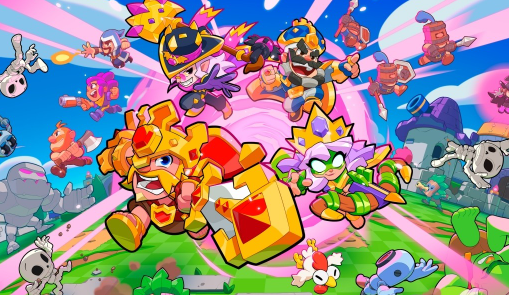
I. Introduction to Squad Busters
A. What Squad Busters is and how it fits into Supercell’s ecosystem
Squad Busters is Supercell’s “all-stars meet battle royale-ish chaos” mobile game. Instead of locking you into one character, you’re building a whole squad from a pool of familiar faces (think Clash, Brawl, Hay Day vibes all smashing together), then running around a map collecting resources, fighting other squads, and trying to finish in a top placing.
The important part is that Squad Busters isn’t a pure skill-check game like a shooter. It’s a decision game:
What do you draft early?
Do you farm or fight?
When do you pivot from “get strong” to “protect my lead / steal the lead”?
How do you avoid getting third-partied?
If you play it like “run at people and brawl nonstop,” you’ll win some lobbies and then get obliterated the moment your opponents learn how to punish greedy fights.
B. Core gameplay: heroes, abilities, collecting “busts,” and map-wide combat
Your match loop (the real one) looks like this:
Start weak
Farm (resources, power-ups, units—depending on mode)
Draft into a functioning squad
Pick your fights (or get forced into them)
Convert wins into map control (more resources, better positioning, safer routes)
Survive the mid-game chaos where everyone collides
Close out with good positioning and the right aggression at the right time
The game has moved toward a clearer structure with Heroes leading squads and Power moves as active abilities used in battle (replacing older spell mechanics).
C. Why Squad Busters has become a popular mobile hero-collection title
Because it hits that “easy to start, hard to master” sweet spot:
The matches are quick and chaotic, so it feels fun immediately.
The roster collection keeps people invested.
The meta shifts and events keep the game from getting stale.
Even if you’re not a sweaty ranked grinder, you can still feel account progress through upgrades and unlocks.
Also, Supercell players love crossovers. Seeing familiar characters in a new format is basically free dopamine.
II. Getting Started and First-Run Tips
A. How to create your account and start your first match
Do the boring but important thing early: bind your account. I know, it’s not exciting, but it prevents “I lost everything because I switched devices” heartbreak.
Then start matches and pay attention to the early-game pattern:
You’re not trying to win fights early.
You’re trying to build a stable squad and avoid losing units to dumb skirmishes.
Early fights are often traps. If you fight while weak, you get rolled. If you fight while someone else is stronger, you get farmed. Your goal is to become the person doing the farming.
B. Early-game objectives and progression
Early progression in Squad Busters is about:
unlocking more characters (so you have better drafting options),
building a basic understanding of map flow,
and upgrading a small pool of high-value units rather than sprinkling upgrades everywhere.
A huge beginner win is learning which fights to take:
If your squad is bigger/stronger, fight.
If you’re smaller/weaker, avoid.
If you’re equal, only fight if you can win quickly and not get third-partied.
The third-party problem is real. You can win a fight and still lose the match because another squad shows up at the exact moment you’re low.
C. Best starter heroes and why they matter for early runs
Early on, you want characters that are:
simple,
consistent,
and forgiving.
You don’t want “high ceiling but fragile.” You want “I do reliable value even if I’m not playing perfectly.”
Beginner-friendly archetypes:
Frontline bruisers that don’t explode instantly
Simple ranged damage that scales nicely
Value suppliers that help you farm and grow
Don’t worry if you don’t have all the flashy meta picks yet. Early wins come more from decision-making than perfect roster.
III. Heroes, Squaddies, and Character Tiers
A. The roster and roles
The game’s roster is large and keeps evolving, and the terminology matters:
“Heroes” exist as a category (and some characters were converted into Heroes in a major update).
Other troops are commonly referred to as Squaddies, and they’re the “heart and soul” of your squad building.
You’ll hear players talk about roles like:
Tank / Frontliner (soaks, stabilizes fights)
Damage (wins fights)
Support (heals, buffs, utility)
Supplier (economy—helps you scale faster)
Speedster (mobility, repositioning, chasing, escaping)
You don’t need perfect labels, but you do need to understand one truth:
A squad with only damage and no stability often loses to chaos.
B. S-tier and A-tier heroes in the “current meta” sense
Tier lists shift a lot after balance patches, so treat any list as “current snapshot,” not eternal law.
From recent tier list snapshots, you’ll frequently see characters like Barbarian King, Archer Queen, Hog Rider, Penny, Tank, and sometimes Max, Wizard listed as high-value picks in many metas.
Player translation: these characters tend to either:
give strong combat power without needing perfect setup,
scale well with squad growth,
or provide utility that stays relevant across many situations.
C. Role categories: tank, damage, support, supplier, speedster
Here’s how I’d explain these in “match reality” terms:
Tank: “I can stand in the fight and not instantly lose my whole squad.”
Damage: “I convert fights into wins fast.”
Support: “I keep my squad alive long enough to win multiple fights.”
Supplier: “I get stronger faster than everyone else.”
Speedster: “I choose which fights happen.”
The best squads usually include at least:
one stability source (tank/support),
one damage engine,
and one way to control tempo (supplier or speedster).
IV. Squad Busters Tier List and Meta Overview
A. How tier lists are structured (S/A/B/C…)
Tier lists are usually based on:
individual unit power,
value across multiple modes,
how much they scale with upgrades,
how easy they are to use effectively,
and how they perform in ranked environments.
A common S/A/B/C breakdown is:
S: consistently strong, hard to replace
A: strong but more context-dependent
B: fine, but needs support or has weaknesses
C/D: niche or underpowered
Recent snapshots put multiple top picks in S-tier (e.g., Barbarian King, Hog Rider, Archer Queen, Penny, Tank, Witch, Miner, Archer in one list).
B. Best characters to build around in ranked and casual
In casual/unranked, you can play more experimental. You can try weird comps and learn.
In ranked, consistency matters:
characters with reliable survivability or chase tools go up in value,
fragile “win-more” picks feel worse,
and you start caring a lot about avoiding “bad fights.”
If you’re serious about climbing, you want:
a stable frontline plan,
reliable damage,
and the ability to disengage when the map gets crowded.
C. How meta shifts after balance patches and new abilities
Supercell games are living systems. A small nerf to mobility can make aggressive comps weaker. A small buff to sustain can make fights last longer, which changes the value of burst vs sustain. A new event mode can change “best picks” overnight.
So the mindset that wins long-term:
don’t marry a tier list,
marry a playstyle you execute well,
then adjust a few picks as the meta changes.
V. Abilities and Ability Builds
A. Ability levels: Baby → Classic → Super → Ultra → Ultimate
Squaddies and upgrades are based around evolutions. A key detail: Squaddies have five evolutions: Baby, Classic, Super, Ultra, Ultimate.
Player takeaway:
higher evolution tiers generally mean better stats and/or more power.
chasing Ultimate on everything is not realistic unless you spend heavily or grind forever.
the best approach is to upgrade a small group of characters that form your core.
B. Best all-round abilities and “single-hero powers”
Since the game uses Power moves and trait/power systems (and those systems have evolved over time), the “best” abilities are usually the ones that:
change a fight immediately (burst, heal, shield, control),
scale with squad size,
and don’t require perfect conditions.
In real matches, a “good ability” is one that:
saves you from getting deleted,
helps you win a fight quickly,
or lets you escape a bad fight.
C. Ability-synergy lineups and must-have combos
This is where Squad Busters gets spicy: synergy matters.
Common synergy logic:
Tank + healer = you stop losing fights to chip damage
Speedster + burst = you pick off squads or steal resources
Supplier + scaling DPS = you win late because you’re richer
Even if you don’t have a “perfect meta roster,” you can build strong synergy with what you own.
VI. Ranked Mode and Competitive Play
A. How Ranked / Squad League works
Ranked is commonly called Squad League (often described as the game’s ranked mode). It has unlock requirements and trophy-based outcomes.
Think of ranked as:
more punishing fights,
more disciplined players,
fewer “random freebies,”
and more third-party awareness.
B. Best lineups and comps for climbing
Climbing comps need:
consistency,
survivability,
and the ability to avoid losing your whole squad in one bad fight.
From current tier snapshots, high performers for many players include core picks like Barbarian King, Archer Queen, Hog Rider, Penny, Tank (depending on your roster and mode).
But I’ll say something that matters more than “which character”:
Your positioning and fight selection decide ranked more than your exact lineup.
C. Macro and positioning tips to outplay opponents
Here are the ranked habits that actually win:
Don’t fight when you’re weak
Farm first. Become the problem.Fight near escape routes
If a fight turns bad, you need an exit. Don’t brawl in a dead-end.Assume a third party is coming
If you take a long fight, someone will hear it and show up.Win small fights, not heroic fights
It’s better to take one clean kill and leave than to chase and die.Don’t chase forever
Chasing is how you get pulled into the center of the map and deleted.
VII. Best Squad Busters Lineups and Team Comps
A. Example meta lineups for ranked and seasons
Instead of pretending there’s one “best squad,” here are three lineup archetypes that work across many metas:
1) Stable Core (Beginner-friendly ranked)
Frontline tank/bruiser
Sustain support
Reliable DPS
Mobility pick
Flex utility
This comp forgives mistakes and keeps you alive in messy mid-game fights.
2) Speed & Hunt (Aggressive ranked climbing)
Speedster (mobility/chase/escape)
Burst damage
Utility/control
One stabilizer (tank or healer)
One supplier or scaler
This comp wins by choosing fights and punishing isolated squads.
3) Farming & Scaling (Safe macro, strong late)
Supplier(s)
One strong DPS that scales
One tank
One sustain support
One mobility pick
This comp wins by being richer and stronger when late fights start.
B. Tank-heavy, speed-based, support-focused squads
Tank-heavy is great when the meta is brawl-heavy and you expect constant fights.
Speed-based is great when the map is open and you can pick on weak squads.
Support-focused is great for events and modes where survival is more valuable than constant aggression.
C. Adapting per mode (Gem Hunt, Showdown, etc.)
Some modes reward:
staying alive,
controlling the middle,
or farming efficiently.
Other modes reward:
kills,
stealing,
and fast rotations.
Your lineup should reflect that. If the mode punishes long fights, don’t run a comp that requires long fights to win.
VIII. Hatchling Run 2.0 and Special Event Strategies
A. Mechanics and rules of Hatchling Run 2.0
Hatchling Run is a recurring event mode. Official support describes it like this: you team up with other squads to round up hatchlings and deliver them to a central hutch, while fighting for control.
Player translation: it’s not just “kill everyone.” It’s “control space, escort/secure hatchlings, and don’t throw at the finish.”
B. Best heroes/abilities for Hatchling Run
Without turning this into a “copy my exact list” thing, Hatchling Run tends to reward:
mobility (to escort, steal, reposition),
survivability (because chaos erupts at the center),
and burst/control (to win central fights quickly).
Also, don’t underestimate “staying power.” A team that survives the mid-map blender often scores better than a team that gets flashy kills but loses their flock.
C. Tips for farming event cosmetics and rewards
Event farming mindset:
prioritize consistency over highlight plays
learn the event’s scoring loop
stop taking fights that don’t increase your objective control
If the event store is tied to your hatchling deliveries (as it commonly is in event structures), your goal is maximizing successful deliveries per session, not “most kills.”
IX. Progression, Levels, and Power Curves
A. Leveling, fusion, and stat growth
Your account gets stronger through:
unlocking characters,
evolving them through tiers,
and improving their traits/powers.
The big reality: power growth is not linear. Your account often feels “stuck,” then you hit one upgrade tier and suddenly everything feels easier.
B. What to upgrade first
If you want the simplest upgrade rule that works:
Upgrade your core combat engine (your main DPS and frontline)
Upgrade your sustain (so you stop throwing fights)
Upgrade your mobility or supplier (so your matches become more consistent)
Then start expanding into niche picks
C. Upgrade favorites vs upgrade meta picks
My honest player advice:
If your favorite is a strong “A-tier” style unit, build it. You’ll play more, learn faster, and improve.
If your favorite is a niche low-tier unit, build it later as a “fun project,” not as your core climb plan.
Winning more matches gives you more resources, which lets you build favorites later anyway.
X. Daily, Weekly, and Seasonal Routines
A. Daily missions, login rewards, and stamina planning
Supercell support highlights systems like Daily Streaks & Win Rewards, which reward consistent play and wins with milestone rewards.
The best daily routine is short and repeatable:
claim daily rewards
play enough matches to hit your key milestones
stop when you’re tilted
B. Seasonal events and rewards-track optimization
Seasonal tracks reward consistency more than marathon sessions. If you play a little every day, you often outperform the player who plays once a week for six hours and burns out.
C. Repeatable routine loop for long-term play
My “sane” loop:
Warm up in unranked (1–2 games)
Play ranked in a focused block (3–6 games)
Stop if you lose two in a row due to tilt mistakes
Spend rewards/upgrades deliberately (core first)
XI. Unranked and Fun-Mode Guides
A. Why unranked matters
Unranked is your laboratory:
test lineups,
test reroll habits,
practice map routes,
and learn what fights feel winnable.
If you test in ranked, you’ll lose trophies while learning. Use unranked to improve efficiently.
B. Showdown, gem-hunt, and alt modes
Different modes reward different behavior. The best way to learn is:
play one mode for a week,
learn what wins that mode,
then rotate.
Most players stay bad because they play every mode randomly and never master any mode’s win conditions.
C. Casual builds that prioritize fun
If you want fun builds, go for themes:
full speed chaos
full tank brawl
weird supplier stacking
Just don’t confuse “fun build” with “ranked build.” They can overlap, but they’re not the same goal.
XII. Squaddie and Ability Rerolling Strategy
A. Sparkling time, rerolling, counter runes (and why people throw games)
Rerolling systems (and “do I keep this pick or roll again?” decisions) are where players donate matches.
The biggest mistake is over-rerolling:
You waste time.
You lose tempo.
You fall behind in squad strength.
Then you take a desperate fight and die.
B. When to reroll vs when to lock in
Reroll when:
your options don’t fit your current squad plan at all,
you’re missing a critical role (no damage, no frontline),
or the offered picks are clearly low-value for the mode.
Lock in when:
you already have a functional comp,
you’re ahead and want stability,
or the pick is a synergy piece that upgrades your win condition.
C. Common mistakes
rerolling into randomness while your squad stays weak
chasing “perfect lineup” instead of building “good enough fast”
forcing fights after falling behind due to reroll tempo loss
XIII. Squad Busters Settings, Controls, and Performance
A. Controls and sensitivity
If your controls feel slippery:
reduce visual clutter,
stabilize your device performance,
and make sure you’re not playing in a laggy environment.
Mechanical consistency matters because a mis-tap can lose a fight instantly.
B. Minimap reading and awareness habits
Minimap habit that helps immediately:
glance often
track where fights are happening
assume a big fight will attract more squads
route around the chaos if you’re weak
C. Best devices and settings for competitive play
Competitive play is about stable performance:
stable FPS
low input delay
clear visuals
If your device stutters mid-fight, your “skill” is irrelevant because your actions don’t register in time.
XIV. Community, Tier Lists, and Content Creators
A. How to follow meta changes
Tier lists are useful as long as you treat them as snapshots. Sites like PocketGamer and others publish frequent tier snapshots with S/A/B/C rankings.
The best way to use them:
read them to identify which characters are broadly valuable
then test those characters in your own playstyle
B. Popular creators and where they post lineups
YouTube and Reddit are full of lineup discussions, event guides, and ranked tips. The problem is that many videos are hype-driven. The best creators explain:
why a comp works
when it fails
what to do if you don’t own the exact roster
C. Don’t blindly copy builds
Copying without understanding creates two issues:
you don’t know how to pivot when the match goes weird
you don’t know why you lost, so you can’t improve
Learn the logic, not just the list.
XV. FAQ and Common Squad Busters Questions
A. “What’s the best squad build for beginners?”
A beginner build should be:
stable
forgiving
and consistent in multiple modes
That usually means:
one frontline stabilizer
one reliable DPS
one sustain/utility
one mobility option
one flex pick
If you’re constantly dying, you need more stability. If you can’t finish fights, you need better damage synergy.
B. “Which hero should I unlock next?”
Unlock priorities:
characters that fill missing roles in your roster (tank, sustain, mobility)
broadly strong meta picks (the ones that appear in many successful lineups)
niche picks that solve specific problems
C. “How do I stay sane in ranked?”
My anti-tilt rules:
play ranked in blocks
stop after two tilt losses
don’t revenge queue
upgrade deliberately (core first)
focus on one improvement goal per session (fight selection, routing, or squad building)
Ranked is a marathon. If you treat it like a sprint, you’ll burn out fast.
Squad Busters looks like chaos (and it is), but the players who win consistently aren’t “lucky”—they’re disciplined. They build squads fast, avoid bad fights, control their positioning, and use events and upgrades strategically instead of randomly. If you want quick improvement, don’t start by hunting the perfect tier list.