Honor of Kings in 2026: The Player’s “Stop Losing for Free” Guide (Download, Settings, Roles, Meta, Builds, Ranked, Macro, and More)
If you’ve ever tried a mobile MOBA and thought, “Okay, this is fun… but why does every match feel like I’m babysitting four strangers who just discovered thumbs,” then yeah—welcome to the genre. The thing is, Honor of Kings hits different once you actually learn how the game wants to be played. It’s still a 5v5 chaos festival sometimes (because humans), but the game has a clean MOBA core: lanes, jungle tempo, objective trading, teamfight roles, and enough hero variety that you can find a comfort pick for basically any mood.
In this guide I’m writing as a player—someone who’s queued solo, duo, and “we swear we’re coordinated” trio—and I’m going to break down how to get into Honor of Kings in 2026 without wasting a month learning the hard way. We’ll cover download/setup, performance settings, beginner fundamentals, role/lane responsibilities, meta thinking (without turning into a spreadsheet robot), how to build items intelligently, how to climb ranked without losing your sanity, and the kind of macro + micro habits that quietly win games.
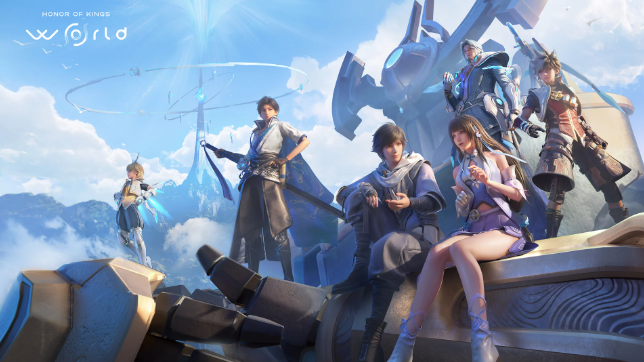
I. Introduction to Honor of Kings
A. What is Honor of Kings? (core MOBA gameplay overview)
Honor of Kings is a classic 5v5 MOBA: two teams, three lanes, a jungle, minion waves, towers, objectives, and one main goal—break the enemy base before they break yours. You win through a mix of:
micro (mechanics): aiming skills, combos, spacing, timing, target selection
macro (strategy): rotations, wave control, objective timing, draft synergy, and not taking stupid fights
The thing new players miss is that the “shoot spells, get kills” part is only half the game. The other half is where you are on the map and why you’re there. If you’re always late to objectives, always fighting in the enemy’s numbers, and always ignoring minion waves, you’ll feel like the game is impossible—even if your hands are good.
B. Honor of Kings vs other mobile MOBAs (Arena of Valor, Mobile Legends)
If you’ve played Arena of Valor or Mobile Legends, you’ll recognize the MOBA DNA immediately—roles, lanes, timings, snowball patterns. The differences usually show up in:
pacing (how fast the game punishes mistakes)
hero kits (how much mobility, reset potential, and burst is common)
match flow (how strongly objectives and rotations decide wins)
feel (animation clarity, responsiveness, “I pressed it and it happened”)
From a player perspective, Honor of Kings often feels like it rewards clean rotations and coordinated objective play more than pure brawling. You can brawl—but if you brawl at the wrong time (like when your wave is dying to your tower), you’ll be behind even if you got a kill.
C. Why play Honor of Kings in 2026? (player base, esports, support)
Three reasons I’d tell a friend in 2026:
It’s globally established now
The global expansion and international availability made it far easier to find matches and content outside a single region.Esports is not just “a banner on the menu”
The official esports hub is actively promoting a full 2026 calendar of events.It’s a “skill stays valuable” MOBA
Even when meta shifts, the fundamentals stay the same: wave control, vision habits, objective timing, teamfight roles. You improve once and it keeps paying dividends.
II. How to Download and Set Up Honor of Kings
A. Honor of Kings on Android (Google Play, APK, region notes)
Best option: Google Play Store. It’s the cleanest install and the easiest updates.
If you can’t see it on Google Play, it’s usually a region listing issue or a store/account region mismatch. Player-to-player advice (not glamorous, but real):
Try a second Google account set to a supported region (this is the most common workaround).
If you go the APK route, only use reputable distribution sites and keep your account security tight. (Because “free skins APK” sites are basically a trap disguised as generosity.)
I’m not going to give you a “do this sketchy trick” tutorial here—just know that region friction is a thing for some players, and the stable path is always the official store when possible.
B. Honor of Kings on iOS (App Store availability, device requirements)
On iOS, the official App Store listing is the simplest route.
Device requirement reality:
If your iPhone already heats up in MOBAs, you want stable FPS settings more than high graphics.
If your device is older and stutters in teamfights, you’ll feel it hardest during objective fights when everyone presses everything at once.
C. Account creation, server selection, and language / English version settings
My “save yourself future pain” checklist:
Link your account early
Whatever login method the global version uses for you, do it now—not after you’ve sunk 50 matches.Pick your server based on ping and friends
Ping is not a vibe. Ping is your life. If you’re always at 120ms while your lane opponent is at 20ms, your “skill shots” become “skill hopes.”Language settings: set it once, then leave it
If you keep flipping languages or UI layouts, your muscle memory gets weird. Lock it in and build consistency.
III. Minimum Requirements, Devices, and Performance Settings
A. Recommended devices and minimum specs for smooth gameplay
I’ll keep this practical: if your phone can’t hold stable performance during a 5v5 objective fight, you’re going to misplay—not because you’re bad, but because your game literally didn’t respond.
“Smooth gameplay” means:
stable frame pacing (not spiking up and down),
consistent touch response,
minimal thermal throttling after 10–15 minutes,
and enough RAM so the game doesn’t fight your OS for survival.
If you’re on a mid-range device, don’t chase “Ultra.” Chase “stable.”
B. Best graphics settings for FPS, visibility, and battery saving
Competitive rule: clarity > beauty.
My go-to philosophy:
Lower the settings that add visual clutter or cost performance.
Keep enemy animations and spell effects readable.
Reduce distractions so you can actually track what matters.
Recommended baseline:
Graphics: Medium or Low (depending on device)
High-quality shadows: Off/Low
Effects: Medium (low if teamfights lag)
FPS mode: High/Max stable
Battery: don’t play at max brightness if you want stable performance for longer sessions
If you stutter during teamfights, don’t “cope.” Lower settings. The game is about decisions, not screenshots.
C. Sensitivity, control, and camera settings for better accuracy
Even though it’s a MOBA, camera control and targeting are your real “aim.”
Your goal:
quick camera pan without losing track of your hero,
clean targeting for priority enemies (marksman/mage),
and fast skill casting without fat-fingering the wrong button.
If you miss skill shots:
lower sensitivity slightly,
turn on helpful targeting aids (until you’re consistent),
and practice in low-stakes modes rather than learning in ranked (ranked is not a training room).
D. Lag and ping fix, network optimization, and low-end device tweaks
Player-level fixes that actually help:
Use 5GHz Wi-Fi if you can.
Stop downloading updates in the background.
Restart your phone before ranked sessions (seriously).
Close background apps.
Turn on a performance mode if your device has it.
If your phone overheats, remove the case or use a cooling approach (heat = throttling = input delay).
Low-end device mindset:
play a smaller hero pool (less mental load),
play stable roles (support/tank can still carry through macro),
and avoid “mechanic-only” heroes until your device can keep up.
IV. Honor of Kings Basics for Beginners
A. Core MOBA rules: lanes, jungle, minions, and objectives
If you’re new: the map is basically a schedule.
Minions are your income and your pressure.
Lanes are your structure—the game’s “flow.”
Jungle is tempo and surprise.
Objectives are how games end.
The biggest beginner misconception is “kills are everything.” Kills matter—but only because they allow you to take something real:
a tower,
an objective,
enemy jungle camps,
or map control.
If you get a kill and then do nothing with it, congratulations—you got a dopamine notification.
B. Roles overview: marksman, mage, assassin, warrior, tank, support
Marksman (Farm/Duo lane carry): consistent DPS, melts towers, needs protection
Mage (Mid): wave clear + burst + control, usually the first to roam
Assassin (Jungle): picks targets, controls tempo, punishes overextends
Warrior (Solo/Clash lane): frontline bruiser, side-lane pressure, split threat
Tank: initiator/peeler, vision control, absorbs pressure
Support: enables carry, controls fights with utility, keeps team functional
The trap is thinking “support doesn’t carry.” In solo queue, a great support can literally decide every objective fight by controlling vision, engaging correctly, and saving the carry at the exact moment the assassin dives.
C. Essential beginner tips and common mistakes to avoid
Beginner “stop doing this” list:
Stop fighting when your wave is dying to your tower.
Stop chasing kills into fog of war.
Stop taking 1v2s because you’re tilted.
Stop ignoring objectives because you’re “almost got them.”
Stop splitting from your team right before a big objective.
Beginner “start doing this” list:
Look at the minimap every few seconds (make it a habit).
Push your wave before roaming (so you don’t lose gold for free).
If you don’t see the enemy jungle, assume they’re nearby.
After winning a fight, immediately ask: “tower or objective?”
D. Best heroes for beginners in each role
I’m not going to pretend one list fits everyone, but beginner-friendly heroes share traits:
simple combos,
reliable damage or utility,
and low punishment if you miss one skill.
Beginner-friendly picks usually include:
straightforward tanks with clear engage buttons,
mages with easy wave clear,
marksmen with simple DPS patterns,
junglers that don’t require perfect resets to function.
If you want to climb early, pick easy heroes with high consistency before you touch the “highlight montage” heroes.
V. Roles and Lanes Explained
A. Duo lane (marksman + support) fundamentals and synergy
Duo lane is about two things:
Marksman scaling safely
Support controlling the lane so the marksman gets to exist
Support fundamentals:
trade health so your carry doesn’t have to,
ward/vision control around river paths,
keep track of enemy jungle timing,
peel in fights instead of chasing kills.
Marksman fundamentals:
last hit properly,
don’t overextend without vision,
position behind frontline,
and treat your life as the team’s win condition.
B. Mid lane mage responsibilities and roaming
Mid lane is the map’s “brain.”
You’re responsible for:
clearing wave quickly,
rotating to side lanes when you have priority,
helping jungle secure objectives,
and controlling mid-river vision.
Bad mid players farm mid forever and wonder why bot lane exploded.
Good mid players know when to move and when to stay.
C. Jungle pathing, ganking, and objective control
Jungle is the role that teaches you the harshest truth:
If you’re late, you lose.
You need:
an efficient clear,
timing awareness,
gank selection (not all lanes are worth saving),
and objective planning.
Best beginner jungle advice:
gank lanes that are easiest to gank (overextended enemies, no escapes),
don’t force dives early if you don’t know damage limits,
and always think about “what objective comes next?”
D. Solo lane (top) macro decisions and split pushing
Solo lane is about:
wave control,
trading efficiently,
and knowing when to split vs join.
If you split push:
you must watch the minimap like your rent depends on it,
you must have an exit plan,
and you must understand when your team needs you.
The solo lane carry isn’t always “I got 10 kills.”
Sometimes it’s:
“I pulled two enemies top while my team got the objective.”
VI. Heroes Overview and Meta Snapshot
A. Hero roster structure and how to unlock heroes
You’ll unlock heroes through a mix of:
in-game currency,
events,
progression rewards,
and sometimes limited-time offers.
Smart approach:
build a small hero pool per role,
don’t buy every hero you “might play,”
and invest in mastery before expanding.
B. Current meta heroes in ranked for each role
Meta changes, but a consistent 2026 pattern is that mobility and tempo tend to dominate many patches—heroes that rotate quickly, start fights on their terms, or punish immobile carries often feel strongest.
If you want a practical way to use meta lists:
don’t chase every S-tier,
pick 2–3 strong heroes in your main role,
and keep 1–2 comfort picks that you can play even when tilted.
C. Easy heroes vs mechanically difficult heroes
Easy heroes are “decision-based.”
Hard heroes are “decision + execution-based.”
If you’re still learning macro:
don’t make your life harder by playing heroes that require perfect combos.
You’re trying to learn the map, objectives, rotations, and teamfights. Keep mechanics manageable.
D. Hero counters and counter-pick basics
Counter-picking isn’t just “this hero beats that hero.”
It’s:
“my hero can survive lane,”
“my hero can answer their engage,”
“my hero can reach their carry,”
“my hero can out-rotate their mid,”
“my hero can split push faster than they can respond.”
If you don’t understand why a counter works, you’ll misplay it.
VII. Best Heroes and Tier Lists
A. S-tier marksmen and their ideal team comps
Marksmen thrive when the team provides:
frontline,
peel,
and vision.
Ideal marksman comp:
tank/warrior frontline,
support with peel or disengage,
mid mage with control,
jungle that threatens the backline so your marksman can free-hit.
Marksman truth:
if you play a fragile carry with no peel, you’re volunteering to be hunted.
B. S-tier mages, assassins, warriors, and tanks
Across many metas, the “best” heroes tend to be:
mages with fast wave clear + roaming,
assassins with reliable backline access,
warriors that can both fight and pressure side lanes,
tanks with strong engage or strong peel depending on meta.
Don’t overcomplicate it: if a hero helps you win fights and win objectives, it’s usually strong.
C. Best support heroes for climbing in solo queue
Solo queue support climbing is about:
saving your carry,
controlling objectives,
and forcing clean fights.
Supports that climb well usually have:
reliable crowd control,
strong peel,
and playmaking engage that doesn’t require perfect team coordination.
D. Patch-driven shifts in the hero tier list
Patch changes can flip priorities fast—especially if:
mobility tools get buffed/nerfed,
objective tempo changes,
or core items shift.
Your patch adaptation plan should be:
test your main heroes after updates,
adjust one or two item choices,
and keep a backup hero if your main gets nerfed.
VIII. Items and Builds Guide
A. Core item categories: damage, defense, utility, jungle items
MOBA items are basically “math plus personality.”
Damage items: increase DPS or burst
Defense items: allow you to exist in fights longer
Utility items: mobility, cleanse, sustain, anti-heal, shields
Jungle items: accelerate clear, enable ganks, secure objectives
New player mistake:
building the same six items every game like it’s a religious text.
Good player habit:
build a core, then adapt.
B. Standard builds for each role
Marksman
core DPS item → survivability or attack speed → anti-heal (if needed) → defensive tech late
Mage
burst or sustained damage core → penetration → survivability tech if assassins are hunting you
Assassin
snowball damage → mobility/utility → late survivability so you don’t die instantly after diving
Warrior
mix of damage + durability depending on matchup and team needs
Tank
durability + engage tools + anti-heal if your team needs it
Support
utility, aura items, cooldowns, defensive protection for carries
C. Situational items and when to buy them
Situational items are how you stop losing to one problem.
Common problems:
enemy healing too much → anti-heal
getting burst by assassins → defensive tech / positioning + survivability item
enemy stacking armor → penetration
getting CC chained → cleanse-type solutions if available
If you refuse to build situationally, you’ll lose games that were otherwise winnable.
D. Example pro builds and how to adapt them to your games
Pro builds are a starting point. They assume:
pro-level team coordination,
pro-level wave management,
and pro-level protection for carries.
In solo queue, you often need:
more survivability,
earlier defensive choices,
and more “self-peel” options.
So take pro builds and ask:
“What is this build trying to accomplish?”
Then adjust for your real match.
IX. In-Depth Hero Build Examples
A. Best builds for popular marksman heroes (with sample item paths)
Marksman build philosophy (simple):
secure consistent DPS
survive dives
deal with tanks
don’t lose to healing
Sample path idea:
early DPS core → attack speed/crit or on-hit → penetration/anti-tank → situational defense
B. Best builds for top meta mages and assassins
Mages:
wave clear + burst spikes matter.
Assassins:you need a damage spike that actually lets you delete priority targets.
If you can’t kill the carry in your combo window, you’re not an assassin—you’re a fast melee minion.
C. Durable frontline builds for tanks and warriors
Frontline builds are about time:
time to start a fight,
time to soak damage,
time to peel,
time for your backline to win.
If you die instantly as a tank, your build is wrong—or you engaged alone like a villain.
D. Rune / talent suggestions to pair with these builds
Runes/talents should match your role goal:
carry: damage scaling + survivability options
tank/support: utility, durability, cooldown
jungle: tempo, clear speed, objective control
The simplest rule:
Don’t pick “damage everything” runes on a hero whose job is to peel.
X. Ranked Mode and Climbing Strategy
A. How ranked works, tiers, and rewards overview
Ranked typically moves through a multi-tier system where you climb by winning and maintaining performance, and seasons reward you based on rank milestones.
The real ranked truth:
your goal is not “win every match.”
your goal is “be consistent enough that your winrate stays positive over time.”
B. Best roles to climb for solo queue players
Solo queue climbing usually favors roles that can influence the map:
jungle (tempo + objectives),
mid (roam + control),
support (fight control + protecting win condition),
or a strong solo laner who can split and create pressure.
Marksman can climb too, but it’s often more team-dependent unless you’re genuinely better than your lobby.
C. Duo and trio queue strategies and strong hero duos
Duo/trio is where the game starts feeling “real” because you can coordinate:
jungle + mid roam pair
support + marksman lane control
tank engage + assassin follow-up
The best duo strategy is simple:
pick roles that move together and punish mistakes.
You don’t need fancy comps—just consistent execution.
D. Mindset, discipline, and avoiding tilt in ranked grind
Tilt loses more games than “bad teammates.”
My anti-tilt rules:
take a break after a brutal loss streak
mute toxicity early
focus on one improvement goal per session
don’t rage queue “to get points back”
If you’re emotionally sprinting, you’re going to int.
XI. Macro Play and Game Strategy
A. Map awareness, vision, and minimap habits
The minimap is basically your sixth sense.
If you only look when you’re dead, you’re doing it wrong.
Good habits:
glance every few seconds
track enemy jungle last seen
notice missing mid laner and respect it
ping danger instead of hoping teammates notice
B. Wave management, freezing, and fast pushing
Wave control is how you create time:
time to rotate,
time to take objectives,
time to set up vision,
time to deny farm.
If you roam without pushing your wave, you’re paying for your roam with your own gold.
C. Objective control: towers, buffs, and main boss
Objectives win games. Period.
The secret is not “always take objectives.”
The secret is:
take objectives when you have priority,
trade objectives when you don’t,
and don’t start objectives when your team is dead or scattered.
D. Teamfight positioning for each role
Positioning is role-based:
Tank: front line, soak, engage/peel
Warrior: threaten sides, disrupt backline, soak some damage
Assassin: wait for key cooldowns, then delete backline or force them out
Mage: stay safe, control zones, burst priority targets
Marksman: live at all costs, free-hit behind frontline
Support: keep carry alive, control space, deny dives
If your marksman is “frontlining,” you are not in a teamfight—you’re in a tragedy.
XII. Micro Skills and Mechanics
A. Kiting, orb walking, and basic attack animation cancel tips
If you play marksman or certain warriors:
learn to move between autos,
keep distance while dealing damage,
and avoid standing still unless you’re completely safe.
Standing still is an invitation.
B. Skill shot accuracy and aiming practice recommendations
Skill shots are about:
prediction,
patience,
and not panic throwing cooldowns.
Practice in non-ranked modes until:
you hit reliably under pressure,
and you can aim while moving your camera.
C. Combos, resets, and engaging vs disengaging
A lot of heroes have combos that feel amazing… when you don’t engage at the wrong time.
Engage when:
you have numbers,
you have vision,
key enemy cooldowns are down,
or you’re forcing an objective fight.
Disengage when:
you’re down resources,
you’re outnumbered,
or your carry can’t fight yet.
Learning when NOT to go in is how you stop throwing leads.
D. Using pings, quick chat, and camera control efficiently
You don’t need full voice comms to coordinate in MOBA.
You need:
clear pings,
short, consistent signals,
and camera checks before committing.
Ping like you mean it—early, not after your teammate dies.
XIII. Settings and Controls Optimization
A. Custom control layouts for different hand sizes and devices
Your layout should fit your hands, not a screenshot.
General goals:
comfortable skill access
easy targeting
minimal mis-taps
clear spacing between important buttons
B. Fine-tuning sensitivity for skill shots and targeting
Tune sensitivity slowly:
change one thing
play a few matches
adjust again
If you change everything at once, you won’t know what fixed (or ruined) your aim.
C. Recommended camera and targeting options
For beginners:
use targeting aids that reduce mis-targeting
prioritize hero targeting over minions when fighting
enable settings that make your intended target clear
For experienced players:
reduce assistance that fights your intentions
maximize manual control and precision
D. Voice chat, ping wheel, and communication settings
If voice chat improves your games, use it.
If it adds toxicity, turn it off and rely on pings.
Ping wheel tip:
set quick pings for objectives and danger
keep your comms consistent so teammates recognize patterns
XIV. Events, Skins, and Monetization
A. Battle pass, events, and how to get free skins
Events are usually where free rewards live—especially skins and cosmetics. The simplest approach:
do daily/weekly missions consistently
stack event tasks with your normal play
don’t burn out chasing every limited-time thing
B. Redeem codes, gift codes, and where to find them
Codes come and go quickly, and they can be region- and time-limited. The safest places to watch are official channels and reputable community hubs that track active codes. (If a site promises “10000 diamonds instantly,” that’s not a code list—that’s a scam funnel.)
C. Best value bundles and what is safe to skip
As a player, I judge bundles like this:
Does it improve my experience meaningfully?
Is it cosmetic-only?
Is it time-saving or power-boosting?
Cosmetics are fine if you like them. Just don’t confuse “cool skin” with “I’ll suddenly win lane.”
D. Free-to-play progression vs spending, and pay-to-win concerns
In most MOBAs, direct “pay-to-win” is limited because competitive integrity matters. But spending can still:
speed up unlocking heroes,
expand your options faster,
and reduce grind friction.
F2P can absolutely climb. Your real limitation is usually:
hero pool depth,
knowledge,
and consistency—not money.
XV. Servers, Regions, and Crossplay
A. Region lock, server list, and how to pick the best server
Pick based on:
ping
friends
matchmaking health
If you pick “far server because content creators play there,” you’re choosing harder mechanics for no reason.
B. Ping considerations for NA, EU, SEA, and other regions
Ping affects:
reaction-based dodges,
skill shot consistency,
last hits under pressure,
and teamfight responsiveness.
If you’re consistently high ping:
prioritize tank/support roles first (less precision-dependent),
play safer heroes,
and avoid mechanics-heavy assassins until you stabilize.
C. Account transfer, linking accounts, and data recovery
Link your account early and keep recovery options updated.
This is boring advice that saves people months of progress.
D. Playing with friends in other regions and limitations
Cross-region play usually means someone gets worse ping.
If you do it:
accept that you may need safer picks,
and play roles that tolerate latency better.
XVI. Esports and Competitive Scene
A. Overview of Honor of Kings esports ecosystem and tournaments
Honor of Kings has a massive competitive scene historically, and the global esports ecosystem continues to be actively promoted through official channels, including a clear 2026 event roadmap.
B. Learning from pro players: builds, settings, and macro patterns
If you watch pros the right way, you learn:
rotation timing
objective setup
wave discipline
teamfight spacing
when they don’t fight
Don’t just copy the build.
Copy the decision-making.
C. How to watch and analyze pro matches as a learner
My favorite “watch like a student” method:
pick one role
only watch that role’s camera decisions
pause at objectives and ask: “Why are they standing there?”
track wave states when fights happen
You’ll start seeing the invisible structure of the match.
D. Pathways from ranked to competitive play
If you’re serious:
specialize a role,
build a tight hero pool,
join communities,
scrim with a consistent group,
and treat ranked as practice for fundamentals and composure.
XVII. Advanced Strategies and High-Level Tips
A. Shotcalling basics for objective-focused teams
Shotcalling is not yelling.
It’s simple, early decisions:
“Push mid, then objective.”
“Don’t fight—reset.”
“We trade tower for boss.”
“Group now, stop side farming.”
The best shotcalls prevent bad fights before they start.
B. Drafting and banning strategies in higher ranks
High-rank draft basics:
ban what you can’t handle
pick comfort with synergy
don’t draft five selfish heroes
balance engage, peel, and damage sources
Draft isn’t just “strong heroes.”
It’s “strong plan.”
C. Adapting to patches and shifting hero/item meta
Patch adaptation plan:
test your main heroes after patch
identify what changed (damage, cooldowns, item spikes)
adjust item timing
keep a backup hero
Avoid the trap of blaming patches for everything. Most losses are still fundamentals.
D. Creating personal hero pools and role specialization plans
The fastest climb method:
main one role
backup one role
have 3–5 heroes you can play confidently
learn matchups deeply instead of “knowing everyone a little”
Depth beats breadth for ranking.
XVIII. FAQ and Troubleshooting
A. Common technical issues: crashes, stutters, login problems
Fix order:
lower graphics/effects
close background apps
restart device
update game + OS
free storage
reinstall (only after account is safely linked)
B. Fixing ping spikes and desync in different networks
use stable Wi-Fi (5GHz if possible)
avoid crowded networks
stop background downloads
test mobile data to isolate router issues
C. What to do when matched with toxic teammates
My survival rules:
mute fast
don’t argue
play objective
use pings
focus on your win condition (usually your carry or objective control)
Toxic chat doesn’t win fights. It just burns your attention.
D. Time-efficient daily routine for casual and hardcore players
Casual routine (20–40 minutes):
warm up one match in unranked
play 1–2 ranked matches
stop if tilted
Hardcore routine:
1 warmup
3–5 ranked block
short break
review one mistake pattern
repeat
If you queue endlessly while tired, your gameplay quality falls off a cliff.
Honor of Kings in 2026 is still a MOBA at heart: the team that controls waves, rotates with purpose, and shows up to objectives on time usually wins. You don’t need to be a mechanical monster to climb—you need consistency. Fix the free mistakes, build a hero pool you can actually execute, learn the timing of rotations and objectives, and stop taking fights that don’t lead to anything.