Reverse 1999 Resonance Guide — How to Master Resonance Like a Timekeeper
Hey fellow Timekeeper — if you’re reading this, you’re probably diving into Reverse: 1999, and you’ve heard about “Resonance.” But what is it, and why does it matter? I’ve been messing around with it for a while now, so here’s the low-down, from one player to another.
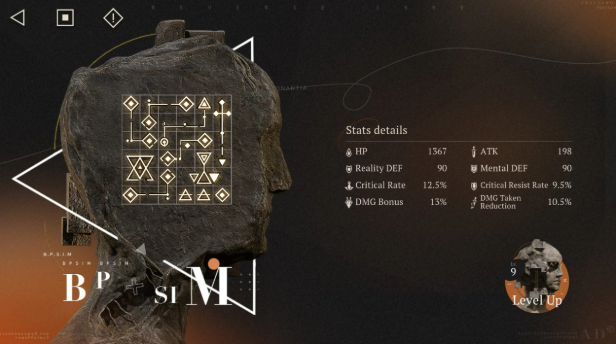
Introduction to Resonance System
A. Game Overview: Turn-Based Tactical RPG
Reverse: 1999 isn’t your usual auto-grind gacha — it’s a turn-based tactical RPG. You gather Arcanists (characters), build teams, and fight through story stages or content like “Limbo.” Combat uses a card-based incantation system, and character progression involves multiple layers: level, insight, psychubes... and yes — resonance.
B. Character Progression and Development
Every character in Reverse: 1999 has core stats (HP, ATK, defenses, etc.), Insight (I0–I3), and can equip a Psychube for extra bonuses. On top of that, Resonance acts as a customizable stat-boosting system that lets you tailor a character’s strengths — it’s basically the fine-tuning tool for serious players.
C. Resonance Mechanic Definition
Resonance is like a grid-based “puzzle upgrade” system. Think of it as a talent-tree + tetris-grid mashup: as you increase a character’s Resonance level, you unlock a larger grid. Then you slot “tiles” (with stat bonuses) into that grid — your layout changes your buffs.
D. Importance of Resonance in Gameplay
Without solid Resonance, even “top-tier” units can feel weak. Resonance significantly affects raw stats and can make or break a character’s viability, especially for late-game content or harder modes. Many veteran players consider Resonance just as important as level or insight.
E. Resource Management Significance
Resonance doesn’t come free — it uses special materials (from end-game content or shops), and farming/using them requires planning. Since resources are limited (especially for F2P or casual players), you need to choose carefully who and when to invest. I’ll show you how I think best to allocate.
Understanding the Resonance Puzzle System
Okay, now that you know what Resonance is — let’s get under the hood and talk mechanics, puzzle grids, and how this “tetris-stat-board” actually works.
A. Grid Mechanics: How Resonance Levels Unlock Space
As your character’s Resonance level increases, the “brain grid” they have for placing tiles expands. According to guides:
Early resonance: small grid, limited tile slots.
Mid-game: more slots open, giving room to mix a few tiles.
High resonance: full grid — means maximum flexibility and stat gains.
Although exact grid sizes by level aren’t always publicized, data suggests that once you hit certain thresholds (like R9 or R10), you’ll have near-maximum layout options.
B. Resonance Pieces / Tiles: Types and Shapes
“Tiles” (sometimes called ideas) are the building blocks. Each gives bonuses — ATK, Crit Rate/Damage, DEF, HP, or mixed stats. Tiles come in various shapes: single-block, multi-block (like cross, L-shapes), larger composite shapes.
Because shapes vary, slotting them efficiently becomes a puzzle — bigger tiles often carry stronger bonuses but are harder to fit.
C. Placement & Rotation Strategy: Fit Smart, Not Hard
Because you can rotate tiles, optimal placement matters. A big piece that boosts ATK might be great — but if it blocks space for other useful tiles (like Crit or DEF), it could be suboptimal. Good players rotate, test fits, and aim for efficient layouts: maximizing coverage while leaving space for other shape tiles.
From what I’ve learned (and screwed up a couple times): corners and edges are your friends — they help anchor big tiles while leaving center space for flexible small bonuses.
Resonance Materials and Resource Requirements
You don’t just level up Resonance with dust — there are special materials needed. Let’s go through them.
A. Primary Material Types
Resonance upgrades consume resources from special shops or event drops (for example, from “Crystal Caskets” or oneiric-mode rewards).
Materials often have fancy names (in the community: “Cacophony”, “Moment of Dissonance”, etc.), depending on rarity and what resonance level you're aiming for. High levels require rarer, more expensive stuff.
B. Secondary Materials and Character-Specific Items
Beyond general materials, late resonance levels may require character-specific materials (rare drops, unique items), especially if you want to maximize output for 5★ / 6★ units.
Because of this, blindly pumping resonance on every character is a trap — you’ll burn materials fast and hit diminishing returns.
C. Farming and Acquisition: Where to Get Materials
The game unlocks a special mode (often “Artificial Somnambulism” / Dream-walking / high-level content) where you can farm resonance materials. After beating the early chapters (Stage 3-2), Resonance unlocks — and so does access to material farming.
My advice: treat materials like gold — early-game, reserve them; mid-game, target your main DPS; late-game only go all-in if you know what you’re doing.
Resonance Levels and Progression Breakpoints
Not all resonance levels are equal. The benefit curve is steep early, then flattens. Understanding where to stop is key.
A. Early Game (Resonance 1–5)
Grid small but enough for 2–3 basic tiles (great for early stat boost).
Cheap material cost; good early-game bang for buck.
Ideal for beginners or when you have many characters.
At this stage, Resonance helps with progression and makes early content smoother.
B. Mid-Game (Resonance 6–9)
Grid expands, more tiles possible — ability to tailor balance (some ATK, some DEF or Crit).
Stat gains more noticeable — increase in survival, damage, consistency.
Good time to pick your core team and commit somewhat wisely.
For support/sub-DPS or utility characters, aiming for R7–R9 tends to be a “sweet spot” — good bonuses without big investment.
C. Critical Breakpoint: Resonance 9 → 10
From many guide sources: R10 is the real “max grid unlock” milestone — most end-game players consider this the goal for main DPS.
Full grid unlock, maximum tile capacity.
Stat gains (when optimized) are often the difference between good performance and elite performance.
After R10, resonance levels (11–15) give diminishing returns relative to material cost — many skip.
If I’m only powering one main carry, I push to R10. For backup/supports — R7–R9 is plenty.
Character-Specific Resonance Strategies
Not all characters should be treated equal. Your build should depend on character role (DPS, support, healer, tank, etc.).
A. Main DPS — Push to R10
For heavy hitters (carries like Lucy, Jiu Niangzi, or other high-output units):
Prioritize ATK → Crit Rate → Crit Damage tiles.
Reach R10 to get max grid and performance.
Use high-tier Psychube to complement resonance boost (since psychube + resonance = ~half your overall stat potential)
My own Lucy ended up decimating content once I got her to R10 with crit-focused layout.
B. Support / Sub-DPS / Utility — Aim for R7–R9
For characters not carrying DPS but offering buffs, debuffs, healing or utility (like buffers or hybrid units):
Go for balanced tiles — maybe a mix of DEF, HP, passives.
No need to invest heavy late-game resources; R9 is generally enough.
Focus more on synergy (psychube, team comp) than raw resonance power.
C. Healers / Tanks / Survivability Units — Defensive Build Focus
For roles needing durability:
Prioritize HP, Mental/Reality DEF, maybe some DEF + HP tiles.
R7–R9 enough in most cases (since you want consistency, not burst).
Use tiles that offer stability over damage output.
D. Lower-Rarity or Temporary Units (4★ / 5★) — Keep Resonance Low
Unless you plan to keep them long-term, burning materials on low-tier units is usually wasteful.
Aim for R3–R5 for small stat boost.
Prioritize resources for your permanent squad.
Resonance Stat Optimization and Build Philosophy
Resonance isn’t just “more = better” — you need to build smart. Stats you care about vary by role.
A. Primary Stat Categories
Here are the main stats you can target with Resonance tiles: ATK, Critical Rate, Critical Damage/Bonus, Reality DEF, Mental DEF, HP, sometimes mixed boosts.
B. Balanced Build Philosophy (for Survivability + Damage Balance)
If you don’t want a glass cannon, here’s a layout philosophy:
Maintain a decent DEF floor (Mental + Reality) so you don’t get one-shotted.
Balance ATK and CRIT so your damage stays consistent.
Add HP if unit gets targeted a lot (tanks/healers).
C. Specialized Build Types
Depending on character and role:
Pure Crit Build: high Crit Rate, Crit Damage, moderate ATK — great for burst DPS, but fragile.
ATK Build: higher base ATK, moderate crit — consistent damage output.
Defensive Build: prioritize DEF/HP over damage — ideal for tanks/healers.
Hybrid Build: mix balanced stats, useful for versatile characters or sub-DPS/support hybrids.
Piece Selection and Puzzle Design Strategy
Here’s where the “grid puzzle” part comes in. It’s not just slapping tiles — placement matters.
A. Priority Tile Selection
The highest-rarity tiles (often larger shaped ones) usually give best stat per cell — slot them first.
Make them your “main piece” before adding smaller filler tiles.
B. Secondary / Filler Tiles
After main tile placed, use smaller tiles to fill gaps — like Crit boosts, DEF support, HP, etc.
C. Efficient Arrangement Tips
Use corner/edge placements for big tiles — these naturally reduce “wasted” grid space.
Rotate tiles when needed — sometimes a rotated shape fits where straight placement doesn’t.
Aim for minimal gaps — empty space is wasted stats.
When I first tried this, I accidentally locked myself out of efficient builds because I filled center first — don’t make that mistake