Chasing Kaleidorider: A Player’s Deep-Dive Guide to the Motorcycle Romance RPG Everyone’s Side-Eyeing (In a Good Way)
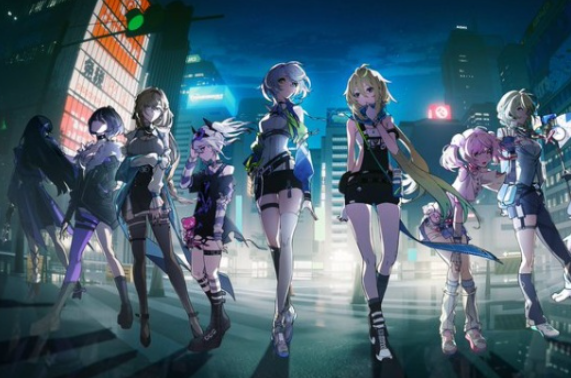
If you’ve been hanging around gacha circles lately, you’ve probably seen “Chasing KaleidoRIDER” pop up with the kind of trailer energy that makes you pause your scroll: neon city, motorbikes, stylish girls, and a vibe that screams “we’re doing romance and action and we’re not pretending we’re shy about it.” Officially, it’s being positioned as a 3D romance RPG where you team up with motorcycle-riding girls called Kaleido Riders to investigate bizarre incidents in a near-future metropolis, while also building relationships that clearly matter to the narrative.
What makes Chasing Kaleidorider feel “special” (at least from a player-hype perspective) is that it’s not trying to be the 900th fantasy open-world clone. It’s leaning into a very specific fantasy: high-speed urban chases + supernatural threats + character-driven romance routes + anime-styled cinematic flair. And yeah, it’s also tied to a big corporate umbrella—Fizzglee Studio is widely reported as a Tencent Games subsidiary—so expectations are naturally high, whether you’re excited or cautious.
I. Introduction & Why Chasing Kaleidorider Feels Different
At a basic level, Chasing KaleidoRIDER is being marketed as a “RIDER Girl DokiDoki RPG”—which is a fancy way of saying the “main dish” is character relationships and story tension, while the “side dish” is combat and progression. A lot of romance RPGs either go full visual-novel with minimal gameplay, or they go full combat with romance as a decorative UI tab. This one looks like it’s trying to sit in the middle: cinematic narrative + actual combat loops + relationship-driven power/plot beats.
The other big “stand out” point is the motorcycle identity. Bikes aren’t just a skin or a mount; they’re part of the brand and (apparently) part of the combat presentation—pursuit-style scenes, chase framing, speed-focused mechanics. It’s basically saying: “You’re not a wandering swordsman. You’re a Navigator in a city, and your squad fights like a moving strike team.”
And if you’re the kind of player who binges sci-fi romance anime, likes cyberpunk city atmospheres, or just wants a gacha that isn’t pretending it’s not about the characters, this is exactly the sort of thing that lands. The game’s own marketing leans hard on the idea that you’re not just collecting units—you’re building bonds with a core cast in a story where feelings and trust matter.
II. What Is Chasing KaleidoRIDER?
Think of it as an interactive story-driven RPG where:
You play the role of a Navigator (basically the human anchor in the chaos).
You team up with Kaleido Riders (motorbike girls with special abilities).
You investigate supernatural incidents in a near-future city (often described as Terminus).
You fight threats commonly referred to as Hysteria, connected to darker human impulses and weird reality overlap.
You progress through story chapters, relationship scenes, combat missions, and character growth systems that likely feed into each other.
What’s important here is the vibe: it’s framed like an anime romance thriller with action set-pieces, not like a traditional “farm gear, clear stages, repeat” gacha. The stages might still exist (it’s still a gacha RPG ecosystem, let’s be real), but the hook is the “TV-season” feeling—characters that talk, react, change, and remember what you do.
Also, from the way it’s been introduced in gaming coverage and official snippets, it’s not trying to be reflex-heavy. It’s not selling itself as a parry-timing action game. It’s selling itself as choice, strategy, and pacing—the kind of game you can play with one hand while you’re emotionally invested with the other.
III. The Setting: Terminus, Hysteria, and That “Something’s Wrong With Reality” Energy
The setting is doing a lot of heavy lifting. Terminus is basically the stage: a near-future city where flashy tech and normal life exist side-by-side… until the supernatural starts bleeding in. The inciting concept that keeps showing up in descriptions is some form of “Integration”—a collision between reality and a realm shaped by human consciousness (often described as a “Sea of Unconsciousness”). The result: anomalies, delusions made physical, and threats that don’t behave like normal enemies.
This is actually a smart narrative setup for a gacha romance RPG, because it gives you:
A reason why the city can have both “daily life” scenes and “boss fight” scenes without feeling like two different games.
A reason why characters can have secret identities (Riders blending in among humans) without it being corny superhero logic.
A justification for emotional themes—fear, desire, obsession—because the enemies are literally tied to negative impulses and psychological distortions.
In other words, the worldbuilding isn’t just wallpaper. It’s structured so romance, trust, betrayal, and “who are you really?” questions can naturally exist alongside the action.
IV. The Player Role: Navigator and the “Kaleido Vision” Hook
A lot of games say “you are special” and then never do anything with it. Here, the Navigator concept is at least designed to matter: you gain a perception ability (often described as Kaleido Vision) that lets you detect or understand the supernatural threat better than normal people can.
That does two important things:
It explains why the Riders stick with you—because you’re not just a commander UI; you’re a narrative keystone.
It frames romance/relationship progression as something more meaningful than “give gifts, increase affection.” If the story leans into it, intimacy might not just unlock voice lines; it could unlock story routes, character power evolutions, or alternate outcomes.
And from a player perspective, that’s the difference between “cute waifu collector” and “actual character RPG.” If the game follows through, your role becomes the emotional and tactical center, not a silent vending machine for pulls.
V. Main Character Roster: The Core Riders You’ll Keep Seeing
Based on early introductions and the way the game presents itself, there’s a core cast that keeps showing up in promotional material—names like Prome, Nana, UC, and Adodol have been repeatedly highlighted.
Here’s what I expect as a player (and what you should mentally prepare for):
Core cast characters are likely story-locked companions (you’ll meet them early, they’ll be relevant in key scenes).
Gacha recruits will probably expand the roster beyond that core cast (more Riders, side characters, maybe rival factions).
Relationship systems usually focus most deeply on the main cast first, then branch out to additional recruits later.
If you’ve played character-driven gachas before, you know the pattern: the “poster girls” get the best writing, the best cinematics, and the most emotionally loaded story arcs. The rest fill in gameplay niches and optional romance paths (if the game supports multiple routes).
VI. Gameplay & Combat: Semi-Real-Time Card Battles (But With Chase Flavor)
Now for the part people always underestimate: the combat system.
Chasing KaleidoRIDER is often described as having a semi-real-time card battle system, where a squad (commonly framed as a four-Rider team) uses skills represented as cards. Instead of twitch-reflex action, the tension is in timing, resource management, and sequencing.
If you’ve never played a “semi-real-time card combat” RPG, the best way to picture it is:
You’re not waiting for a strict turn order like classic JRPGs.
You’re also not spamming skills like an action ARPG.
You’re responding to pacing windows: cost points, skill cooldown rhythms, and “burst moments” where the game wants you to combo.
And the motorcycle framing makes it feel like you’re always in motion—even if the underlying logic is “play cards, manage cost.” That matters because presentation changes how combat feels. A lot of gachas have decent mechanics but boring delivery. If this one nails the chase vibe, even routine fights can feel like set-pieces.
VII. The Speedometer Mechanic: Why It Might Be the Real Skill Check
This is the kind of gimmick that sounds cosmetic until you realize it’s probably the core “tempo” system.
The pitch is: your actions charge a speedometer, and when it hits a threshold (often framed like 100 km/h), you can trigger a burst mode—sometimes described as a “total attack” style moment that spikes your output or efficiency.
From a player-brain perspective, that means:
Every skill you play isn’t just “damage vs heal”—it’s also “how fast am I charging my spike window?”
The best players won’t just pick strong cards. They’ll pick sequences that line up bursts with enemy break states, boss phases, or synergy triggers.
Your team comp might be built around “fast charge + explosive payoff” or “slower charge + safer sustain,” depending on content.
If the game wants to be more than a visual novel with combat attached, this is where they can do it: make the speedometer the thing you master.
VIII. Toughness & Break System: The Classic “Crack the Shield, Then Delete Them”
If there’s a toughness/break mechanic, you can safely assume the game is encouraging two layers of strategy:
Setup phase: hit weaknesses, apply pressure, break defense.
Punish phase: dump your burst skills when the target is vulnerable.
This is gacha design 101 now, but it’s popular because it works. It gives you a reason to bring different unit types, it creates “timing skill,” and it makes bosses feel like puzzles instead of HP sponges.
If the speedometer burst lines up with break windows, that’s where the “I feel smart” gameplay loop happens: you’re not just winning because your numbers are bigger—you’re winning because you played the moment correctly.
IX. Synergies & Team Building: Why Four-Rider Squads Can Get Spicy
A four-character squad is a sweet spot. Three often feels too tight (you can’t cover roles), and five can get messy (too many interactions). Four lets designers create:
A primary damage dealer
A breaker or control unit
A support/healer
A flex slot (sub DPS, buffer, debuffer, niche tech)
If the game supports synergy attacks—combined moves triggered by sequencing—then the “best team” won’t just be “highest rarity.” It’ll be “most consistent synergy loop.” That’s what makes team-building guides fun: you can argue about value, rotations, burst cycles, and whether a comp is “smooth” or “clunky.”
And yes, motorcycle upgrades (if they feed stats or combat perks) could become another layer: the bike isn’t just aesthetic; it becomes part of your build identity.
X. Character Progression: Levels, Skills, Bikes, and Relationship Power
In a romance RPG gacha, progression usually has multiple tracks:
Character level (base stats, unlock thresholds)
Skill upgrades (cooldowns, multipliers, new effects)
Equipment or bike upgrades (build specialization, stat shaping)
Affinity/relationship level (story scenes, bonuses, route unlocks)
The trick is whether relationship progression is purely narrative or partially mechanical. If the game dares to make bonds influence combat (even subtly), it instantly becomes more immersive. Suddenly, caring about a character isn’t “roleplay”—it’s a real part of optimization.
As a player, I always hope the balance is: romance gives meaningful benefits but doesn’t force you into one “meta girlfriend.” Let players pick favorites without feeling punished.
XI. Gacha & Acquisition: What to Expect Without Overpromising
We don’t have a full public breakdown of rates, pity rules, banner cycles, or monetization details in the outline you provided, so the honest expectation-setting is:
It’s likely free-to-play, with gacha recruitment for expanding the roster.
There will probably be rarity tiers and role coverage per tier.
The core story cast may be partly guaranteed, while variants/alternate Riders are gacha.
If you’ve played any modern anime gacha, you already know the emotional trap: the story makes you love a character, then the banner appears. The healthiest way to approach it is to decide early whether you’re playing for romance routes (collection-driven) or for combat depth (meta-driven). Your spending and saving plan looks totally different depending on that answer.
XII. Romance & Relationship Systems: “DokiDoki” Isn’t Just a Label Here
This is where Chasing Kaleidorider is very intentionally planting its flag.
Romance content in RPGs often feels like optional fluff. Here, it’s being marketed as an emotional core: heart-stirring romance, intimate character moments, and relationship growth that likely unlocks scenes and changes interactions.
If the writing is strong, romance routes can become the reason you replay chapters or explore alternate choices. If the writing is weak, it becomes cringe fast. So the key thing to watch (especially during CBT impressions) is:
Are the characters distinct beyond surface tropes?
Do relationship scenes feel earned, or like “fanservice checkpoints”?
Does the Navigator feel like a real person in the story, or a blank slate?
The best romance RPGs make you feel like your choices are shaping dynamics. The worst ones make you feel like you’re clicking through an affection menu.
XIII. Release Info & CBT: What We Know (And What to Watch For)
The headline that matters for players is the NAVI Test / Closed Beta Test, which has been publicly announced with a date: September 12, 2025 (with server timing details shared through official channels).
In practical player terms, CBT usually answers the questions that trailers can’t:
Does the combat feel good minute-to-minute?
Is the UI smooth or cluttered?
Are the story scenes well-paced or bloated?
Do devices run it without overheating into a handheld stove?
Is it generous enough early to let you test team building?
If you’re planning to try CBT, your best mindset is: don’t just chase hype—use it as a reality check. Try to see the loop beneath the aesthetics.
XIV. Platform Availability: Mobile, PC, and the Cross-Play Dream
The outline frames the game as targeting iOS, Android, and PC. For players, PC support is usually a big deal because:
Visuals look better (higher resolution, stable framerate).
Controls can be smoother for menu-heavy games.
You can multitask (auto-grind while working, let’s be honest).
If cross-save/cross-progression exists, that’s the ideal: play story and romance scenes on a big screen, do daily chores on mobile. If it doesn’t exist, then you’ll have to choose your “main platform” early to avoid account regret.
XV. Official Channels & Social Media: Where Codes, CBT Links, and News Usually Drop
In gacha ecosystems, official channels are basically the bloodstream of the community. If you want to keep up with Chasing Kaleidorider without relying on rumor mills, prioritize:
The official website for structured announcements and sign-up pages.
The official X/Twitter account for rapid-fire updates like server times, CBT reminders, and campaign links.
And if the game runs a Discord community (common for CBT feedback loops), that’s typically where player-to-player problem solving happens first: bugs, translations, performance fixes, “which character is secretly broken,” all that good stuff.
XVI. FAQ: The Questions Players Actually Ask
“Is this a pure dating sim?”
Not really, at least not by how it’s being positioned. Romance seems important, but it’s wrapped in a larger story about a city-wide supernatural crisis and a squad-based combat loop. If you want pure romance-only VN vibes, this may feel too “gamey.” If you want action-only, it may feel too “feelings-forward.”
“Do choices matter?”
In romance RPGs, choices usually matter in two ways: route gating (who you get closer to) and outcome branching (how scenes resolve). CBT impressions will reveal whether choices are real branches or just flavor text.
“Is it free-to-play?”
The genre strongly suggests yes, but the responsible player assumption is: free entry, monetization through gacha + cosmetics + progression packs. Wait for official details before you treat that as confirmed.
“Will it be global?”
Testing regions and language support are the strongest hint. If official comms keep using EN/JP channels and the CBT is open in major regions, it usually means global ambitions.
“What’s the unique hook?”
Motorbike-chase presentation + speedometer burst system + romance-forward narrative identity. If those three click, it’ll build a loyal niche fast.
XVII. What We Don’t Know Yet (And Why That’s Okay)
Even with hype, it’s healthy to admit the unknowns:
Exact global launch date (beyond CBT windows)
Full gacha system details (rates, pity, banner scheduling)
Endgame design (boss raids? story-only? challenge towers?)
PvP existence (many romance-driven gachas avoid it)
Long-term content cadence (events, seasonal updates, story drops)
And honestly, that’s normal. Early-stage games always show the “hook” first. The real question is whether the dev team can deliver stability, pacing, and fair progression once the honeymoon hype fades.
If you’ve been craving a gacha RPG that feels like it actually wants to be a character drama—and not just a spreadsheet with pretty PNGs—Chasing KaleidoRIDER is absolutely one to watch. The near-future city setting, the “Navigator + Kaleido Vision” narrative framing, and the chase-styled combat presentation all point toward a game that’s trying to build an identity beyond “another banner, another patch.”
From a player perspective, my honest recommendation is this: treat the NAVI Test / CBT as your truth moment. If the combat feels strategic (speedometer + break timing), if the UI respects your time, and if the romance writing lands without feeling forced, this could carve out a real lane in the market. If it ends up shallow—pretty cutscenes stapled onto grind—then it’ll still have fans, but it won’t become that game people talk about for years.