pokemon sleep tier list — The 2026 Player’s Tier List & Team Guide
If you’ve been playing Pokémon Sleep for more than a week, you’ve probably had this exact moment: you finally get a “good” Pokémon, you dump candies into it, you feel proud… and then your Snorlax Strength still feels kind of mid compared to what you see online. That’s when the real truth of the game hits you—Pokémon Sleep isn’t about one “strong” mon, it’s about help speed, what your main skill is doing over time, whether the Pokémon matches the island, and whether your sub-skills/nature actually support its job.
So this pokemon sleep tier list isn’t just “S is good, B is bad.” I’m writing this like a player who’s been through the growing pains: I’ll explain why certain helpers are top tier, when “meta picks” aren’t actually your best pick yet, and how to build teams that feel good whether you’re F2P, low-effort, or trying to min-max every week.
This guide follows your outline: methodology, S-tier berry and ingredient specialists, top skill specialists, island-specific rankings, evolution impacts, beginner team templates, main-skill proc strategy, sub-skill value, nature/shiny factors, event helpers, community consensus, low-effort F2P teams, expedition tips, meta shifts in 2026, tools (RaenonX), a full snapshot-style tier breakdown, and an FAQ.
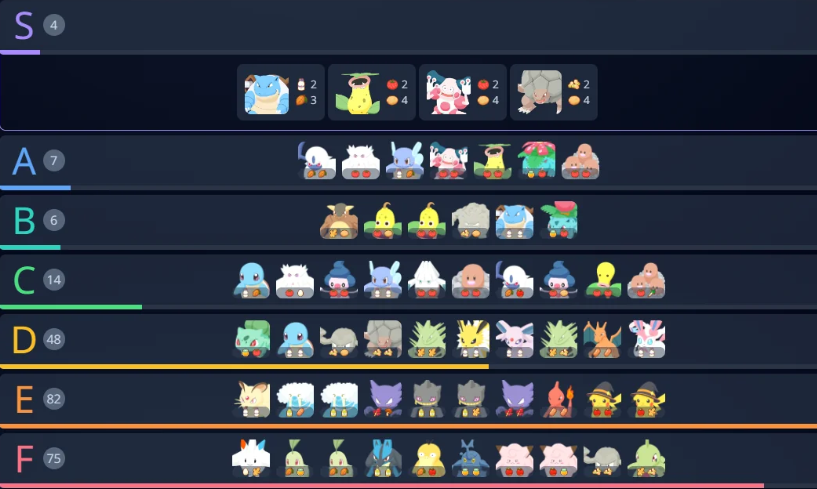
I. Tier List Methodology
A. Frequency (Help Speed): Snorlax Strength per hour
In Pokémon Sleep, everything comes back to one brutal metric: how much Strength your team generates per hour. That Strength comes from berries, cooking (ingredients → dishes), and main skills, but the “engine” that powers all of it is help frequency—how often your helper produces something.
This is why two Pokémon of the same species can feel wildly different:
One has a great nature and speed sub-skills and “prints” berries/ingredients all day.
The other is slow and looks cute but feels like it’s doing part-time work.
B. Skills: Main/Sub procs (Charge Strength, Energy Recovery, etc.)
Main skills are basically “power spikes on a timer.” Some are direct Strength injections (Charge Strength), some are sustainability engines (Energy for Everyone / Charge Energy), and some are cooking accelerators (Cooking Power-Up) that indirectly snowball your weekly output.
For quick reference, Charge Strength and other main skills are documented and widely discussed because they directly affect Snorlax Strength scaling. (You can see the official-style skill list and baseline descriptions on Serebii.)
Game8 also maintains a main-skill list and explains things like Cooking Power-Up being a one-meal pot boost, which matters a lot when you’re planning proc timing.
C. Island Match: biome specialists (e.g., Walrein on Snowdrop)
Island synergy matters more than most new players expect. A Pokémon that’s “A-tier overall” can become “S-tier on the right island” just because it matches the weekly berry favorites and your team stops fighting the map.
Island info and unlock requirements are stable references, and you can cross-check area details like Cyan Beach, Taupe Hollow, Snowdrop Tundra, and Lapis Lakeside on Serebii and Pokémon GO Hub.
Walrein specifically gets called out by Pokémon GO Hub as a key Snowdrop performer due to being a strong berry collector and also useful on ingredients via Ingredient Magnet.
D. Community consensus (Reddit / TierMaker)
Tier lists in Pokémon Sleep are famously opinionated because players value different things (cooking vs berry rush vs shard farming). That said, the community does converge over time, and you can see it in:
recurring Reddit threads that discuss “best for Lapis,” “best for Snowdrop,” etc.
community tier projects and survey-style ranking posts
and tools like RaenonX that provide structured tiering + a Pokémon rater
So my methodology here blends:
help speed / output over time,
main skill impact,
island matchups, and
community consensus.
II. S-Tier Berry Specialists
Berry specialists are the “sleep economy” kings because berries are guaranteed value, require no recipe planning, and scale extremely well with help speed. If you want a team that feels consistent even on lazy weeks, berry specialists are your best friends.
A. Feraligatr — Charge Strength S (Cyan Beach king)
If you’ve spent time on Cyan Beach, you already know why people love the Totodile line: when it’s built well, it’s a weekly anchor that keeps your Strength climbing even if your cooking is messy.
Why it’s S-tier in practical terms:
It’s reliable: steady berry value plus a main skill that can spike Strength.
It loves island alignment: Cyan Beach is a place where Water-type lines feel naturally at home.
It scales with investment: the more you improve its speed and consistency, the more it rewards you.
Also, community consensus tends to put top Water berry lines very high—especially when players prioritize consistent weekly output rather than niche gimmicks.
Player tip: Don’t judge Feraligatr by a low-level copy. The line’s “this is insane” feeling starts when you get decent sub-skills/nature and stop starving it of candy upgrades.
B. Typhlosion — Berries S (Taupe Hollow meta)
Taupe Hollow is the island where you learn that “matching the biome” is not optional if you want your week to feel smooth.
Typhlosion shines because:
It fits Taupe’s general vibe and rewards fast berry output.
It performs well in a straight-up “Strength per hour” race.
It’s also widely mentioned in tier discussions and YouTube breakdowns as a top performer.
Player tip: If you’re Taupe-focused and you’re not building at least one strong berry engine, you’ll feel like your Snorlax is always behind where it should be.
C. Meganium — Lapis Lakeside Durin specialist
Lapis Lakeside changed how people think about “late-game island planning.” It’s not just harder; it’s also more punishing if your team is off-theme.
Meganium keeps showing up in Lapis discussions as the berry pick players rely on—especially in community convos about “best berry mon for Lapis.”
Lapis Lakeside itself (unlocking and island details) is documented and has become a standard milestone island for progression.
Player tip: If you’re building for Lapis, don’t treat Meganium as optional. Treat it as “one of the easiest ways to make the island stop feeling like punishment.”
D. Raichu — Pichu evo, universal collector
Raichu is the classic “starter-friendly, endgame-viable” pick. The Pichu line is accessible, evolution pays off, and Raichu tends to remain useful across a lot of weekly setups because it’s just a strong generalist berry producer when built properly.
This is why so many players consider the Raichu line one of the best early long-term investments (and why “Raichu line best starter” appears so often in community Q&As and tier list discussions).
III. S-Tier Ingredient Specialists
Ingredient specialists become “S-tier” the moment your cooking starts carrying your week. If you’re at the stage where you consistently cook strong recipes (or you’re trying to), ingredients are where your biggest Strength spikes come from.
A. Cramorant — Tasty Chance S
“Tasty Chance” is the kind of skill that feels random… until you realize that over a week it’s basically a multiplier on your best meals. When it procs consistently, you stop relying on perfect ingredient planning because it helps turn “good meals” into “great meals.”
B. Blissey — Energy for Everyone S
Blissey is famous because it turns your whole team into better versions of themselves. Energy is the hidden stat that makes everything smoother: higher energy means more frequent helps, which means more berries, more ingredients, and more skill chances.
Bulbapedia’s Pokémon Sleep skill documentation highlights Energy for Everyone as a main skill that restores energy to each helper, and patch notes/skill changes are tracked there as well.
Community tier discussions also repeatedly treat Blissey as a top-tier “team engine” pick.
Player tip: If your team feels sluggish, Blissey is one of the most “plug it in and feel the difference” helpers in the game.
C. Aggron / Clodsire — Charge Energy S
Charge Energy style skills are the opposite of flashy but extremely valuable long-term. The more your team can stay energetic and consistent, the less your week depends on luck.
Serebii’s main skill list and Bulbapedia’s Sleep skill coverage help confirm which skills exist and what they do at baseline.
D. Farfetch’d — Charge Strength S
Charge Strength is the simplest “I want more Snorlax Strength now” skill. When it procs enough, it’s basically direct weekly progress.
Game8’s skill list includes Charge Strength and other core skills, which helps anchor how these procs function.
IV. Top Skills Specialists
This section is about the “skill meta.” Some Pokémon are strong not because their berries or ingredients are insane, but because their main skill is so valuable that you build around it.
Quick Skill Table
| Skill | Pokémon examples |
|---|---|
| Cooking Power-Up S | Magnezone, Glaceon |
| Energy Recovery / Energy engine | Gardevoir |
| Helper Boost | Raikou / Entei / Suicune |
| Berry Burst | Sceptile, Braviary |
Cooking Power-Up S being a one-meal pot-size boost is important because you can waste it if you cook immediately with low ingredients. Game8 explains this “next meal only” behavior clearly.
And for baseline skill existence and naming, Serebii is a solid reference for what main skills do in Pokémon Sleep.
Why these skills matter in real play
Cooking Power-Up S: lets you push bigger recipes earlier than your base pot would allow, accelerating dish leveling and weekly meal Strength.
Energy recovery: makes your entire week smoother by increasing help uptime.
Helper Boost: supports team-wide tempo and can be insane in burst windows.
Berry Burst: turns a berry-focused week into a speedrun.
V. Island-Specific Rankings
This is where tier lists stop being abstract. The “best Pokémon” changes depending on where you are.
A. Cyan Beach: Feraligatr, Raichu, Shuckle
Cyan Beach is commonly described as an early-mid island with Water presence and a progression step after Greengrass.
Feraligatr thrives here because the environment and berry preferences often favor Water-focused progress strategies.
Raichu stays strong as a generalist, and Shuckle can be valuable depending on your cooking/ingredient plans and how you’re building your team that week.
B. Taupe Hollow: Typhlosion, Tyranitar
Taupe tends to reward strong berry engines and stable output because it can feel “slow” if your team isn’t aligned. Typhlosion is one of the most consistently praised picks here in community and content discussions.
Tyranitar is often treated as a high-investment project that pays off once you can support it.
C. Snowdrop Tundra: Walrein, Alolan Ninetales
Snowdrop is where cold-biome specialists shine. Walrein is frequently cited as a Snowdrop performer due to berry collecting plus Ingredient Magnet utility.
D. Lapis Lakeside: Meganium, Quaquaval
Lapis Lakeside was added as a major milestone island and is specifically documented as a new research island with its own favorites and unlock requirement.
Meganium appears again and again in “best Lapis berry” discussions.
VI. Evolution Tier Impacts
Evolution is one of the most “quietly OP” mechanics in Pokémon Sleep because it often changes:
berry output,
frequency,
sometimes skill access (depending on the line),
and overall weekly efficiency.
A. Pichu → Raichu: massive berry boost
The Raichu line is one of the most recommended early evolutions because it tends to translate candy investment into immediate weekly strength.
B. Totodile → Feraligatr: Charge Strength unlock path
Totodile line growth is a classic “invest early, enjoy later” situation. Once you reach the stage where your evolved helper is functioning with good sub-skills, it stops being “a cute water mon” and becomes a weekly pillar.
C. Chikorita → Meganium: island specialty payoff
If you’re aiming for Lapis, Chikorita candy investment becomes much more attractive because Meganium has strong island synergy discussions behind it.
D. Candy farming: Snorlax ratings and weekly planning
Candy farming efficiency depends on:
how much you sleep consistently,
what research results you’re getting,
and whether you’re pushing to higher Snorlax ranks (more styles, better weekly outcomes).
VII. Beginner Team Templates
Pokémon Sleep technically uses five helpers, but most players build around a core trio that defines the week, then fill the last two slots with island specialists or ingredient needs. Your outline frames “3 max,” so I’ll treat these as your core three.
A. Balanced core: Raichu (berries) + Blissey (energy) + Gardevoir (recovery)
This is the “I want consistency and I don’t want to overthink” team spine:
Raichu prints steady berries.
Blissey raises the whole team’s uptime.
Gardevoir supports recovery/tempo so your helpers feel “awake” more often.
Energy-focused main skills and their definitions are covered in Bulbapedia’s Pokémon Sleep skill documentation.
B. Research-focused core: Cresselia + magnet specialists
If you’re pushing research goals (styles, shard economy, event value), Cresselia-type “event utility” helpers plus magnet/cooking specialists can be a strong approach—especially when you don’t need maximum Strength and you’re optimizing for long-term account growth.
C. Strength rush: Feraligatr + Farfetch’d
This is the “I want Snorlax Strength now” plan:
Feraligatr provides strong berry week output.
Farfetch’d offers Charge Strength spikes.
It’s straightforward and feels satisfying.
VIII. Main Skill Procs Guide
This section is where you stop feeling like procs are “random” and start treating them like something you can plan around.
A. Charge Strength: Typhlosion / Feraligatr
Charge Strength is the cleanest main skill: it directly increases Snorlax Strength, and over a week it can represent huge value if it procs frequently enough.
Serebii lists Charge Strength and other main skills with baseline descriptions.
Players also debate skill value (Charge Strength vs Cooking Power-Up, etc.) in community threads, and the consistent advice is that Charge Strength tends to be more universally helpful, especially earlier.
B. Energy Recovery: Gardevoir
Energy recovery is about preventing “team fatigue.” If your helpers are constantly low energy, they help less, and everything slows down.
C. Cooking Power-Up: faster/bigger meals
Cooking Power-Up is a skill you want to proc before your most valuable meal, not after you’ve already cooked or when you’re ingredient-poor. Since it applies only to the next meal, timing matters.
D. Ingredient Magnet: Plusle/Minun style synergy
Ingredient Magnet is the cooking player’s best friend because it smooths out ingredient shortages and lets you hit your recipes more consistently.
IX. Sub-Skill Value
Sub-skills are where Pokémon Sleep becomes a “build game” instead of a “collection game.” Two Pokémon of the same species can be different tiers because their sub-skills are basically their personality.
A. Dream Shard Magnet: Persian / Sableye / Lucario
Shard economy matters more the further you go. If you’re constantly broke on shards, shard magnet sub-skills can feel like an account stabilizer.
B. Tasty Chance: Dedenne / holiday Spheal-type picks
Tasty chance sub-skill value spikes when:
you’re cooking strong recipes regularly,
and you want consistency in dish multipliers.
C. Mimic: Ditto / Mime Jr.
Copy-style skills are fun and can be very strong, but their value depends heavily on what you’re copying and how consistently.
D. Nuzzle: Togedemaru cheer
Cheer/utility sub-skills often don’t show up on “damage tier lists,” but they can be the difference between a week that feels smooth and a week that feels scuffed.
X. Nature & Shiny Factors
A. Hardy / Adamant and specialty boosts
Nature is one of those systems that you can’t ignore if you care about optimization. A good nature can push a Pokémon up a tier; a bad nature can make an otherwise great species feel disappointing.
B. Shiny odds: research events
Shinies are mostly a bonus flex in Pokémon Sleep. If you want to shiny hunt efficiently, you generally do it during events that increase encounter volume or offer better odds.
C. Mint optimization tools (RaenonX)
RaenonX is one of the most-used community tools for Pokémon Sleep evaluation. It provides tier lists and also a “rate my Pokémon” function that many players use to judge whether a mon is worth investing in.
Player note: Tools don’t replace judgment, but they do stop you from wasting weeks of candy on a mediocre roll.
XI. Event & Holiday Helpers
Events can temporarily rewrite the meta because:
some event Pokémon have unusually strong skill/value profiles,
holiday variants often lean into shard/cooking utility,
and event bonuses can elevate normally “A-tier” picks to “S-tier for that week.”
This is why seasonal rotations matter and why some players build “event boxes” of helpers they only use during certain weeks.
XII. Community Consensus
A. Reddit r/PokemonSleep: Feraligatr hype
Community ranking projects and ongoing discussions consistently elevate certain staples, and Water berry engines (like Feraligatr line) are frequently celebrated for Cyan performance and overall consistency.
B. TierMaker averages: Blissey energy god
Energy engine Pokémon often rise in community voting because they make every other Pokémon better. You can see this logic reflected in community tier list projects and vote-based tier pages.
C. YouTube 2026: island metas shift
Video tier list updates (including early 2026 rankings) show how opinions shift with new islands and balance changes.
XIII. Low-Effort F2P Teams
If you’re F2P and you don’t want to overthink, here are teams that work because they’re built from accessible lines and focus on consistency.
A. Starter core: Cyndaquil / Totodile / Pichu evos
This trio covers:
a Taupe-leaning berry engine path (Cyndaquil → Typhlosion),
a Cyan-leaning berry engine path (Totodile → Feraligatr),
and a universal berry backbone (Pichu → Raichu).
B. No-shiny basics: Mareep / Shuppet style “good enough” picks
You don’t need shinies to progress. What you need is:
a few evolved helpers,
with decent natures,
and sub-skills that match their role.
C. Daily sleep: focus on 3 Snorlax ratings goals
Instead of trying to “perfect week” every week, aim for:
consistent sleep tracking,
steady weekly Snorlax rank improvements,
and incremental upgrades to your core helpers.
That consistency is how F2P accounts become strong.
XIV. Research Expedition Tips
A. Cresselia / Raikou style boosts
Event legendaries or special helpers can provide big value spikes depending on the event.
B. Gold sleep: 4+ sleep styles
The more styles you register, the more islands and content you unlock long-term (Lapis unlock requirements are a good example of this progression gating).
C. Platinum ranks: specialist stacking
If you’re trying to maximize weekly ranks, don’t run five “random good Pokémon.” Run a team that has a clear identity:
berry rush week,
cooking week,
or hybrid week with one anchor from each.
XV. Meta Shifts 2026
A. New islands increase specialist value
When new islands arrive, previously “generalist” tier lists shift because new berry favorites and encounter pools change.
B. Skill buffs push cooking meta
Skill behavior and balance tweaks can change which teams feel best. Bulbapedia’s skill pages even track certain version changes and skill adjustments, which is a reminder that the meta isn’t frozen.
C. Event Pokémon: temporary S+
Some event Pokémon are “S+ for two weeks” and then settle back down. That’s fine—use them when they’re hot, don’t overinvest if they won’t matter later.
XVI. Tools & Calculators
A. RaenonX Pokédex / tiers
RaenonX provides a Pokémon Sleep tier landing page and broader Pokédex tools.
B. Nature mint planner
If you’re optimizing nature outcomes and planning which Pokémon to keep or reroll mentally, planners help you avoid mistakes.
C. Proc simulators
Proc simulators are for the true grinders—useful when you want to estimate expected value over a week rather than trust “feel.”
XVII. Full Pokédex Snapshots
Instead of listing 50+ names and turning your eyes into static, here’s a snapshot-style guide you can actually use.
S Tier (examples)
Feraligatr (Cyan anchor, Charge Strength value)
Typhlosion (Taupe berry meta)
Meganium (Lapis specialist)
Raichu (universal berry backbone)
Blissey (team energy engine)
Walrein (Snowdrop standout)
A Tier (examples)
Strong island-conditional berry specialists
High-value ingredient magnets that feed top recipes
Utility skill mons that make your week smoother rather than higher ceiling
B–D Tier (examples)
Niche picks (only good on certain islands or in certain recipes)
Event-only helpers with temporary relevance
Pokémon that require too much investment for too little return unless you love them
If you want a structured tier list by tool consensus, check RaenonX’s tier page as a starting reference, then evaluate your own copies with their rater.
XVIII. FAQ & Updates
A. Best starter?
If you want a starter line that stays useful forever, Raichu line is one of the safest early investments because it’s accessible and consistently valuable across many teams.
B. Shiny hunt?
Shiny hunting in Pokémon Sleep is mostly about events and encounter volume. If you’re hunting shinies, do it when the game is basically encouraging it.
C. Team size?
Mechanically you run five helpers, but if you’re trying to build efficiently, think in terms of a core trio (berry anchor + energy engine + cooking/utility) and then fill the last two slots based on the week’s island and your recipe needs.
A good pokemon sleep tier list isn’t just “these are the best Pokémon.” It’s understanding the loop:
Help speed is your hourly engine.
Main skills are your weekly spikes (Charge Strength and Energy engines are the most universally impactful).
Islands change the meta—what’s “S-tier” on Taupe isn’t always “S-tier” on Snowdrop.
Evolution is one of the biggest power jumps per candy spent.
Natures + sub-skills decide whether your Pokémon is a superstar or a bench warmer.
Tools like RaenonX help you stop wasting resources on bad rolls.