Goddess of Victory: NIKKE — The 2026 Player’s “Actually Useful” Mega Guide
If you’ve been around Goddess of Victory: NIKKE for more than five minutes, you already know this game is a weirdly addictive mix of “I’ll just do my dailies” and “why am I still awake optimizing burst rotations.” It’s a shooter on the surface, but under the hood it’s a resource-management game with a side of gacha psychology and a main course of team-building. Once you understand the rules of how squads, bursts, Combat Power (CP), gear, and leveling interact, the game stops feeling like a wall simulator and starts feeling like a problem you can solve.
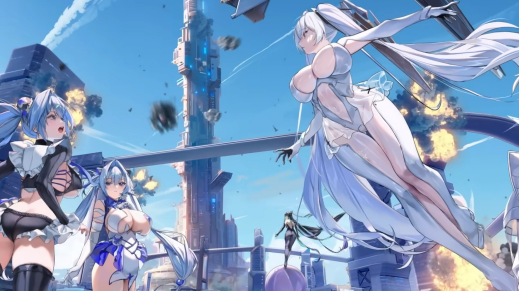
I. NIKKE Gameplay Fundamentals
A. 5-Nikke squads with B1/B2/B3 burst rotations
The core “language” of NIKKE combat is Burst rotation. If you don’t speak Burst, the game will feel like your team randomly wins or randomly explodes. The moment you understand Burst roles, you start controlling outcomes instead of praying.
A standard squad is 5 Nikkes, and you generally want:
1 Burst I (B1)
1 Burst II (B2)
2–3 Burst III (B3)
Why this structure? Because most meta teams want to reach Full Burst fast, then keep Full Burst rolling on cooldown, because Full Burst is where damage and tempo explode.
In practice, your rotation looks like this:
Build burst gauge quickly (by shooting, generating burst, and not dying).
Press B1 → B2 → B3 in sequence.
You enter Full Burst and your team starts doing what you actually recruited them for.
Repeat as soon as your burst cooldowns allow.
Here’s the part new players miss: cooldowns matter more than you think. A B1 with cooldown reduction (CDR) basically doesn’t just “support” your team—it makes your entire team function at a higher frequency. That’s why certain B1 units remain evergreen for years.
Also, “Burst balance” isn’t optional. If you run something like two B1s and no B2, you’re going to stare at your burst UI while bosses dunk on you. Don’t do that. The game is not forgiving about it.
A quick “player rule” I use when building any new team:
If I can’t Full Burst consistently, my team is not a real team yet.
If my team Full Bursts but feels slow, I need burst generation or cooldown reduction.
If my team Full Bursts but still can’t clear, I need either better B3 carry damage or better survivability (heals/shields/taunt/cover management).
If you take nothing else from this whole guide, take this:
Burst rotation is the skeleton of every squad. Everything else is muscles and accessories.
B. Combat Power (CP) calculation (levels, gear, skills)
CP is the gatekeeper. You can be a mechanical god on manual, but if you’re massively under CP, the game will slap you with penalties that make your shots feel like you’re firing foam darts.
Your CP comes primarily from:
Levels (this is the big one early)
Gear tier + gear level
Skill levels (very important mid/late)
Limit breaks / cores
Harmony Cube + Overload (later)
Bond levels and collection systems (slow burn, but real)
Here’s the “real talk” version:
Early game CP is mostly level + basic gear. Mid game CP is skills + proper gear + Synchro efficiency. Late game CP is Overload lines + cube optimization + targeted skill investment.
New players often panic about CP because they think it’s purely “power.” It’s not purely power—but it’s a brutally accurate measure of whether the game will let you brute-force content on auto. When you’re near the recommended CP, your team behaves normally. When you’re far below, enemies become bullet sponges and you get punished hard.
So when you hit a wall, don’t just spam attempts. Ask:
“Am I under CP because my levels are behind?”
“Did I neglect skills on my carry?”
“Is my carry using trash gear while I upgraded random pieces on random Nikkes?”
“Am I wasting resources on units I’m not using?”
The solution is usually not “play harder.” The solution is usually “invest smarter.”
C. Manual control for bosses vs auto for farming
Auto is fine… until it isn’t.
Here’s how I treat it:
Auto for farming: campaign stages you out-CP, resource stages, daily repetition, low-stakes content.
Manual for bosses / tight clears: anything where target selection, burst timing, or survival matters.
Manual matters because:
You can focus fire cores / weak points.
You can time bursts when boss is vulnerable instead of wasting them into invulnerability or downtime.
You can aim for interrupts (and yes, interrupts are basically “know the fight or suffer”).
You can control cover usage and stop your AI from face-tanking like it’s trying to speedrun your defeat.
If you’re trying to clear a boss and you’re close, manual often turns a “no chance” into a clear. It’s not even about being cracked; it’s about making one or two correct decisions:
Burst now vs burst later
Shoot core vs shoot adds
Break interruption circle vs ignore it
Save cover vs greed DPS
Auto doesn’t understand the fight. You do.
D. Surface reclamation story campaign
The campaign is not just story—campaign is your account progression backbone.
Campaign unlocks:
systems (Synchro Device, modes, resources)
better Outpost income
access to higher-tier interception/raids/tower floors
and, most importantly, the ability to farm more efficiently
If you’re ever unsure what to do, default to:
push campaign until you hit a real wall, then farm smarter and come back stronger.
II. Complete 2026 Tier List Overview
Tier lists are always a little controversial because context matters (campaign vs raid vs PvP), and investment matters (a “mid” Nikke with max Overload can outperform a “top” Nikke at base). But if you want a practical 2026 overview, you can treat tiers like this:
SSS = “build-around, makes content easier, stays relevant”
SS = “elite support/core unit, upgrades most teams”
S = “strong specialist or high-skill ceiling carry”
A = “good filler, versatile, solid until replaced or for specific comps”
Also, meta team cores like Crown/Liter/Red Hood/Modernia show up repeatedly in 2026 discussions.
A. SSS-Tier: Crown, Red Hood, Modernia (bossing DPS)
Crown is one of those units that doesn’t just “do a job”—she makes other units better at their jobs. In real teams, Crown’s value often shows up as “my Burst III carries suddenly hit way harder and feel smoother.” Her buff uptime is a big part of why she’s considered top-tier for many comps.
Red Hood is basically a “yes” button for a lot of players: yes to boss damage, yes to carry potential, yes to making your account feel like it’s finally online. When people say “reroll for Red Hood,” it’s not because they’re dramatic—it’s because she shortcuts a ton of early/mid pain.
Modernia is still the queen of “make waves disappear.” In content where you’re fighting multiple enemies and you need consistent output, she’s the kind of unit that turns messy stages into clean clears. She’s commonly rated among the top picks even in 2026 meta discussions.
If you own even one of these, build around them. If you own two, your account’s “power curve” feels completely different. If you own all three, congratulations—you’re now the friend people ask for team advice.
B. SS-Tier: Nayuta, Helm, Liter (CDR/support)
Liter is the definition of evergreen. She’s a Burst I support that boosts team tempo and consistency, and CDR units remain foundational for smoother rotations. You’ll see Liter recommended in meta cores constantly for a reason.
Helm brings sustain and stability—she’s the kind of unit that makes your runs less fragile. In practice, this means fewer “I was winning and then randomly died” moments.
Nayuta is a newer name for some players, but she’s been positioned as a strong unit with healing/buff utility in community analysis, and she shows up in 2026 tier discussions.
The “support truth” in NIKKE is this:
A cracked DPS is great, but a cracked support makes every DPS better.
C. S-Tier: Alice, Scarlet, Snow White (raid stars)
This tier is where you get the “high ceiling” units:
Alice can be absurd in bossing with the right setup and investment.
Scarlet remains a common PvE/PvP mention depending on variant and comp focus.
Snow White (especially in raid contexts) can be a star when you build around her burst windows.
These are units that reward you for knowing what you’re doing. If you like min-maxing and manual play, they’re your playground.
D. A-Tier: Asuka, Mari, Diesel (versatile fillers)
A-tier doesn’t mean “bad.” It means “good enough, flexible, and not always the best-in-slot.”
Diesel is a classic example of a unit that can stabilize early progression and slot into teams when you’re missing meta cores. A-tier units often shine when:
you’re early game and your roster is limited
you need a specific burst role filled
you’re building a second team for modes that demand it
Your account doesn’t die because you don’t have every SSS unit. Your account dies because you invested like a raccoon—shiny distractions everywhere and no plan.
III. Beginner Progression Roadmap
A. Reroll for Red Hood/Modernia (tutorial banner)
If you’re willing to reroll, rerolling for a top carry like Red Hood or Modernia is one of the biggest “time travel” hacks in the game. It’s not mandatory, but it changes your first month dramatically.
Player-style guidance:
If you reroll: pick a carry first (Red Hood / Modernia), then build supports around them.
If you don’t reroll: totally fine—just be disciplined with resources and push campaign smartly.
B. Push campaign to Ch. 4-15 (unlock Synchro Device)
Campaign progression is a checklist of account unlocks, and Synchro Device is one of the most important. Once you unlock it, you stop leveling “everyone” and start leveling “five,” which is the correct way to play.
C. Daily Intercept for T5 gear
Interception is one of those daily habits that feels small until you realize it’s literally feeding your gear pipeline. Even if your clears aren’t perfect, doing the mode consistently matters.
D. Claim codes/CD-Keys early
Codes are basically “free acceleration.” The earlier you claim them, the earlier those resources start compounding into faster clears and better farming.
Player tip: Don’t hoard “free stuff” out of fear. Use it to push your progression thresholds earlier.
IV. Synchro Device Mastery
A. Sync 5 main Nikkes to lowest level (reset others)
The Synchro Device is the single best system for efficient leveling. The core mechanic is simple:
The device looks at your five highest-level Nikkes
The lowest level among those five becomes the Synchro level
Units placed into Synchro get leveled to that Synchro level automatically
This is why the “smart” way to progress is:
Pick your best five “main” levelers.
Keep them evenly leveled (don’t let one lag behind).
Put everyone else you actively use into Synchro slots.
If you level 20 Nikkes a little bit each, you will feel poor forever. If you level five properly, your whole roster rises with them.
B. Prioritize meta DPS/supports (Liter + Crown)
If you have Liter and Crown, you have a foundation that makes almost any team feel smoother. You can swap carries based on content, but that support backbone stays relevant.
C. Level cap breaks post-Ch. 15
Eventually you’ll run into level cap realities (limit breaks, MLB requirements, etc.). The important mindset is:
Synchro gives you breadth (many units at usable level)
Limit breaks give you height (raising the ceiling)
Plan for both, but don’t panic early.
D. Core Dust farming priority
Core Dust is the “late game tax.” You can’t dodge it, so you may as well respect it early:
take Core Dust from events when it’s efficient
prioritize modes that feed your long-term leveling
don’t waste stamina/effort on low-value farms when you’re stuck on dust walls
V. Team Composition Guide
You included a simple table, and I love that because team-building doesn’t need to be mystical.
Burst Role | Top Picks | Function
B1 | Liter, Blanc | CDR / Buffer
B2 | Helm, Dorothy | Sustain
B3 | Crown, Red Hood | Hyper Carry DPS
Let me turn that into “how you actually build a team”:
The “default meta logic” team
B1 (CDR): Liter
B2 (stability): Helm / Dorothy / another sustain-support
B3 (carry): Red Hood / Modernia / other top DPS
Remaining slots: second DPS, flex support, burst generation, or a synergy duo
The reason meta cores keep repeating is because the roles are universal:
something must make your burst rotation fast and consistent
something must keep you alive through mistakes and spikes
something must delete the boss before the boss deletes you
If your team is failing, it’s almost always because one of those jobs is not being done.
VI. 2026 Selector & Wishlist Guide
A. New Year Box: Crown > Red Hood > Nayuta
Selectors are where you can permanently improve your account if you don’t troll-pick. If your selector includes these options, the “meta-first” ranking you provided is a strong blueprint:
Crown (team-wide value, buffs, stays relevant)
Red Hood (carry potential, progression speed)
Nayuta (support/heal/buff utility)
Crown’s team buff value is repeatedly emphasized in build discussions.
B. Standard Wishlist: Modernia, Liter, Alice
Wishlist is basically you telling the game: “If you’re going to randomly bless me, bless me with something that matters.”
Modernia: campaign wave control, consistent value
Liter: CDR/support backbone
Alice: high ceiling bossing investment piece
C. F2P Priority: Pilgrim chasers (SSR rate-ups)
F2P players don’t win by pulling more—they win by pulling smarter.
Save for banners that change your account.
Don’t get baited into “niche but cute” unless you’re playing purely for коллекtion vibes.
D. Avoid niche/low-meta units
This is not me saying “never pull for favorites.” This is me saying:
Don’t build your account’s progression plan around units that only shine in one weird corner of the game.
Pull favorites. Just don’t bankrupt your progression doing it.
VII. Harmony Cube & Overload Gear
This is the part where your account goes from “I have units” to “I have builds.”
A. Cube slots: ATK% > Crit > Elemental DMG
If you’re early, keep it simple:
carries want offensive scaling
supports want what helps them do their job (sometimes CDR-like effects matter more than raw stats depending on systems)
B. OL Lines: Crit Rate/DMG for DPS; CDR for supports
Overload lines are basically the endgame casino. The goal is to roll lines that support your unit’s actual function:
DPS wants damage consistency and burst damage
supports want uptime, rotation smoothness, and survival tools
C. T9 gear from raids (shotgun meta)
Gear pipeline matters, and raids are part of how players push into better tiers. Some 2026 discussions also highlight shotgun relevance/meta shifts (we’ll talk about that later).
D. Label builds (Delusion/Shield for PvP)
PvP in NIKKE often becomes its own mini-game with its own rules. Label-focused builds and shield/tempo comps show up a lot in community conversation because PvP rewards “burst first, burst hard, don’t die.” (More in the PvP sections.)
VIII. Game Modes Priority
If you log in and feel overwhelmed, use this priority list like a GPS:
A. Campaign (unlock modes/resources)
Campaign is always “main quest” in terms of account growth.
B. Tribe Tower (gold/Core Dust)
Tower is a steady drip of progression materials and is especially valuable when you hit dust or credit bottlenecks.
C. Solo Raid (gear/CP boost)
Solo raid is where you start caring about optimization. Even “good enough” performance pays over time.
D. Anomaly Interception (elemental farming)
Elemental and specialized farming is where you start building depth. Early game you just need strength; later you need the right kind of strength.
IX. Outpost & Daily Routine
This is where veteran accounts quietly beat casual accounts: consistency.
A. Upgrade Command Center (AFK rewards)
Outpost is your passive income engine. If you neglect it, you’re basically choosing to earn slower for no reason.
B. Tactics Academy blueprints (Lost Relics)
Lost Relics are one of those systems that feels optional until you realize how much power and convenience is locked behind it. Skipping relics is like skipping free stats.
C. Dispatch missions (passives)
Dispatch is “set it and forget it” power. It’s not exciting, but it adds up.
D. Simulation Room buffs
Simulation buffs can make your day-to-day clears smoother and reduce the amount of sweat required for routine content.
X. Resource Farming Priorities
This is the section where I’m going to sound like an accountant, but it matters.
A. Gems: Codes > Events > Arena
Gems are your long-term freedom. Use them strategically:
claim codes early
prioritize event rewards that return high value
don’t burn gems trying to “fix” bad resource habits
B. Skill Books: Campaign > Tower
Skill investment is one of the most cost-effective power increases… if you invest in the right units.
C. Batteries: Outpost > Shop
Outpost produces; shop supplements. Don’t invert that.
D. Avoid over-investing weak Nikkes
The easiest way to slow your account is to “spread love” across too many mediocre units. NIKKE rewards focus.
A simple investment rule I use:
70% of resources go into my main carry + core supports
20% goes into second-team development (if needed)
10% goes into experimentation/favorites
XI. Gacha & Summoning System
A. Standard vs Rate-Up banners (same Pilgrim rates)
Banners are not equal in practical value. Even if rates look similar on paper, your account impact depends on what’s featured and what you’re missing.
B. Step-Up pity (90 pulls guaranteed SSR)
Pity systems are your safety net. Plan around them, not around luck.
C. Mileage tickets (save for limiteds)
Mileage is how disciplined players guarantee progress. If you blow mileage impulsively, you’ll eventually regret it when a truly account-defining limited unit arrives.
D. Free pulls: Login/events/codes
Free pulls are the game’s way of keeping F2P alive. Take them seriously and time your banners around them when possible.
XII. F2P Late-Game Strategy
Late game as F2P is not “I can’t compete.” It’s “I compete differently.”
A. Focus 2 teams (bossing/PvP)
Most players eventually need:
one team optimized for PvE/bossing (damage, uptime, sustain)
one team optimized for PvP (burst speed, shields, disruption)
Trying to build five teams at once is how you become permanently underbuilt.
B. Union Raids for T9 gear
Union content is one of the best “group value” systems. Even if you’re not top damage, participation matters.
C. PvP Arena comps (electric counters)
PvP gets meta-y fast. Elemental matchups, burst timing, and shield/tempo comps all matter.
D. Wall clears (Ch. 30+)
Late campaign walls are where you learn patience. Clearing them is about:
incremental CP gains
better gear lines
optimizing rotation and manual play
and not wasting resources on side quests that don’t move the needle
XIII. Meta Shifts 2026
Meta is never static, and 2026 has some themes players keep talking about.
A. Shotgun buff dominance
When shotguns are favored, fights feel more “burst windows + close-range melts.” This shifts which units feel insane in raids and which ones feel merely “fine.”
B. Electric counter teams
Elemental countering becomes more important as you push competitive modes and harder content where raw CP can’t always brute-force.
C. Pilgrim power creep
Pilgrim units often define the “top end” of account power. Power creep is real, and if you’re F2P, your job is to pick your moments to chase it.
D. Label meta (PvP focus)
PvP meta tends to crystallize around “burst first, survive burst, punish burst.” Shield labels and burst generation become central tools.
XIV. Common Beginner Mistakes
Let’s save you pain.
A. Leveling too many Nikkes pre-Synchro
This is the #1 newbie trap. Don’t do it. Level five. Synchro the rest.
B. Ignoring burst balance
If you can’t Full Burst, you don’t have a team—you have five random employees without a manager.
C. Skipping Lost Relics
Relics are free progress disguised as exploration. Grab them.
D. Auto-only bossing
Auto will lose you fights you could win with basic manual targeting and burst timing.
XV. Recommended Starter Teams
These aren’t “perfect comps.” They’re realistic comps that work.
A. F2P Campaign: Liter + Modernia + Helm + 2 DPS
This is the “comfort food” team:
Liter keeps rotations smooth.
Modernia clears waves and stabilizes progression.
Helm helps you survive.
Add two DPS based on what you own.
Modernia and Liter are commonly featured in recommended team cores.
B. Raid Bossing: Crown + Snow White + Liter CDR
This comp idea is about amplifying burst windows:
Liter enables frequency.
Crown amplifies and supports your damage output.
Snow White is built around nuking boss phases.
Crown’s buff value is frequently emphasized for boosting B3 output.
C. PvP Arena: Label Shield + Burst Gen
PvP starter logic:
Don’t die to the first burst.
Burst faster or survive faster.
Punish the enemy’s burst downtime.
XVI. Events & Shop Guide
A. Co-op Events (free gems/recruits)
Co-op is value. Even casual co-op participation stacks up over time.
B. Mileage Shop priorities
Mileage is for big moments. Prioritize units that:
unlock new team archetypes
upgrade your existing cores dramatically
stay relevant across multiple modes
C. Collection milestones
Collections often look slow, but they’re long-term account power.
D. Limited collabs (Stellar Blade)
Collabs are where players either win big or regret spending. Treat collabs like:
“Do I need this unit for performance?”
“Do I want this unit for collection?”
Both are valid. Just be honest which one it is before you pull.
XVII. Community Tools
When you’re optimizing, you don’t have to reinvent the wheel. These community spaces are where players share relic maps, team comps, and build logic.
A. nikke.gg (relics/teams)
B. Prydwen tier lists
C. r/NikkeMobile discussions
D. Discord comp shares
My advice: use community tools for:
finding what you missed (relics)
checking if a unit is worth heavy investment
seeing what teams clear current raid rotations
But don’t let tier lists replace your brain. Your roster, your investment level, and your mode focus matter.
XVIII. QoL & Settings Tips
These are the small switches that make the game feel better immediately.
A. Auto-burst toggle
Auto-burst is convenient, but learning when to turn it off (boss phases, interrupts) is a skill that pays.
B. Friend list optimization
Active friends = more consistent social benefits. Keep your list healthy.
C. Notification setup
If you’re the type who forgets dispatch or event stamina, notifications can literally translate into more resources.
D. Union joining
Join an active Union. Even if you’re not a whale, group rewards matter.
Goddess of Victory: NIKKE looks like a shooter, but it plays like a long-term strategy game with a gacha skin. The players who progress fastest aren’t always the ones with the luckiest pulls—they’re the ones who understand