Mecharashi Tier List: Best Pilots, ST Synergies, Reroll Targets, and Team-Building Guide
If you are looking for a practical mecharashi tier list, you are probably already feeling the same thing most new players feel after a few hours: this game is not just “pick your rarest pilot and win.” Mecharashi looks stylish on the surface, but once you actually start pushing stages, the combat becomes very tactical. You are managing pilots, ST frames, weapons, body parts, AP, positioning, healing, part destruction, support links, and enemy retaliation. That is a lot to think about, especially if you are trying to decide who deserves your early resources.
The big thing that makes Mecharashi different from many gacha strategy games is the part-destruction system. The Steam page describes it as a tactical turn-based mecha game where you assemble mechs, equip weapons, choose pilots, and weaken enemies by destroying specific parts, which directly reduces their battle efficiency. In normal player language, that means your pilot is only half the story. A good pilot in the wrong ST can feel average, while the same pilot inside the right machine can suddenly become one of the strongest units on your account.
For the latest available non-Mainland reference points, current English guides commonly rate pilots like Eileen, Melissa, Frida, Sylvie, William, Hong, and Marcus very highly, while beginner guidance often highlights Melissa and Frida as strong beginner-banner targets and Kaidan, Dana, and Grant as useful budget pilots. ST rankings also matter a lot: current ST guides place machines like Glasya, Twilight Fang, Blue Bird, Blazer, Aurora, Kong, and Malthus near the top, while also explaining that Light, Medium, and Heavy STs serve different pilot roles.
I. Mecharashi Tier List Overview
This mecharashi tier list ranks pilots first, but it also considers ST synergy, role value, and long-term investment safety. That is important because Mecharashi is not the kind of game where a pilot’s portrait tells the full story. You can have a strong DPS pilot, but if the ST does not support their weapon type, AP rhythm, mobility, crit setup, healing loop, or part-destruction plan, the actual performance can fall short. On the other hand, a pilot who looks “only decent” can become very strong when paired with a machine that pushes their exact strengths.
Pilot strength is evaluated through several practical questions. Can this pilot clear campaign stages without too much babysitting? Can they delete important parts from enemy STs? Can they survive retaliation? Can they support the team? Can they perform in raids where single-target damage matters? Can they still be useful when enemies become tankier, smarter, and more punishing? And finally, does the pilot scale well with the kind of ST and weapon investment most players can realistically build?
Mech synergy changes rankings because STs in Mecharashi are not just stat sticks. Top ST lists show clear role differences between Light, Medium, and Heavy machines. Light STs tend to offer mobility and dodge tools, Medium STs are balanced and can equip flexible tactical equipment, and Heavy STs bring high HP, armor, shields, and frontline value. That means a sniper, healer, raider, guardian, or melee pilot does not want the same setup. If you ignore ST compatibility, your tier list becomes misleading.
For this article, I will use five practical ranks: T0, T0.5, T1, T2, and T3/situational. T0 pilots are account-defining units. T0.5 pilots are just slightly less universal but still excellent. T1 pilots are reliable and worth building. T2 pilots are usable, especially early or in specific teams. T3 and situational picks are not worthless, but I would be careful before spending premium resources on them.
II. Ranking Criteria
The first ranking factor is damage. Mecharashi rewards players who can remove key enemy parts quickly. If a pilot can blow off arms, disable weapons, break legs, or pressure the core before the enemy gets too many turns, that pilot naturally rises in value. Pure damage is not everything, but without enough damage, even the smartest tactical plan can become a slow loss.
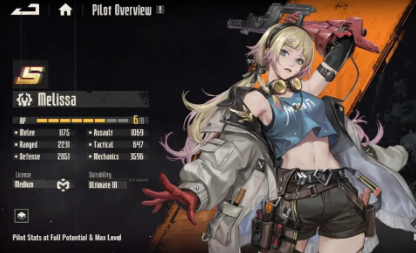
The second factor is utility. Healing, repair, debuff removal, AP support, part-targeting advantages, link attacks, crit support, re-attack effects, defense reduction, and control effects all matter. Melissa is a great example of why utility matters so much. She is frequently recommended as one of the best beginner-banner pilots because her support value remains relevant even much later. In a tactical game, the unit that keeps your strongest attacker alive can be just as important as the attacker.
The third factor is survivability. Some pilots hit hard but fold quickly if enemies focus them. Others may not top the damage chart, but they keep your formation stable. Mecharashi is full of situations where positioning, armor status, and damaged parts determine whether a unit can still function. A pilot that survives one more turn can heal, repair, finish a weakened enemy, or set up a link attack.
The fourth factor is early-game impact versus endgame scaling. Some pilots are amazing in the first few chapters because their kit is simple and strong. Others take longer to shine because they need the right ST, weapon setup, or upgraded skills. A good tier list should separate “great right now” from “great after investment.” For beginners, both matter, but early value is especially important because wasted resources slow your whole account.
The fifth factor is flexibility across campaign, raids, and PvP. A pilot who is only good in one mode can still be worth using, but top-tier pilots usually perform in multiple places. Campaign needs consistency. Raids need focused damage and part control. PvP needs pressure, survival, and unpredictable threat. Pilots who can handle more than one content type are safer investments.
III. Full Mecharashi Tier List
Here is my practical mecharashi tier list for general account progression:
| Tier | Pilots | Main Reason |
|---|---|---|
| T0 | Eileen, Melissa, Frida, Sylvie, William, Hong, Marcus | Meta-defining or extremely high-value pilots with strong long-term impact |
| T0.5 | Natalia, Shawnee, Rosa, Mary, Kaidan, Naomi, Seven | Excellent picks that perform very well with correct STs and team setup |
| T1 | Dana, Catherine, Diracca, Yevgeny, Grant, Emily | Reliable pilots with strong role value or budget usefulness |
| T2 | Raven, Ana, Harvey, Hulkwood, Gumusiay, other role fillers | Usable in specific setups but less universally valuable |
| T3 / Situational | Early temporary pilots, low-synergy units, unsupported role fillers | Use only when needed, replace when roster improves |
This list is intentionally practical rather than pretending every player has maxed STs and perfect builds. For example, Frida can be a monster when built correctly because she brings strong damage pressure, and Pro Game Guides describes her as a DPS who can carry through most game content. But if you do not have the right ST or weapon setup, you may not see her full power immediately. That is why the ST section matters later.
Melissa is one of the safest pilots to build because support stays valuable. A powerful damage dealer can be power-crept, but a great healer or repair-focused support can remain useful for a long time. If your team survives longer, your DPS gets more turns, and more turns mean more part destruction, more boss pressure, and fewer failed clears.
Eileen, Sylvie, William, Hong, and Marcus are also top-tier because they offer either strong offensive output, major utility, or excellent synergy with high-end STs. The exact order can shift depending on your account, but as a long-term priority pool, these are the names I would treat seriously.
IV. T0 Pilots
T0 pilots are the units that can shape your whole account. These are the pilots I would build around instead of just casually adding to a team.
Melissa is a top-priority support because healing, repair, and sustain are always useful. In campaign, she keeps weaker teams alive. In raids, she helps your main damage dealers stay active across longer fights. In PvP, sustain can force opponents to spend extra turns finishing targets they thought were already dead. When paired with STs like Blazer or Aurora, her value gets even better because those STs are specifically associated with healing enhancement, damage buffing, debuff removal, overheal conversion, and team durability.
Frida is one of the best damage-focused pilots to chase early. She is frequently recommended as a strong beginner-banner target, and the reason is simple: she helps you push content. In a game where destroying enemy parts decides the flow of combat, a strong carry pilot is not a luxury. It is your engine. Frida works especially well when her ST supports dodge, crit, mobility, and burst pressure.
Eileen is treated as one of the strongest current pilots by English tier guides, and she belongs in T0 because she represents the kind of high-impact unit that remains valuable in serious content. Even if you are not building around her immediately, she is the type of pilot you should not ignore if your account pulls her.
William is valuable because strong frontline and heavy-pressure roles matter in Mecharashi. A pilot who can work with Heavy ST setups and contribute to sustained battles brings a different kind of value from pure DPS. Heavy STs are rarer and usually tied to guardians or melee pilots, but they provide high HP, thick armor, shields, and frontline function. If your team lacks a stable anchor, pilots like William become much more important.
Hong and Marcus are also top-tier because they can convert strong ST synergy into real battlefield pressure. Hong is often linked with aggressive ST choices like Glasya, while Marcus is linked with Light ST setups like Twilight Fang and mobility-oriented play. These pilots are excellent examples of why you should never rank a pilot without asking what machine they are driving.
V. T0.5 and T1 Pilots
T0.5 pilots are almost top-tier, and for many accounts, they can perform like T0 units if you have the right ST or duplicates. These pilots are not “second-rate.” They are high-value alternatives that may simply be less universal or more dependent on setup.
Natalia and Dana are strong ranged or sniper-style options. They pair well with STs like Blue Bird, Arcus, and sometimes other ranged-support machines. OSLink’s ST guide describes Blue Bird as a Medium ST that offers crit scaling based on enemy count plus re-attack enhancement, while Arcus supports ranged precision, crit, and re-attack potential. That kind of synergy is huge for pilots who want to stay at range and pick apart enemy parts.
Shawnee and Naomi are useful when your team needs ranged pressure, tactical weapon setups, or AoE-style suppression. They may not always be as universally strong as the top carries, but they can be excellent in the correct role. The main thing is to build them with a clear purpose. Do not turn them into random generalists if their value comes from ranged pressure or tactical weapon use.
Rosa can be very strong when you care about explosive part destruction. XR is listed as a strong ST pairing for Rosa because it helps with targeted part destruction and burst disruption. In Mecharashi, that kind of ability is not just damage. It is control. Removing the right part from an enemy can shut down their threat before they get another turn.
Kaidan is one of the most important budget-friendly names because beginner-focused guidance describes him as one of the best beginner pilots, partly because B-rarity pilots are easier to upgrade while still being useful later. That makes Kaidan very attractive for free-to-play players who need practical power, not just dream-tier pulls.
Grant and Emily fit more into the T1 practical-value group. They may not be the flashiest pilots, but they can fill important roles and pair with certain Heavy ST setups. If you do not have the perfect SSR frontline or specialist, these pilots can keep your team functional while you build toward stronger options.
VI. Lower-Tier Pilots and Niche Picks
Lower-tier pilots are not automatically bad. In Mecharashi, a lower-rarity or lower-ranked pilot can still be useful if they solve a real tactical problem. The danger is overinvesting in them before you understand whether they have long-term synergy.
Budget-friendly pilots are important because not everyone starts with perfect T0 pulls. Kaidan, Dana, and Grant are especially worth mentioning because they are described as beginner-friendly, easier-to-upgrade B-rarity pilots with solid stats and abilities. These are the kinds of pilots I would use early without feeling bad, especially if they fill a role your roster lacks.
Situational pilots can be valuable when their specific strengths line up with a stage. A pilot who looks average in general campaign may shine in a map that rewards sniping. A guardian may feel slow until you reach content where the team needs a durable frontline. A repair-focused support may feel unnecessary until boss damage starts breaking key parts faster than you can finish the fight.
The lower-tier units worth building are the ones that either have good ST compatibility, useful skills, or budget upgrade value. If a pilot is easy to upgrade, fills a clear role, and has a matching ST, they can outperform a higher-rarity pilot who has no synergy. That is why rarity alone is a bad shortcut.
The pilots I would replace first are the ones with unclear roles. If a unit does mediocre damage, brings no utility, has poor ST fit, and does not help with campaign, raids, or PvP, do not keep investing just because you already leveled them. Early sunk cost is normal. Moving on is part of progression.
VII. Best Mecharashi Pilots by Role
For DPS pilots, I would prioritize Frida, Eileen, Hong, Marcus, Rosa, Natalia, Shawnee, and Naomi depending on your ST roster. Frida is a very safe damage carry. Hong and Marcus can become terrifying with strong Light ST synergy. Rosa is strong when you want targeted part destruction. Natalia and Dana-style ranged pilots are great when a map rewards precision and safer positioning.
For healers and support pilots, Melissa is the obvious top recommendation. She is the kind of pilot who stays useful because healing, repair, and sustain never go out of style. Seven can also work as a support option, especially with STs like Blazer, Aurora, or Roadrunner depending on the build. Blazer is associated with healing-triggered damage buffs and debuff removal, while Roadrunner improves active repair amounts.
For guardian and frontline pilots, William, Grant, Emily, Gumusiay, Raven, Harvey, and Hulkwood are the names I would watch depending on your available Heavy STs. Heavy STs have high HP and thick armor, and only Heavy STs can fit certain defensive equipment like large shields. A good frontline is not always exciting, but it makes difficult maps much easier.
For sniper and raider picks, Natalia, Dana, Shawnee, Naomi, Marcus, Kaidan, and Catherine all deserve attention depending on their ST fit. Light STs often support mobility and dodge, while Medium STs give balanced stats and flexible tactical equipment. Snipers and raiders need the right machine because positioning and attack angles matter as much as raw numbers.
VIII. Best Pilots for Beginners
For beginners, I would not chase only the rarest name on a tier list. You need pilots who are easy to use, easy to support, and strong enough to carry your account through early campaign stages. Based on current beginner recommendations, Melissa and Frida are the best beginner-banner pilots to aim for, with Melissa offering long-term support value and Frida giving strong DPS carry power.
If you cannot get those, do not panic. Kaidan, Dana, and Grant are excellent practical beginner pilots because they are easier to upgrade and still useful later. That makes them especially good for players who do not want to reroll forever or spend heavily. A well-upgraded budget pilot can feel better than an underbuilt premium pilot with no matching ST.
Easy pilots to use early are the ones with simple jobs. A DPS pilot should destroy parts. A support pilot should heal or repair. A guardian should soak pressure. A sniper should safely remove important enemy parts. If a pilot’s job is too complicated, they may not be the best first investment even if they are strong later.
Safe investments for new players include Melissa, Frida, Kaidan, Dana, Grant, Natalia, Rosa, and William depending on your pulls. This gives you a good mix of damage, support, ranged pressure, and frontline stability. The main beginner mistake is building too many pilots at once. Choose a core team and push them first.
IX. Best Pilots for Endgame
Endgame Mecharashi is more punishing because enemies are tougher, maps demand better positioning, and your team needs more than basic damage. Pilots with strong late-game scaling usually have one of four things: high burst, repeat attacks, strong repair or sustain, part-destruction utility, or AP-efficient pressure.
Melissa remains valuable in endgame because sustain and repair scale with difficulty. The harder the content gets, the more important it becomes to keep your key STs functional. If your carry loses an arm, weapon, or key part, your damage collapses. Repair support helps prevent one bad enemy turn from ruining the whole stage.
Frida, Eileen, Hong, Marcus, and Rosa are strong late-game considerations because damage and part control remain central to advanced content. In endgame, you are not just attacking enemies randomly. You are choosing which part to destroy first, which threat to disable, and when to commit AP. Pilots who can execute those plans efficiently stay relevant.
William and other strong frontline pilots matter in optimized teams because someone needs to manage pressure. A full glass-cannon team can clear easy maps fast, but harder content often needs a unit that survives, blocks, draws threat, or creates safe openings. Heavy ST pilots become more valuable when your team needs structure.
Endgame specialists are worth building when you already have your core team. For example, a raid-focused damage pilot, a PvP-focused dodge attacker, or a specific part-destruction specialist may not be your first investment, but they can become important once your basic team is stable.
X. Best ST and Mech Synergies
The best ST choices depend on the pilot. This is the part many tier lists simplify too much. Mecharashi’s ST system is deep enough that a pilot’s ranking can rise or fall based on machine compatibility.
For aggressive Light ST pilots, Glasya and Twilight Fang are two of the most important names. Glasya is listed as a top-tier ST and is associated with Frida and Hong in OSLink’s guide, offering dodge and crit-rate synergy that can trigger flurry strikes and improve burst pressure. Twilight Fang is associated with Marcus and Kaidan, boosting re-attack chances and damage when switching between weapon types.
For support pilots, Blazer and Aurora are excellent ST choices. Blazer supports healing-based damage buffs, debuff removal, and low-HP recovery, while Aurora can convert overhealing into temporary extra HP. That makes them especially good for Melissa or Seven-style support builds.
For ranged and sniper pilots, Blue Bird and Arcus stand out. Blue Bird supports crit and re-attack effects in crowded fights, while Arcus supports ranged precision and sustained fire. These machines are very useful for pilots like Natalia and Dana who want safe, accurate, high-impact attacks.
For guardian and frontline pilots, Kong, Dias, Gillesrais, Heracles, and other Heavy STs are worth watching. Kong improves link attack damage and proc frequency, while Dias supports defense and AP management. Frontline STs are not always your first reroll target, but they become more valuable as content gets harder.
XI. ST Tier List Essentials
For heavy ST choices, top names include Kong, Malthus, Dias, Gillesrais, Heracles, and situational machines like Kaolin or MetalMare depending on your needs. Heavy STs are generally bulkier and better for guardian or melee pilots, but they are less common and not always the first thing beginners should chase. Pro Game Guides notes that Heavy STs are mostly used by guardians and melee pilots and are not usually the top early priority compared with Light and Medium STs.
For medium ST choices, Blazer, Blue Bird, Aurora, XR, Arcus, Wolverine, Roadrunner, and similar machines matter a lot. Medium STs are balanced and widely useful because many pilots can use them. They can also fit certain tactical equipment options, which makes them flexible for different combat plans.
For light ST choices, Glasya, Twilight Fang, Dopplesoldner, Dreadtalon, SEFAS, Hela, and some budget machines are important. Light STs are especially valuable for mobile attackers, raiders, and certain long-range or melee pilots. They provide dodge and mobility advantages and can equip tools like accelerators and jetpacks.
For burst ST options, I would look at Glasya, Twilight Fang, Blue Bird, XR, and Arcus depending on the pilot. For sustain and support, Blazer, Aurora, and Roadrunner are more important. For tanking and frontline endurance, Kong, Dias, Gillesrais, and Heracles are the machines I would evaluate first.
XII. Reroll Recommendations
If you are rerolling for pilots, the best targets are Melissa and Frida on the beginner banner. Melissa gives long-term support value, while Frida gives strong DPS carry value. If you pull either one, your account is already off to a strong start. If you somehow pull both strong pilot value and a top ST, that is the dream.
For ST rerolling, the highest-priority targets include Glasya, Twilight Fang, Blazer, Blue Bird, Aurora, Kong, and Malthus based on current ST tier lists. If you want the smoothest start, I would rather have a strong pilot plus a matching high-tier ST than a random pile of good units that do not work together.
When is rerolling worth the time? It is worth it if you are still at the very beginning, you enjoy optimizing, and you want a stronger long-term account foundation. It is less worth it if you already progressed far, claimed limited rewards, or pulled a decent team. Do not reroll yourself into burnout. A good account you actually play is better than a perfect account you quit chasing.
My ideal beginner reroll would be something like Frida + Glasya, Melissa + Blazer, Melissa + Aurora, Marcus + Twilight Fang, or Natalia/Dana + Blue Bird/Arcus. These combinations are not the only good starts, but they show the right logic: pilot plus matching machine.
XIII. Best Teams and Compositions
A balanced story team should include one main DPS, one support/repair pilot, one frontline or durable unit, one ranged part-destruction pilot, and one flexible slot. For example, a strong general setup could be Frida + Melissa + William + Natalia + Kaidan. Frida handles damage, Melissa keeps the team alive, William provides frontline structure, Natalia gives ranged precision, and Kaidan fills flexible pressure.
A burst-focused team could use Frida + Hong + Marcus + Rosa + Melissa. This type of setup tries to remove enemy threats quickly through high damage, re-attacks, mobility, and targeted part destruction. Melissa is still included because full glass-cannon teams can collapse if one enemy turn goes badly.
A sustain and control team could use Melissa + William + Grant + Rosa + Dana. This team is less about instantly deleting everything and more about staying alive, controlling enemy function through part damage, and slowly winning the tactical fight. This is useful in harder stages where enemies punish reckless aggression.
For raid or boss-focused content, I would prioritize Frida, Rosa, William, Melissa, and a strong ranged attacker. Bosses usually reward focused part destruction, reliable healing, and the ability to keep your main damage units alive through long fights. If you cannot survive the fight, damage numbers do not matter.
XIV. Pilot Skills and Special Traits
Healing, repair, and sustain skills are some of the most important tools in Mecharashi. A pilot like Melissa is not just “the healer.” She protects your whole action economy. When a damaged part is repaired or a unit survives one more turn, you get more attacks, more AP efficiency, and more chances to finish the map.
Part destruction and debuff utility are equally important. Mecharashi’s official description emphasizes that destroying parts reduces battle efficiency and creates strategic advantages. That means pilots who can target, weaken, or delete important parts are extremely valuable. You are not just lowering HP. You are removing enemy options.
AP management also separates good pilots from average ones. A pilot who can use AP efficiently, trigger link attacks, re-attack, or create extra value from each action is much stronger than a pilot who spends a lot for one mediocre hit. STs like Kong and Dias are specifically described as helping with link attack scaling or AP management in frontline roles.
Crit and re-attack mechanics are powerful because they increase tempo. If your pilot can attack again, chain pressure, or land high-value crits on key parts, the enemy loses options quickly. This is why STs like Twilight Fang, Glasya, Blue Bird, and Arcus matter so much for offensive pilots.
XV. Mode-Specific Rankings
For campaign, the best pilots are the ones who clear consistently without requiring perfect play every turn. Frida, Melissa, Kaidan, Dana, Grant, Natalia, William, and Marcus are all strong campaign choices depending on your STs. Campaign rewards balanced teams, not just raw damage.
For raids and bosses, I value Frida, Rosa, William, Melissa, Hong, Marcus, and strong sniper pilots. Boss fights often require focused part destruction and survival through longer engagements. Rosa-style targeted destruction and Melissa-style sustain become especially valuable here.
For PvP and competitive play, the best pilots are the ones who can pressure enemies quickly, survive counterplay, or disrupt key units. Hong, Marcus, Frida, Melissa, Eileen, Natalia, Rosa, and William all have strong PvP logic depending on their machines. Burst and mobility matter, but so does sustain.
For auto or lower-effort content, I prefer pilots who are stable and not too fragile. Melissa, Frida, William, Kaidan, Dana, and Grant can be very comfortable because their roles are straightforward. High-skill units may be stronger manually, but reliable units are better for daily farming.
XVI. Investment Priority Guide
Build your main carry first. For most players, that means Frida, Eileen, Hong, Marcus, or another strong damage pilot. A tactical game still needs damage. If your team cannot remove enemy threats, you will get overwhelmed no matter how much sustain you have.
Build your support second. Melissa is the best example because she can remain useful for a very long time. A strong support protects your investment in every other pilot. If your DPS survives longer and keeps their key parts functional, your whole team performs better.
Build your frontline or role specialist third. William, Grant, Emily, or another guardian-style pilot can keep your team from collapsing. After that, invest in a ranged specialist or part-destruction pilot like Natalia, Dana, Rosa, Shawnee, or Naomi depending on your roster.
The best budget units to keep are Kaidan, Dana, and Grant, because they are beginner-friendly and easier to upgrade while still offering practical value. Do not throw them away just because they are not the rarest. In Mecharashi, upgraded and synergized units can outperform shiny but unsupported pulls.
XVII. Future Meta and Pull Planning
Future meta planning in Mecharashi should focus on pilot-ST pairs, not inaixiaoidual pulls. If an upcoming pilot needs a specific ST to shine, you need to plan for both. Pulling the pilot but missing the machine can lead to disappointment. Pulling the machine but having no pilot can also leave value unused.
Upcoming pilots worth saving for are usually the ones that bring new mechanics, stronger AP efficiency, better part destruction, or unique support value. In tactical games, new utility often matters more than simple damage increases. A pilot who changes how you approach maps can stay relevant longer than a pure stat-stick attacker.
Future mechs worth targeting are the ones with strong passive effects and broad compatibility. Pro Game Guides notes that after pilots, STs are the most important thing to invest in as you progress, and many STs are mediocre compared with the top options. That is why banner planning should include machines, not just pilots.
For free-to-play players, the best plan is to save for complete setups. Do not pull randomly just because a banner looks cool. Ask whether the pilot fits your team, whether you have or can get the correct ST, and whether the role overlaps with someone you already built.
XVIII. Common Tier List Mistakes
The first mistake is ranking pilots without mech context. This is the biggest one. A pilot in their ideal ST can feel like T0. The same pilot in a bad setup can feel average. Since STs provide passives, stats, equipment access, mobility, and role support, they are part of the pilot’s real power.
The second mistake is overvaluing rarity. Rare pilots are exciting, but Mecharashi rewards synergy and upgrades. A budget pilot like Kaidan, Dana, or Grant can be very useful because they are easier to upgrade and still have solid abilities. Do not bench a useful upgraded unit just because you pulled a shiny pilot with no support.
The third mistake is ignoring role overlap. If your team has four damage pilots and no repair support, you will struggle. If your team has too much frontline and no part destruction, fights drag forever. A good Mecharashi team needs role balance: damage, repair, frontline, ranged pressure, and tactical utility.
The fourth mistake is copying endgame rankings too early. A pilot who is amazing with maxed STs and upgraded skills may not be good on a fresh account. Beginners should care about immediate usefulness, easy upgrades, and simple team function. Endgame players can chase specialized setups later.
The fifth mistake is investing too widely. Do not build every pilot. Pick a core team, build them properly, and add specialists as needed. Spreading resources across too many units makes everyone feel weak.
XIX. Frequently Asked Questions
Who is the best Mecharashi pilot overall?
If I had to give the safest answer, I would say Melissa is one of the best overall pilots because support, repair, and sustain stay useful across almost every mode. For pure damage carry value, Frida is one of the best beginner-friendly choices. Current English tier guidance also highlights Eileen, Melissa, Frida, Sylvie, William, Hong, and Marcus as top pilots.
Which pilot is best for beginners?
For beginner-banner rerolling, Melissa and Frida are the safest targets. Melissa gives long-term support value, while Frida can carry damage through a lot of content. For budget progression, Kaidan, Dana, and Grant are excellent because they are easier to upgrade and still useful.
Do pilots or mechs matter more?
Both matter. Pilots decide the role, skills, and combat identity, but STs decide whether that kit reaches full power. Since Mecharashi lets you customize mech bodies, arms, legs, and weapons, and pilot them with specific characters, the final performance comes from the combination rather than one piece alone.
What is the best ST to reroll for?
Top ST targets include Glasya, Twilight Fang, Blazer, Blue Bird, Aurora, Kong, and Malthus. These are commonly placed near the top of ST rankings, but the best choice depends on your pilot.
Can lower-rarity pilots still be good?
Yes. Lower-rarity pilots can be very useful if they are easy to upgrade and fit your ST setup. Kaidan, Dana, and Grant are good examples of budget pilots that can help beginners and remain useful later.
How often should the tier list be updated?
Update your personal mecharashi tier list whenever new pilots, STs, weapons, balance changes, or major content updates arrive. Because pilots and STs affect each other so much, one new machine can change a pilot’s value overnight.
Conclusion
A good mecharashi tier list should never be just a list of names. Mecharashi is too tactical for that. Pilot strength depends on role, ST compatibility, weapon setup, AP efficiency, part-destruction value, survivability, and the kind of content you are pushing. A pilot like Frida can carry hard when built properly. A support like Melissa can keep your whole team alive and stay relevant for ages. A pilot like Marcus or Hong can jump in value when paired with the right Light ST. A budget unit like Kaidan or Dana can outperform expectations because upgrades and synergy matter.
For most players, the safest early targets are Melissa and Frida. Melissa gives the kind of repair and sustain value that never feels wasted, while Frida gives you the damage needed to push campaign and boss content. After that, look at strong pilots like Eileen, William, Hong, Marcus, Natalia, Rosa, Shawnee, Naomi, Kaidan, Dana, and Grant based on what your account needs.
For STs, do not ignore machines like Glasya, Twilight Fang, Blazer, Blue Bird, Aurora, Kong, Malthus, XR, Arcus, Dias, and Gillesrais. They can completely change how a pilot performs. A good ST is not just armor. It is mobility, passives, crit support, healing amplification, AP control, link attack value, and tactical flexibility.
My final player advice is simple: build around combinations, not isolated rankings. Choose one carry, one support, one frontline, one ranged or part-destruction specialist, and one flexible slot. Then match each pilot with an ST that actually supports their job. If you do that, your team will feel much stronger than a random lineup of high-rarity units with no plan. Mecharashi rewards smart building, and once the pilot-mech synergy clicks, the whole game becomes way more satisfying.