Ragnarok M Classic Global Beginner Guide: Classes, Zeny, Builds, Leveling, Gear, and F2P Tips
If you have ever played Ragnarok Online, Ragnarok M: Eternal Love, or any of the mobile RO spin-offs, ragnarok m classic global probably feels like a familiar name with a slightly different promise. It is still Ragnarok at heart: Novice beginnings, job classes, Prontera memories, monster farming, cards, elements, guilds, MVP hunting, Endless Tower, and that never-ending chase for better gear. But the “Classic Global” part matters because this version is built around a cleaner, more gameplay-driven economy where Zeny sits at the center. Instead of feeling like every strong upgrade is locked behind paid gachas or exclusive cash items, the Global version markets itself around a fairer progression loop where players farm, trade, grind, party, and slowly build strength through the game itself.
This guide is written from a player’s point of view, so I will not pretend that every class is equally easy, every farming spot is perfect, or every build works with low investment. Ragnarok has always been a game where small choices stack up. Your first job, your stat distribution, your weapon element, your farming route, your card priorities, your guild, and your daily routine can all change how smooth the game feels. If you start blind, you can still have fun, but you may waste Zeny on gear you replace too soon, refine too early, or build a class that does not fit your actual playstyle.
Content
I. Ragnarok M: Classic Global Overview
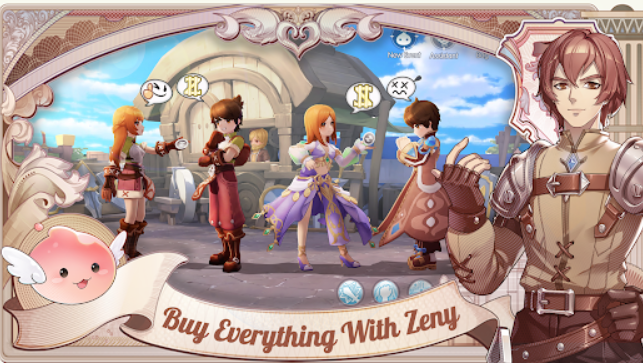
Ragnarok M: Classic Global is a mobile MMORPG based on the Ragnarok M formula, but adjusted around a “Classic” identity. The main selling point is not that it is a totally different game from every Ragnarok M version ever made. The hook is that it removes or reduces many of the monetization-heavy systems that made some players tired of modern mobile MMOs. The Global version promotes Zeny as the main economy currency, no traditional cash-shop stat advantage, no paid gacha pressure in the same way older servers were known for, and a more gameplay-centered route toward gear, cards, refinement, and character growth.
Compared with older Ragnarok M: Eternal Love versions, the biggest difference is mindset. In many mobile MMO versions, you quickly learn to separate “normal player progression” from “paid player progression.” In Classic Global, the pitch is that everyone is meant to interact with the same economy more directly through Zeny and gameplay. Items can be obtained, traded, farmed, or earned through game systems. This gives the game a stronger old-school MMORPG feeling, where your character’s strength comes from grinding, planning, selling drops, investing in gear, and building around your class.
Global versus SEA servers also matters. SEA versions usually build their communities around Southeast Asian time zones, older regional player bases, and server-specific event histories. Global is aimed at a wider international audience, which means more mixed-language communities, different guild recruitment patterns, and a broader group of new and returning players. If you are starting fresh, Global can feel more welcoming because many players are learning the economy and progression curve together rather than joining a server where everyone is already years ahead.
The word “classic” is powerful because RO players care about fairness and nostalgia. They want job identity to matter. They want Zeny farming to matter. They want cards to feel exciting. They want guilds and parties to matter. They want a world where effort has weight. Ragnarok M: Classic Global does not erase all grind, and honestly, it should not. The grind is part of Ragnarok. What it tries to do is make that grind feel more meaningful and less like a race against cash-shop power.
II. How to Download and Start Playing
The safest way to download Ragnarok M: Classic Global is through the official Google Play or App Store listing for your region. Android players should install from Google Play when available, while iOS players should use the App Store listing tied to the Global version. Avoid random APK sites unless you absolutely know what you are doing, because MMORPG accounts are long-term assets. You do not want to risk account theft, outdated clients, or modified files just to save a few minutes. Official store pages also help ensure your updates, login methods, and purchase regions match the actual Global server environment.
Before installing, make sure your device has enough storage and stable network access. Ragnarok M-style games can add extra data after installation, so the store download size is not always the full size you will end up using. If your phone is older, close background apps before launching and lower settings once you enter the game. Smooth performance matters more than pretty graphics when you are grinding for hours or joining party content where lag can get you killed. If your device struggles, consider using a tablet or trusted Android emulator, but keep account security in mind.
On your first login, take account binding seriously. Do not treat a guest login like a permanent account. Bind your account using the supported official methods so you do not lose progress if your phone breaks, the app gets deleted, or you switch devices. After that, check language settings, server selection, and character creation carefully. If you have friends or a guild waiting, make sure you join the same server. Server choice matters in MMORPGs because markets, guilds, parties, MVP competition, and social activity are server-specific.
The basic UI can feel crowded at first, especially if you are new to mobile Ragnarok. You will see quest tracking, map controls, skill buttons, bag icons, event menus, auto-combat options, camera controls, and various red-dot reminders. Do not try to master every icon immediately. Learn the essentials first: main quest tracking, skill setup, inventory, character stats, equipment, map movement, camera zoom/rotation, and party/guild menus. Once you understand those, the rest of the interface becomes much less intimidating.
III. Beginner Guide for ROM Classic Global
Your day-one priority is simple: become useful, not perfect. Finish the tutorial, complete main quests, reach your first job path, unlock basic combat systems, and start learning how your class actually plays. Do not spend too much Zeny on random market gear just because it looks cool. Do not refine every early weapon. Do not scatter stat points without knowing your build direction. Ragnarok gives you freedom, but freedom also means you can make messy choices if you rush without thinking.
During your first week, focus on building a stable routine. Push quests until they slow down, grind monsters that match your level, join a guild, unlock daily activities, learn how AFK/offline systems work, and start tracking which drops sell well. Base level and job level are both important. Base level gives general character growth and access to content, while job level unlocks skill progress and class advancement. A player who only chases base EXP but ignores job growth may feel weaker than expected because skills are a huge part of class power.
Combat in Ragnarok M: Classic Global is built around skills, stats, equipment, elements, and monster matchups. This is not a game where one build automatically handles everything equally well. A physical class cares about attack, attack speed, crit, hit, strength, agility, dexterity, or other relevant stats depending on build. A caster cares about INT, cast time, SP sustain, magic damage, and DEX. A support cares about survivability, healing strength, cast speed, and party utility. Your class route should guide your stat choices, not the other way around.
The top beginner tips are easy to remember. Pick a class that matches your playstyle. Follow main quests early. Prioritize weapon upgrades over fashion spending. Join a guild early. Learn elements. Do not waste rare materials on short-term gear. Farm monsters close to your level. Track Zeny value, not just EXP. Use party play when it helps. Read patch notes before committing to expensive builds. Most beginner mistakes come from impatience. Ragnarok rewards players who plan before spending.
IV. Leveling and Grinding Guide
Leveling in Ragnarok M: Classic Global is a mix of questing, grinding, party play, and activity completion. In the early levels, quests usually carry you quickly because they introduce maps, NPCs, systems, and class basics. Do not skip them unless you have a specific farming reason. Early grinding should focus on monsters you can kill quickly with low potion cost. Killing a slightly lower-level monster fast is often better than slowly fighting a tougher monster that drains supplies.
For early levels, classic low-risk monsters like Porings, Lunatics, Fabres, Rockers, Willows, Spores, and similar starter-map enemies are usually comfortable depending on your route. As you move into the mid-game, you start caring more about monster element, size, race, density, and drop value. Wolves, Orcs, Goblins, Muka-style monsters, Payon/Geffen-area mobs, and similar mid-tier targets become relevant depending on your class. Late-game grinding becomes more build-specific, so you should choose spots based on kill speed, material value, card value, and whether your class can handle the map safely.
Questing is great for unlocks, but pure grinding is where Ragnarok identity really kicks in. The best leveling route is usually not “only quests” or “only grinding.” Mix both. Use quests to unlock systems and gain big chunks of EXP, then grind efficient monsters when quests slow down. If an event offers strong EXP or materials, include it in your routine. If a party dungeon gives good rewards, do it with friends or guildmates. Fast progression comes from stacking all sources rather than relying on one.
Solo versus party leveling depends on your class. Archer/Hunter, Mage/Wizard, Thief/Assassin, and some Merchant/Blacksmith routes can solo well if geared properly. Acolyte/Priest may level slower alone but becomes valuable in parties. Swordsman/Knight can solo safely but may not always farm as fast as ranged or AoE classes. Party leveling helps when monsters are tougher, pulls are bigger, or class synergy improves speed. Just make sure EXP sharing and kill speed are actually worth it. A slow party is not automatically better than efficient solo grinding.
V. Zeny, Economy, and F2P Approach
Zeny is the heart of Ragnarok M: Classic Global. You use it for gear, materials, trading, upgrades, consumables, cards, refinement costs, and long-term progression. Because the Global version is marketed around Zeny-only economy design, learning to earn and manage Zeny is more important than chasing shortcuts. A player who understands the market can progress much faster than someone who farms random monsters without checking what sells.
The best Zeny farming method depends on your class and server economy. Some players farm raw Zeny and common drops. Others farm materials used for crafting, upgrades, or daily demand. Some chase card drops or MVP-related items. Merchant/Blacksmith/Mechanic-style routes are traditionally strong for economy-minded players because merchant classes often interact well with trading, farming, or utility systems. That said, any class can farm if you choose the right monsters and manage costs.
The F2P-friendly appeal comes from the absence of certain heavy cash-shop stat systems and the focus on gameplay-earned items. Official descriptions highlight no shop-style item advantage, Zeny as the only currency, free Offline Battle, lifetime Monthly Pass, and safe refinement up to +15. That sounds great for free players, but it does not mean casual players automatically match hardcore grinders. Time, market knowledge, guild access, and smart class choice still matter. F2P-friendly means your path exists; it does not mean there is no grind.
A good daily Zeny routine includes offline/AFK reward management, targeted farming, daily activities, market checks, and careful spending. Do not farm only for EXP if the drops are worthless. Do not buy every small upgrade if it delays an important weapon. Do not refine random gear just because you have materials. Zeny saved is also Zeny earned. The strongest F2P players usually win through patience and efficiency, not luck alone.
VI. Class Overview and Recommendations
Every player starts as a Novice before moving into a first job such as Swordsman, Mage, Archer, Thief, Acolyte, or Merchant. These first jobs define your early experience. Swordsman is durable and forgiving. Mage has strong magic and AoE potential but is fragile. Archer is safe, ranged, and beginner-friendly. Thief is fast and evasive but can feel gear-dependent. Acolyte brings healing and support value but may level slower alone. Merchant has economic flavor and later farming potential, but the early path can require patience.
Second jobs and advanced paths make the game much deeper. Swordsman can move toward Knight or Crusader-style roles. Mage can become Wizard or Sage. Archer can become Hunter, Bard, or Dancer depending on route and available job structure. Thief can become Assassin or Rogue. Acolyte can become Priest or Monk. Merchant can become Blacksmith and later advanced economic or combat roles. Each route has different strengths in solo farming, MVP hunting, War of Emperium, party support, and late-game scaling.
For beginners, Swordsman and Archer are usually the easiest recommendations. Swordsman survives mistakes and teaches melee basics. Archer farms safely and handles solo content well. Mage is strong if you like AoE and can manage positioning. Acolyte is great if you plan to play with friends or enjoy support. Merchant is good if you care about economy and farming long-term. Thief is fun for players who like speed and crit-style gameplay, but it can be less forgiving early if gear is weak.
At-a-glance tiering is best understood by purpose. Best beginner comfort: Swordsman and Archer. Best early farming safety: Archer and Mage. Best party support: Acolyte/Priest. Best economy-minded route: Merchant/Blacksmith/Mechanic-style progression. Best MVP potential depends heavily on gear, party, and server phase, but Hunter, Wizard, Assassin, Knight, Monk, and Blacksmith routes can all find roles with the right build. Do not choose only based on one tier list; choose based on what you will enjoy grinding for weeks.
VII. Best Builds by Role
Physical DPS builds usually revolve around STR, AGI, DEX, VIT, and sometimes LUK depending on class. Melee builds often need STR for attack, AGI for attack speed or flee, DEX for accuracy, VIT for survival, and LUK for crit-oriented setups. Ranged physical builds care heavily about DEX, attack speed, critical scaling, and elemental advantage. The mistake beginners make is stacking damage while ignoring hit rate or survival. If you miss too much or die too fast, your damage stat does not matter.
Magic DPS builds revolve around INT, DEX, SP sustain, cast time, and magic damage bonuses. Wizards and other casters can farm extremely well when they one-shot or two-shot groups, but they feel awful when cast times are too long or SP costs are too high. Early Mage players should focus on reliable farming skills and manageable costs. A powerful spell that drains your SP every few casts may be worse than a cheaper skill you can use continuously.
Support builds usually focus on INT, DEX, VIT, and survival. A Priest is not useful if they die before healing or buffing. Support players should think about cast speed, healing strength, defensive stats, SP management, and party utility. In Ragnarok, supports are often loved by guilds and parties because they make content smoother. The tradeoff is that solo farming may feel slower unless you build a hybrid route or use alternative jobs.
Tank and hybrid builds depend on content. A Knight or Crusader-style tank may prioritize VIT, defensive gear, HP, resistances, and threat/control tools. Hybrid builds are attractive because they promise both damage and utility, but they are also easy to mess up. If you split stats too much, you become mediocre at everything. Build hybrid only when you understand what problem the build is solving. For beginners, straightforward builds are safer.
VIII. Class-Specific Mini Guides
Knight is one of the safest and most beginner-friendly routes. It has durability, melee consistency, and good party value. Early Knights can focus on STR, VIT, DEX, and enough AGI depending on whether the build leans toward skill damage, auto attacks, or tanking. The main advantage is forgiveness. You can survive mistakes that would kill a Mage or Archer. The downside is that farming speed may depend heavily on gear and skill choices.
Assassin is for players who like speed, crits, and evasive melee. It can be very satisfying once it has proper gear, but it may feel more fragile or expensive than beginner classes. Assassin players should pay attention to weapon choice, crit rate, attack speed, and element matching. This class rewards investment and planning. If you love seeing fast hits and bursty melee pressure, it is fun, but do not expect it to be the cheapest early route.
Wizard is a classic farming powerhouse. Strong AoE magic makes it great for clearing groups, but positioning and SP management matter. Early Wizards should aim for efficient spells, cast speed improvement, and enough survival to avoid being interrupted or killed. Wizard is one of those classes that can feel amazing in the right spot and miserable in the wrong one. Learn monster elements and choose farming maps carefully.
Priest is the heart of party play. Buffs, heals, resurrection-style utility, and support identity make Priest valuable in dungeons, guilds, MVP groups, and long-term content. Solo leveling can be slower unless you choose battle priest or hybrid strategies, but party demand is always strong. If you like being needed and enjoy helping others clear content, Priest is one of the most rewarding jobs. Just be ready for a different pace than pure DPS.
Hunter is one of the best solo-friendly options because ranged damage keeps you safe and farming is straightforward. DEX-heavy builds, attack speed, traps, crit routes, and elemental arrows or converters can all matter depending on server systems. Hunter is easy to recommend to new players because it farms well, levels smoothly, and does not require standing face-to-face with monsters. Blacksmith is more economy-oriented, with farming and crafting/trading value. It may require more planning, but players who love Zeny optimization often enjoy Merchant routes.
IX. Gearing, Cards, and Elements
Early gear progression should be practical, not fancy. Use quest rewards, dungeon/rift-style gear, monster drops, and affordable market upgrades. Your weapon usually matters most because killing faster improves both EXP and Zeny farming. Armor matters once you start dying or spending too much on potions. Do not refine every early item just because refinement exists. Wait until gear will last long enough to justify the cost.
Safe +15 refinement is one of the Classic Global features that reduces some of the old frustration, but safe does not mean free. Refinement still takes materials, duplicates, Zeny, or effort depending on the system. Treat refinement as a planned investment. Upgrade weapons first for damage classes, defensive gear first for tanks, and role-critical pieces for supports. Random refinement is one of the easiest ways to burn your economy.
The element system is one of the biggest damage lessons in Ragnarok. Fire, Water, Wind, Earth, Holy, Shadow, Ghost, Undead, Neutral, and other elemental interactions can dramatically change your damage. Using the right element against the right monster can be stronger than upgrading your weapon blindly. Physical classes can use elemental weapons or converters. Magic classes should choose spells based on monster weakness. Supports and tanks should also understand elements because enemy damage types can affect survivability.
Cards are another major progression pillar. Cards add stats, damage bonuses, resistance, utility, or build-specific effects. Starter cards depend on your class, but beginners should look for cards that improve their main farming role. Physical DPS may want attack, crit, race damage, size damage, or element damage. Casters want magic damage, cast-related benefits, or SP support. Tanks want HP, defense, resistances, or survival. Do not buy a card just because it is famous; buy it because it improves your build.
X. MVP, Mini Boss, and Endless Tower Content
MVP hunting is one of the most exciting parts of Ragnarok because it combines competition, preparation, party coordination, and loot chasing. Before you start seriously hunting MVPs, make sure your class has a role. Are you damage? Tank? Support? Debuffer? Burst finisher? Randomly showing up undergeared and hoping for loot is not a strategy. MVPs punish weak builds and disorganized parties. Start with easier Mini Bosses or lower-pressure hunts before competing for high-value MVPs.
Classes that work well for MVP depend on server stage and gear. Hunters, Wizards, Assassins, Knights, Monks, Priests, Blacksmiths, and other advanced roles can all contribute differently. Damage dealers need output and correct elements. Tanks need survival. Priests need positioning and quick support. MVP hunting is rarely about one player doing everything unless they are heavily geared. Most players get better results by joining guild groups and learning mechanics together.
Endless Tower is another important PvE activity because it tests your party over multiple floors. The early floors are manageable, but later milestones require better preparation, role balance, and knowledge of enemy threats. Rewards can be meaningful, so do not ignore it. Even if you cannot clear high floors yet, doing what you can still helps progression. Treat Endless Tower as a weekly test of how your build and party are improving.
Party etiquette matters in advanced PvE. Bring the right consumables. Do not AFK without warning. Listen to the party leader. Do not pull enemies randomly if you are not the tank. Share information if you know the mechanics. Respect support players. Ragnarok is a social MMO, and good reputation matters. If you become known as a reliable party member, you will get more invites, better guild opportunities, and smoother progression.
XI. Daily, Weekly, and Event Routines
Your daily routine should include main or side quests when relevant, daily dungeons, offline/AFK reward management, guild tasks, market checks, and targeted farming. The exact activity list can change by patch, but the principle stays the same: claim high-value limited entries first, then spend remaining time on farming. If a daily entry gives strong materials or Zeny value, do not skip it. Consistency beats random marathon sessions.
Weekly routines usually include Endless Tower, guild events, higher-value instances, seasonal event progress, and market planning. Weekly content often gives better rewards than basic daily grinding, but it may require parties or guild coordination. Schedule it with your guild if possible. Missing one weekly run may not ruin your account, but repeated missed weeks add up over time.
Seasonal events are especially important for F2P players because they often provide cosmetics, materials, mounts, cards, or progression items that are easier to get during the event than later. Welcome events, Spin the Wheel-style events, login campaigns, and server milestone rewards can all give meaningful value. Always read event rules before spending resources. Some events reward specific activities, so you can plan your farming around them.
Global events may differ from SEA or older servers, so do not blindly follow outdated regional guides. Event names may be similar, but rewards, dates, and requirements can change. Always check official Global announcements before assuming an event works the same way as another server. This is especially true for limited rewards and progression systems tied to newer Global patches.
XII. Guilds, Community, and Social Systems
Joining a guild early is one of the smartest decisions you can make. A good guild gives you buffs, parties, advice, market tips, MVP groups, Endless Tower teammates, War of Emperium preparation, and social motivation. Ragnarok is much easier when you are not trying to figure out every system alone. Even if you are mostly solo, guild benefits still help. Do not wait until endgame to join one.
Finding an active guild in Global usually means watching world chat, Discord communities, Facebook groups, Reddit threads, or in-game recruitment posts. Look for a guild that matches your playstyle. Some guilds are hardcore and expect attendance. Some are casual and newbie-friendly. Some focus on MVP. Some focus on WoE. Some focus on farming and social play. Do not join the first guild you see if the expectations do not match your schedule.
External resources are useful because Ragnarok systems can be deep. Discord servers, Facebook pages, YouTube playlists, community guides, and veteran Q&A threads can save you from expensive mistakes. That said, always check whether the advice applies to Classic Global specifically. A guide from old SEA, old Eternal Love, private servers, or another region may not match Global balance, economy, or class patches.
Community knowledge is part of the game. Market prices change. Farming spots get crowded. Patches buff or nerf jobs. Guilds discover new strategies. If you stay connected, you adapt faster. If you play completely isolated, you may keep following outdated advice for weeks. In a game as economy-driven as Ragnarok M: Classic Global, information is power.
XIII. Patch Notes and Meta Shifts
Patch notes matter because class recommendations can change. Recent official and community posts have mentioned level cap increases, job balancing, Ranger adjustments, Gunner changes, motion speed, attack range, cancel timing, master skills, and class behavior updates. That means a class that felt weak in one patch may improve later, while a class that dominated early may become less comfortable after balance changes. You should never spend a huge amount of Zeny on a long-term build without checking recent patch direction.
Ranger and Gunner-related updates are a good reminder that ranged classes can be sensitive to mechanical changes. Attack range, motion speed, skill timing, and cancel behavior affect real farming speed and combat feel. A small text change in patch notes can make a build smoother or clunkier. If you are playing one of these jobs, follow official updates closely before buying expensive cards or weapons.
Level cap raises also shift the meta because new levels unlock more stats, stronger monsters, new farming spots, and different party needs. When the cap rises, old best spots may become less efficient, new gear may enter the market, and class rankings may change. Endgame is not static. What is best at level 60 may not be best at level 85 or beyond. Build advice should always be tied to the current server phase.
The safest long-term habit is to monitor maintenance posts, official news, and active community discussion. Before committing to a costly refinement, rare card, or class swap, check whether a balance patch is coming. This does not mean you should freeze forever and never invest. It means major investments deserve current information. Smart players adapt early; careless players spend first and regret later.
XIV. F2P Strategy and Monetization Discussion
Is Ragnarok M: Classic Global F2P-friendly? Compared with many mobile MMORPGs, yes, the Zeny-only and fair-shop positioning makes it much more appealing for players who dislike paid gacha power. The official messaging focuses on gameplay-earned items, Zeny as the main currency, free Offline Battle, lifetime Monthly Pass, and no exclusive top-up item advantage. That is exactly the kind of structure F2P players want to hear.
But F2P-friendly does not mean “no advantage for heavy players.” In any MMORPG with trading, time, efficiency, and optional monetization, differences will still appear. A player who farms more, understands the market better, joins a stronger guild, or buys optional convenience may progress faster. PvP and WoE will always show gaps because competitive systems reward optimization. The important question is not whether everyone progresses at the exact same speed. The question is whether free players have a real path to meaningful power. In Classic Global, that path is much clearer than in many cash-shop-heavy games.
When is it worth buying passes or cosmetics? Only if they fit your budget and make the game more enjoyable. A lifetime pass or optional convenience can be worth considering if you know you will play long-term, but it should not replace learning the game. Cosmetics are personal. If you love a costume and can afford it, fine. Just do not buy things because you feel pressured to keep up. The main progression mindset should still be farming, Zeny management, and smart investment.
Whales versus F2P differences show most clearly in speed, market power, and competitive content. A heavy spender or hardcore grinder can reach gear goals faster, enter MVP competition sooner, and pressure PvP harder. A F2P player can still progress, but must choose goals carefully. Focus on efficient farming, strong guild support, realistic class builds, and long-term gear plans. You do not need to win every race to enjoy Ragnarok. You need a path that keeps your character growing.
XV. Veteran Tips and Common Questions
Veteran players often give one piece of advice above all else: do not waste early resources. Early mistakes feel small, but Ragnarok economies punish repeated waste. Buying gear you replace tomorrow, refining random items, ignoring elements, skipping guilds, and switching classes too often can slow you down. You can recover, but recovery costs time and Zeny. Start with simple, proven choices until you understand the systems.
Another veteran tip is to pick a class based on routine, not fantasy alone. If you plan to farm solo every day, choose a class that farms comfortably. If you want MVP parties, choose a role people need. If you want guild war, learn what your guild lacks. If you only play casually, pick something forgiving like Swordsman or Archer. The best class is not just the strongest class on paper. It is the class you can play consistently without hating the grind.
Common questions usually include best class, best farming spot, and whether to reroll. Best class depends on goal: Swordsman and Archer are safe for beginners, Mage is strong for AoE farming, Acolyte/Priest is great for party players, Merchant routes are strong for economy-minded players, and Thief/Assassin rewards investment. Best farming spot depends on your level, class, element, and market prices. Rerolling is not as central here as in gacha RPGs because your class and economy choices matter more than one early pull.
What I wish I knew earlier is this: Ragnarok is not only an EXP game. It is an economy game, a social game, and a knowledge game. The player who farms the right monster, sells at the right time, joins the right guild, uses the right element, and upgrades the right gear will progress faster than someone who simply grinds longer without thinking. Efficiency is not about being sweaty. It is about respecting your time.
Conclusion
Ragnarok M: Classic Global is appealing because it brings the Ragnarok M experience closer to what many players actually wanted: a fairer, Zeny-centered world where progression feels earned through gameplay, trading, farming, party play, and smart choices. It still has the familiar RO grind, but that grind is part of the charm. You start small, choose a job, learn your build, farm your Zeny, chase cards, join guilds, and slowly turn your character into something you are proud of.
For beginners, the safest path is to keep your first week simple. Download through official channels, bind your account, choose a beginner-friendly class, follow quests, learn base and job levels, join a guild, farm efficiently, avoid wasteful refinement, and use elements properly. Swordsman and Archer are smooth first picks, Mage is great for AoE-minded players, Acolyte is excellent for party support, Merchant is strong for economy-focused players, and Thief is fun for players who enjoy speed and investment-heavy melee.
If you plan to stay long-term, watch patch notes, follow official news, and keep learning from the community. Class balance, level caps, Ranger/Gunner changes, event rewards, and market shifts can all affect what is best. Do not blindly copy old SEA guides or outdated builds without checking whether they apply to Global. The players who do best in ragnarok m classic global are not always the biggest spenders or longest grinders. They are the ones who understand the economy, build around their goals, and make every day of progress count.