Grand Chase Characters Guide 2026: Best Heroes, Classes, Builds, and Teams
When I first started sorting through Grand Chase characters, I made the same mistake a lot of players make: I looked for the strongest hero, dumped resources into that character, and assumed the rest of the team would somehow work itself out. GrandChase: Dimensional Chaser quickly teaches you that things are not that simple. A powerful Ranger can still struggle without protection, an Assault hero can dive straight into trouble without the right sustain, and some Healers contribute more to your actual damage than a second dedicated attacker.
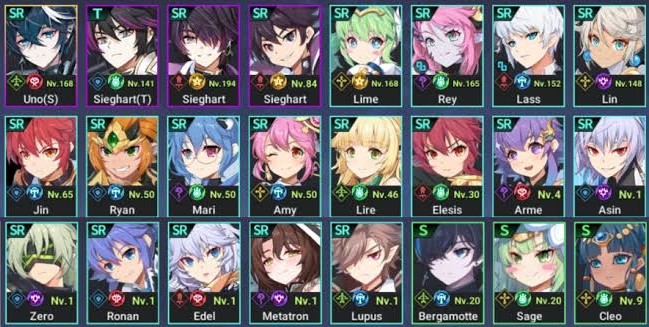
The roster has also changed dramatically over the years. GrandChase now has more than 100 heroes, including the original cast, mobile-exclusive SR heroes, Job Change characters marked with , Special versions marked with , and newer characters such as Metatron, Iyoung, Ayla, and Bastet. The August 2026 Global version is still actively expanding progression, with Cindy's Spirit update and Raid Rank 19 arriving this month after recent additions such as Ayla and Bastet.
Because of that, this guide focuses mainly on GrandChase: Dimensional Chaser, the mobile RPG. Your outline also mentions Void and Tower of Disappearance, which belong to GrandChase Classic. I'll point out those differences where they matter rather than mixing the two games into one misleading tier list.
I. Introduction to Grand Chase Characters
A. What Are Grand Chase Characters?
In GrandChase: Dimensional Chaser, characters are collectible heroes that form parties of four, supported by a pet. KOG's current game description advertises more than 100 heroes, covering both returning characters from the original GrandChase and newer heroes created for the mobile sequel.
The familiar names are still here: Elesis, Lire, Arme, Lass, Ryan, Ronan, Amy, Jin, Sieghart, Mari, Dio, Zero, Ley, Rufus, Rin, and many others. Over time, the roster expanded with characters such as Europa, Tia, Ganymede, Callisto, Cindy, Ragnar, Urara, Vice, Metatron, Myrielle, Iyoung, and Ayla.
What makes the roster interesting is that owning a hero is only the beginning. The same character can feel completely different after Chaser, Soul Imprint, equipment optimization, Job Change, Special forms, or Spirit progression.
B. Why Character Selection Matters in GrandChase and Grand Chase: Dimensional Chaser
Character selection matters because GrandChase rewards synergy more than raw Battle Power.
I could put four individually powerful damage dealers into one party and still get worse results than a balanced lineup using a Tank, DPS, amplifier, and Healer.
You also need to consider attributes. Modern Dimensional Chaser teams are increasingly built around specific attribute interactions, so a strong hero in the wrong composition may not perform anywhere near their theoretical ceiling.
GrandChase Classic works differently because you're directly controlling individual characters through platforming and action combat. Dimensional Chaser is much more focused on party composition and skill timing.
C. Overview of Game Modes: Adventure, Battle, Boss, PvE, and PvP
For mobile players, important activities include:
Adventure
Raid
Dimensional Chasm
World Boss
Boss Attack
Altar of Time
Hall of Heroes
Illusion Arena
PvP
Guild content
The mobile game is still receiving PvE expansions. In 2026 alone, KOG added World 20, expanded Altar of Time, raised Raid progression, and continued Hall of Heroes development.
That is why I never rank Grand Chase characters from one game mode alone.
II. Grand Chase Character Classes and Roles
A. Assault Class: Frontline Damage Dealers
Assault heroes usually fight close to the enemy and combine damage with frontline pressure.
Strong examples include:
Ai, Callisto, Elesis, Elesis, Europa, Kanavan, Edel, Lass, and Sol.
I use Assault characters when I need aggressive damage without relying entirely on fragile backline DPS.
Elesis and Europa are classic examples of heroes that can contribute much more than pure personal damage because their kits help the party while they attack.
B. Ranger Class: Ranged Attack Specialists
Rangers deal physical damage from safer positions and are often excellent boss killers.
Notable Ranger options include:
Lire, Uno, Io, Rufus, Ragnar, Bastet, Iyoung, Nepteon, Lapis, Lire, Werner, Deia, and Myrielle.
Recent August 2026 rankings still place Lire, Uno, Io, Rufus, Ragnar, and Bastet among the strongest Ranger choices.
Rangers normally want a Tank or strong protection because their defensive stats are not the reason you bring them.
C. Mage Class: Magic Damage and Crowd Control
Mage characters combine magical DPS with AoE, debuffs, or battlefield control.
Strong Mage choices include:
Ley, Nelia, Veigas, Harpe, Ganymede, Vice, Metatron, Ayla, Decanee, Arme, and Mari.
Metatron is particularly dangerous because her modern kit mixes critical scaling, Ruin-attribute amplification, shield removal, and strong Battle Power-based effects.
Ayla is another modern Mage. Her Lullaby system slows enemies, reduces recovery and Chaser gain, and can increase Cycle-attribute damage taken.
D. Tank Class: Defensive Anchors and Protectors
Tanks protect the rest of the party while providing shields, damage reduction, control, or enemy debuffs.
My notable Tank pool includes:
Jin, Ryan, Tia, Ai, Ronan, Zero, Brammashell, Myst, and Mayden.
Do not judge Tanks by personal DPS. A good Tank creates the conditions that let everyone else deal damage safely.
E. Healer Class: Support, Buffs, and Sustain
The Healer category includes much more than basic HP recovery.
Strong choices include:
Amy, Grandiel, Urara, Hwarin, Cindy, Io, Lime, Rin, and Serdin.
A modern Healer might provide cooldown help, SP generation, cleansing, buffs, shields, resurrection, or attribute-specific amplification.
This is why a well-built support often improves boss damage more than adding another attacker.
III. Grand Chase Tier List: Best Characters Ranked – August 2026
Tier lists in GrandChase should always be treated as broad investment guidance. Attribute teams and content-specific mechanics can easily move a hero up or down.
A. S Tier Characters: Top Meta Picks
My general S-tier pool includes:
Assault: Ai, Callisto, Elesis, Europa, Kanavan, Edel
Ranger: Lire, Uno, Io, Rufus, Ragnar, Bastet
Mage: Ley, Nelia, Veigas, Ganymede, Vice, Metatron
Tank: Jin, Ryan, Tia, Ai
Healer: Amy, Grandiel, Urara, Hwarin, Cindy, Io
A current August 2026 external ranking shows a very similar distribution across the five roles.
B. A Tier Characters: Strong and Viable Options
A-tier heroes include characters such as:
Lass, Sol, Iyoung, Nepteon, Lapis, Lire, Werner, Deia, Decanee, Arme, Mari, Brammashell, Ronan, Zero, Myst, Mayden, Lime, Rin, and Serdin.
These characters are not weak.
In fact, I would rather use an A-tier hero at Soul Imprint 15 with proper equipment than an unfinished S-tier hero that doesn't fit my team's attribute.
C. B Tier Characters: Situational or Needs Investment
B tier contains heroes that can work but often have clearer replacements.
Examples include older versions of several launch-era characters, highly specialized heroes, and characters that need heavy investment before they become competitive.
I still keep them because broad roster development matters in GrandChase.
D. C Tier Characters: Lower Priority for Endgame
C-tier characters are mainly heroes I would not heavily invest in before finishing important modern units.
Some low-rarity heroes still have collection or account utility, so “C tier” should never be interpreted as “delete this character.”
IV. Top Grand Chase Characters by Class
A. Best Assault Characters: Ai, Callisto, Elesis, Europa, Kanavan, Edel
Ai brings strong offensive value and belongs near the top of current Assault rankings.
Elesis remains one of the game's defining characters, while Elesis gives veteran players a more modern alternative.
Europa has aged impressively because she contributes both damage and team-oriented effects.
Callisto, Kanavan, and Edel each fit different attribute and damage setups, so I would choose based on the team I'm actually building.
B. Best Ranger Characters: Lire, Uno, Io, Rufus, Ragnar, Bastet
Lire is one of my favorite boss-oriented Rangers because she turns a strong physical-support core into extremely efficient damage.
Uno also sits comfortably near the top of the modern Ranger pool.
Io has remained useful across multiple eras, while Rufus, Ragnar, and Bastet all bring strong ranged damage with different team requirements.
Bastet also received a Job Change version in 2026, giving players another modern Ranger-related investment path.
C. Best Mage Characters: Ley, Nelia, Veigas, Harpe, Ganymede, Vice, Metatron
Ley is a long-running magical DPS favorite.
Nelia has repeatedly found places in magical compositions.
Veigas is fantastic when I want large AoE and aggressive spell damage.
Ganymede and Vice represent newer generations of Mage design, while Metatron adds powerful Ruin-oriented damage and critical scaling.
D. Best Tank Characters: Jin, Ryan, Tia, Ai, Ronan, Zero
Tia remains one of my favorite traditional Tank investments because she brings protection and useful control.
Ai is especially important to understand because Job Change characters are separate units rather than replacing the original character.
Jin and Ryan remain reliable, while Ronan and Zero can still perform extremely well depending on content and progression.
E. Best Healer Characters: Amy, Grandiel, Urara, Hwarin, Cindy, Lime, Rin
Amy has always been one of the most recognizable supports in GrandChase and remains excellent when SP or skill cycling matters.
Urara is a newer SR Healer designed for modern team requirements.
Hwarin and Cindy offer useful utility beyond healing, while Lime is especially valuable when cleansing becomes important. Lime's Dimensional Chaser kit is specifically built around party healing and debuff removal.
V. Character-Specific Guides and Builds
A. Ai Grand Chase: Traits, Skills, and Team Synergy
Ai is interesting because the original and Job Change versions fill different roles.
Base Ai is used as an Assault hero, while Ai operates as a Tank.
That alone shows why you should never treat a Job Change character as a simple upgrade replacing the original.
For Ai-based teams, I prioritize traits that improve whatever role the version is performing rather than blindly copying one build.
B. Elesis Grand Chase: Autodash Mechanics and 4th Awakening
This is one area where GrandChase terminology gets mixed between games.
Autodash and numbered job/awakening discussions are more relevant to GrandChase Classic. Dimensional Chaser does not progress Elesis by unlocking “4th Awakening” in the same way.
For mobile Elesis, the important systems are awakening/transcendence, Chaser, Soul Imprint, Special forms, Spirit progression, and equipment.
In August 2026, Elesis is part of the newest Spirit update cycle, so her modern mobile progression goes well beyond older awakening-only guides.
C. Lire Grand Chase: MP Recovery and Speedrun Viability
In mobile GrandChase, Lire is mainly valuable as a Ranger damage dealer rather than an MP-support character.
Lire is particularly strong when you want efficient physical damage and fast boss clears.
If you're reading GrandChase Classic speedrun discussions, however, MP management and movement mechanics become much more relevant. Keep the two games separate when copying builds.
D. Jin Grand Chase: Positioning and Skill Enhancement
Jin is much more useful when he actually controls the frontline.
I position him between enemies and my Rangers or Mages, then use his defensive tools to create safe damage windows.
A Tank wandering behind the party defeats the entire purpose of bringing one.
E. Amy Grand Chase: Boss Battle Dominance and Support Utility
Amy shines when the main DPS needs to cast frequently.
Her value comes from enabling the rest of the party rather than topping the damage chart herself.
For difficult bosses, I would much rather run one excellent carry plus Amy than replace her with another mediocre DPS.
F. Ley and Veigas Grand Chase: AP and Magic Damage Optimization
Ley and Veigas are both Mages, but they shouldn't be built as if their rotations are identical.
Prioritize stats that increase their actual damage cycle, including magic-oriented attack, critical performance, skill efficiency, and cooldown-related benefits where appropriate.
For mobile players, focus more on SP and skill rotation than older Classic guides that discuss AP-based character systems.
VI. Grand Chase Character Progression Systems
A. Character Awakening Guide: 4th and 5th Job Unlocks
Again, this heading needs a mobile/Classic distinction.
GrandChase Classic uses individual job advancement concepts.
Dimensional Chaser uses hero progression systems such as:
Awakening
Transcendence
Chaser
Soul Imprint
Job Change heroes
Special heroes
Spirit
The mobile game even revamped Growth and Transcendence Awakening in late 2024, and Spirit became another major progression layer in 2025–2026.
B. Skill Tree and Trait Enchantment Priorities
For DPS, I generally prioritize:
Attack
Critical-related traits
Skill damage
Cooldown reduction
Attack speed when the hero benefits from it
For Tanks:
Survivability
Damage reduction
Shield-related effectiveness
Defensive utility
For Healers:
Cooldown
Support uptime
Healing-related efficiency
Team-specific utility
The exact answer changes by hero.
C. CDR, Physical ATK, and Attack Speed Build Paths
CDR is excellent for characters whose power comes from repeatedly casting important skills.
Physical ATK naturally benefits Rangers and physical Assault characters.
Attack Speed is strongest on heroes whose passives, basic attacks, or resource generation scale with frequent attacks.
Do not automatically stack all three on every DPS.
D. Character Card Rates and Mileage Shop Upgrades
The mobile Character Card system became an official progression feature in late 2025 and received Season 2 updates in 2026 alongside Hall of Heroes improvements.
Because card probabilities and available pools can change between seasons, I always check the in-game probability page before spending premium currency.
Mileage is most valuable when it helps secure an important upgrade rather than being spent immediately just because the Shop icon is glowing.
VII. Team Composition and Synergy in Grand Chase
A. Building the Perfect Dream Team from Over 100 Heroes
The game's own store description encourages players to mix and match a four-hero party from a roster of over 100 characters.
My default structure is:
Tank + Main DPS + Secondary DPS/Amplifier + Healer
For easier content, I replace the Tank with another damage dealer.
For hard progression, survival comes first.
B. Frontline vs. Backline Positioning Strategies
Assault and Tank heroes usually belong closer to the enemy.
Rangers and Mages should avoid unnecessary frontline damage.
Healers belong wherever they can safely maintain the party.
Because you can manually drag the team in Dimensional Chaser, repositioning before a dangerous boss attack is often better than trying to heal through everything.
C. MP Recovery Support and Crowd Control Combos
The mobile game primarily uses SP-based party skill management rather than treating every hero like a traditional MP character.
Amy and similar supports improve skill frequency, while Tanks and Mages can group or control enemies so your damage dealers hit multiple targets efficiently.
One of my favorite patterns is:
Gather enemies → apply amplification/debuffs → trigger main DPS burst → heal or reposition during downtime.
D. Recommended Teams for Void, Tower of Disappearance, and Abyss Content
Void and Tower of Disappearance belong to GrandChase Classic, so a mobile four-hero tier list does not apply directly to them.
For Dimensional Chaser, comparable late-game planning is better tested in:
Raid
Dimensional Chasm
Altar of Time
Boss Attack
Hall of Heroes
World Boss
Illusion Arena
I would build attribute-specific teams for those modes rather than one universal party.
VIII. Grand Chase Game Modes and Character Viability
A. Stage Clearing PvE Tier List
For normal PvE, I prioritize AoE and easy uptime.
Heroes such as Veigas, Ganymede, Metatron, Elesis, Lire, Ai, and similar modern DPS characters can speed up clearing considerably when properly supported.
The faster the enemies disappear, the less healing you need.
B. PvP and Hall Record Rankings
PvP values different mechanics:
Immediate shields
Cleansing
Burst
Crowd control
Skill denial
Revival
Anti-heal
Buff removal
Hall of Heroes is a newer PvE competition system rather than ordinary PvP. It entered beta in 2025 and continued expanding through 2026.
Do not assume the same hero will dominate both.
C. Speedrun Characters and Mission Clear Times
For speed clearing, I want heroes that:
Hit wide areas
Have low downtime
Move between packs efficiently
Require little setup
Benefit strongly from grouped enemies
A technically higher-DPS single-target Ranger may lose badly to a Mage when the mission contains ten waves of enemies.
D. Endgame Content: Void, Tower of Disappearance, and Hero Dungeons
For Classic players, Void and Tower of Disappearance are genuine endgame discussions.
For mobile players, focus instead on modern content such as Raid Rank 19, Dimensional Chasm, World Boss, Altar of Time, Final Chapter, Hall of Heroes, and Illusion Arena. The August 2026 client specifically raised Raid equipment progression again.
IX. New and Upcoming Grand Chase Characters 2025–2026
A. Latest Additions: Ayla, Metatron, and SR Rank Heroes
The recent roster expansion has been aggressive.
Metatron arrived in late 2025.
Iyoung joined in 2026.
Ayla arrived in June 2026.
Bastet followed in the summer update cycle.
Ayla is especially interesting because her Mage kit includes Lullaby stacking, Cycle damage amplification, and enemy resource suppression.
B. Character Reworks and Balance Patches
Older heroes are not necessarily finished when a new character launches.
Spirit upgrades have repeatedly brought older characters back into discussion.
Recent examples include:
Ryan Spirit
Europa Spirit
Amy Spirit
Cindy Spirit
Elesis Spirit
Arme Spirit
That makes long-term collection more valuable than chasing one static tier list.
C. Pre-Registration and Future Hero Releases
KOG frequently uses pre-release passes and preview events before major hero updates.
Ayla and Bastet both received pre-release promotion in 2026, while other characters have followed similar patterns.
My rule is simple: never spend months of premium resources based only on a preview. Wait until the final kit is available.
X. Grand Chase for New Players: Who to Pick First
A. Viable Characters for Early Game Progression
For beginners, I like characters that remain useful after the tutorial period.
Good examples include:
Tia or Ai for Tanking
Elesis / Elesis for Assault
Lire for physical ranged damage
Metatron or Veigas for magic damage
Amy or Urara for support
Modern catch-up systems make starting much easier than it used to be.
B. Resource Efficiency: Which Heroes to Max First
Do not max ten heroes together.
My order is:
1. Main DPS
2. Main Healer/support
3. Tank
4. Second damage/support unit
5. Alternative attribute team
Recent returning-player advice also emphasizes taking advantage of free selectable heroes and saving pulls for newer characters that may not be immediately available from old selectors.
C. Common Beginner Mistakes in Character Selection
The biggest mistakes I see are:
Building every SR hero
Ignoring attributes
Pulling old characters available through selectors
Assuming Job Change automatically means stronger
Forgetting support characters
Copying obsolete tier lists
Investing before checking current growth events
A character is a separate unit with its own role. It does not erase the original hero.
XI. Advanced Grand Chase Character Optimization
A. Maxed Character Benchmarks and Stat Thresholds
I avoid giving one universal “required ATK” number because equipment ranks, Spirit progression, attributes, content, and buffs constantly shift those benchmarks.
Compare your stats to players clearing the same mode, not somebody's showcase character built for completely different content.
B. Control Difficulty vs. Damage Output Trade-Offs
Some heroes deliver excellent results automatically.
Others require precise skill timing, positioning, or manual control.
If two heroes produce similar damage but one constantly dies because you cannot execute the rotation comfortably, the theoretically weaker hero is better for your account.
C. Wide-Range Attacks vs. Single-Target Boss Damage
AoE wins farming.
Single-target specialization wins many boss fights.
That is why building only one DPS character eventually becomes limiting.
I usually maintain at least one strong room-clearing Mage and one serious boss-oriented Ranger or Assault hero.
D. Hybrid, MP, and AP Character Specializations
Be careful with terminology imported from GrandChase Classic.
Classic includes characters built around traditional MP/AP resources and direct player-controlled combat.
Dimensional Chaser uses party SP, Chaser resources, Soul Imprint mechanics, attributes, and hero-specific systems.
If a build guide talks extensively about AP bars, combo input, or platforming movement, you are probably reading a Classic guide rather than a mobile guide.
XII. Grand Chase Community Resources and Tools
A. TierMaker Community Rankings and Voting
TierMaker lists are useful for seeing general player opinion.
I would never use them as my only source because popularity and actual endgame performance are not always the same thing.
B. Grand Chase Wiki: Character Pages and Skill Databases
Character databases are excellent when I need exact skill effects.
For example, they make it easy to check whether a hero increases attribute damage, reduces healing, removes shields, or modifies Chaser generation.
Those details matter more than a single tier letter.
C. Reddit and Forum Guides: Casual and Endgame Perspectives
Reddit is useful because you can see what players are actually building right now.
A July 2026 returning-player discussion, for example, highlights newer characters such as Ayla, Iyoung, Myrielle, and Metatron as important pull considerations while pointing out how much the game now gives new accounts through catch-up systems.
Just remember that one player's recommendation may be aimed at one attribute or one mode.
D. Video Guides: Tier List Analysis and Build Walkthroughs
Video guides are most useful when they show actual gameplay.
I trust a ten-minute boss clear demonstrating skill timing much more than a thumbnail saying “NEW BROKEN SSS HERO.”
Look for:
Current patch
Equivalent investment
Same attribute
Same boss
Full team shown
Skill rotation explained
XIII. Frequently Asked Questions About Grand Chase Characters
A. Are All Grand Chase Characters Viable?
For ordinary progression, most developed SR characters can work.
For competitive endgame, no. Modern heroes and newer progression systems create obvious differences in efficiency.
That said, team synergy can keep older characters relevant far longer than their age suggests.
B. What Is the Best Trait to Enchant First?
For DPS, I usually start with the main offensive stat or cooldown/attack-speed option that directly supports the hero's rotation.
For Tanks, I focus on survival.
For Healers, cooldown and support uptime are often more valuable than personal attack.
There is no universal best trait for every character.
C. How Do Character Card Effects Work in Battle?
Character Cards are another layer of progression that can provide additional effects and stat advantages depending on the system and current season.
Because the system received seasonal updates in 2026, check the active card descriptions rather than relying on a launch-era guide.
D. Which Characters Are Best for New Players in 2026?
My safest beginner shortlist is:
Elesis or Elesis
Lire
Tia or Ai
Amy or Urara
Metatron or Veigas
But I would first check which heroes the current growth events give you for free. There is no reason to spend premium currency on something the game is about to hand you.
XIV. Conclusion: Mastering Grand Chase Characters in 2026
The biggest lesson I've learned from building Grand Chase characters is that the strongest account is not the one with the largest collection of S-tier names. It is the account that understands why those characters are being used.
A Tank such as Tia or Ai gives the rest of the team room to function. Rangers such as Lire, Uno, Io, and Bastet bring strong physical damage. Mages such as Ley, Veigas, Ganymede, Vice, Metatron, and Ayla give you magical pressure and AoE. Assault characters such as Elesis, Europa, Callisto, Kanavan, and Edel control the frontline while dealing damage. Healers such as Amy, Urara, Hwarin, Grandiel, Cindy, Lime, and Rin keep those pieces working together.
For beginners, I would resist the urge to build everyone. Finish one coherent four-character team first. Max a main DPS, give that hero the right Tank and support, then start expanding into additional attributes and specialized boss teams.
Returning players should also forget the idea that GrandChase stopped evolving when Soul Imprint arrived. The current game has Job Change characters, Special forms, Character Cards, Hall of Heroes, Spirit progression, new Raid tiers, new equipment, and modern SR releases. August 2026 is still adding progression rather than simply maintaining an old roster.
Most importantly, keep GrandChase Classic and GrandChase: Dimensional Chaser separate when researching builds. Void, Tower of Disappearance, MP/AP combat, direct movement techniques, and numbered job progression belong to a different style of GrandChase than the four-hero mobile team building discussed throughout this guide.
Use tier lists to narrow your choices, but don't let them build the team for you. The real fun starts when you understand what each hero contributes, combine those mechanics deliberately, and turn four individually good characters into one team that actually works.