Brawlhalla Tier List 2026: Best Legends, Weapon Rankings, and Ranked Meta Guide
Picking the right legend in Brawlhalla can make climbing ranked feel a whole lot easier, but there's a catch: the strongest character on paper isn't always the one that will win you the most matches. I've seen the same situation come up countless times in competitive fighting games. Someone switches to a supposedly overpowered character, expects instant results, and ends up losing to a player who's mastered a much less popular pick.
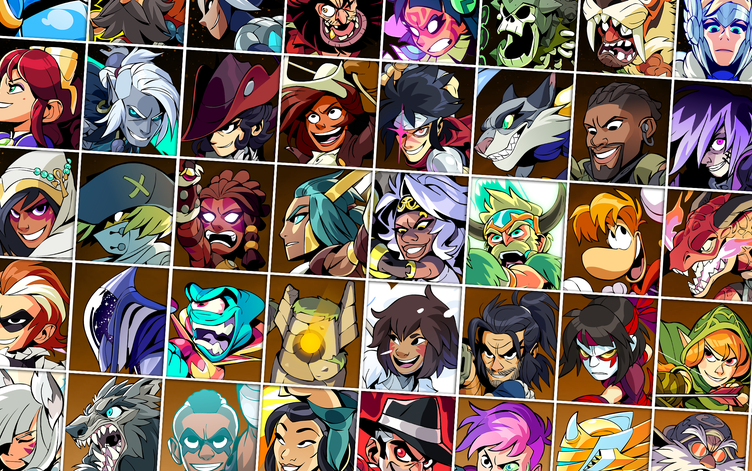
That's why a useful Brawlhalla tier list needs to look beyond flashy signatures and weapon combinations. You have to consider neutral-game control, reliable knockouts, movement speed, defensive options, and how consistently a legend performs against experienced opponents.
The November 2026 meta is particularly interesting. Patch 11.00 introduced another round of weapon and signature adjustments ahead of the Brawlhalla World Championship, while newer legends such as Rupture, Aurus, and Qinghua & Baobao have added more variety to the competitive roster. The introduction of Super Stances earlier in the year also changed how players can optimize character stats.
In this guide, I'll break down the best Brawlhalla legends for ranked 1v1 and 2v2, compare every major weapon category, and explain which characters are worth learning at different skill levels. Whether you're trying to escape Silver, reach Platinum, or push into Diamond, the goal is to help you find a legend that actually fits the way you fight.
I. Brawlhalla Tier List Overview for the Current Meta
A. What a Legend Tier List Measures in Ranked Play
A Brawlhalla tier list ranks legends according to their overall competitive potential rather than their appearance, popularity, or raw damage alone. Every legend has two weapons, six signature attacks, and a particular distribution of strength, dexterity, defense, and speed. Those differences influence how effectively they control space, create openings, survive pressure, and finish stocks.
For ranked play, I put considerable weight on consistency. A character with devastating attacks isn't automatically better than one with slightly lower damage but safer neutral options. Reliable legends can pressure opponents without taking unnecessary risks, punish missed dodges, and secure knockouts without depending entirely on random signature hits.
This ranking focuses primarily on 1v1 ranked performance, with 2v2 effectiveness helping separate closely matched legends.
B. How Patch Balance Changes Shift S, A, B, and C Placements
Brawlhalla's balance changes can alter weapon performance through adjustments to damage, force, recovery frames, attack startup, and stun duration. A relatively small change can make an important combo easier to execute or turn a formerly safe attack into something opponents can punish.
The current Brawlhalla tier list uses four categories:
S-Tier: Legends with outstanding competitive potential, reliable pressure, and strong stock-conversion tools.
A-Tier: Highly competitive characters with a few matchup limitations or additional execution requirements.
B-Tier: Solid choices that perform well with matchup knowledge but have less consistent advantages.
C-Tier: More specialized or demanding picks that are harder to recommend for general-purpose ranked climbing.
These are strategic rankings, not official developer ratings or guarantees of a particular win percentage. In a game as balanced and skill-dependent as Brawlhalla, even lower-tier characters can win at the highest level.
C. Quick Reference Table of Power Level, Best Use, and Win-Rate Potential
Tier | Notable Legends | Best Use | Win-Rate Potential |
|---|---|---|---|
S | Loki, Thea, Tezca, Teros, Koji, Petra, Jaeyun, Mako | Aggressive ranked play, pressure, strong kill setups | Very high with weapon mastery |
S | Red Raptor, Vivi, Seven, Thor, Arcadia, Ezio, Rupture, King Zuva, Imugi | Versatile offense, edgeguards, stock conversion | High to very high |
A | Magyar, Wu Shang, Zariel, Bödvar, Kor | Consistent neutral, balanced play, selective counters | High |
B | Cassidy, Orion, Diana, Caspian, Ember, Ada | Matchup-focused play, zoning, specific strengths | Moderate to high |
C | Mirage, Brynn, Mordex, Dusk, Sir Roland, Nix, Lucien | Specialist playstyles and demanding matchups | Highly player-dependent |
A quick warning before treating this table as a shopping list: these categories describe practical strengths and difficulty-adjusted recommendations, not a strict ordering of observed win rates. Some B-tier and C-tier legends have excellent ladder results, while several aggressive S-tier candidates have surprisingly ordinary aggregate win rates.
The newest characters deserve attention too. Qinghua & Baobao, with Cannon and Orb, are especially worth evaluating after their initial balance adjustments. Aurus brings Spear and Chakram, Ransom combines Bow and Chakram, and Lady Vera offers a different Chakram-and-Scythe approach.
II. How Legends Are Ranked
A. Weapon Strength, Stat Spread, and Signature Attacks
Weapons form the foundation of competitive viability. A legend with two reliable weapons can handle more situations than a specialist who struggles whenever their preferred weapon isn't available.
Gauntlets excel at close-range pressure and offstage control, Spear offers straightforward spacing and dependable follow-ups, and Greatsword rewards accurate reads with impressive damage. Meanwhile, weapons such as Blasters and Scythe can become extremely dangerous in experienced hands but punish poor positioning more severely.
Stat distribution matters alongside weapon selection. High defense improves survival, while high speed helps with positioning and recovery. Strength affects damage and knockback, and dexterity influences attack timing and recovery characteristics. Signatures complete the package by providing character-specific ways to punish movement, cover space, or finish stocks.
B. Pick Rate, Win Rate, and High Diamond Elo Data
Competitive statistics provide valuable context, but they need careful interpretation.
Pick rate shows how frequently players select a legend. Win rate measures the percentage of recorded games that end in victory. Neither statistic independently proves that a character is overpowered, especially when player experience and matchup distribution differ.
For example, Mordex remains one of the most frequently played legends in tracked matches, yet his overall win percentage can sit below 50%. Meanwhile, characters such as Thor, Seven, and Qinghua & Baobao have shown stronger results in recent statistical snapshots despite receiving less attention.
High Diamond and top-Elo performance is particularly useful because experienced players understand spacing, dodge punishment, and weapon-specific conversions. However, publicly available tracking samples may combine ranked matches with other queues, so the numbers shouldn't be mistaken for exact, isolated Diamond 1v1 win rates.
C. Ranked 1v1 Priority Versus 2v2 as a Tiebreaker
In 1v1, a legend must create openings without relying on teammates. Movement, neutral control, and reliable follow-ups become especially important because every mistake can lead directly to a lost stock.
Doubles introduces different considerations. Large hitboxes, team-combo setups, defensive coverage, and the ability to protect a recovering teammate all increase in value. A slower Hammer legend may be less comfortable chasing an agile opponent in singles but excellent at punishing enemies distracted by a partner.
For this ranking, singles performance comes first. When two legends have similar individual potential, stronger team utility provides the advantage.
D. Why Skill, Playstyle, and Matchups Still Beat Raw Tier
Here's something worth remembering whenever you look at a Brawlhalla tier list: familiarity beats theoretical strength surprisingly often.
A Diamond player who understands every Spear interaction will usually make better decisions with their longtime main than with a newly purchased S-tier character. The same goes for players who prefer defensive spacing instead of constant aggression.
Matchups matter, too. A strong rushdown character can struggle against someone who carefully controls distance, while a slow heavy-hitter may dominate an impatient opponent who repeatedly approaches from predictable angles.
The most valuable tier list doesn't simply tell you who to pick. It helps explain why a character works and whether those advantages match your own skills.
III. S-Tier Legends: Best Picks for Ranking Up
A. Loki, Thea, Tezca, and Teros as Meta Staples
Loki, Thea, Tezca, and Teros represent four very different approaches to winning ranked matches. They're all worth considering near the top of a Brawlhalla tier list, although their strengths depend heavily on the player and matchup.
Loki combines Scythe and Katars, giving him excellent string potential and tools for forcing defensive mistakes. His biggest advantage is how effectively he can turn one successful dodge read into extended pressure. However, he's far from an automatic win. Players who struggle to read dodges may find his damage output inconsistent.
Thea is one of the fastest legends available. Her Battle Boots and Rocket Lance allow aggressive approaches, quick repositioning, and constant harassment. Her low defense is the obvious weakness, so she rewards players who can avoid unnecessary trades.
Tezca offers Battle Boots and Gauntlets, making him particularly attractive to rushdown players. Both weapons support close-range pressure, and his signatures give him additional ways to convert openings into knockouts. He's dangerous when controlling the tempo but can become predictable if every approach begins the same way.
Teros is a different kind of threat. His Axe and Hammer specialize in heavy damage and powerful finishing attacks. He doesn't need long strings to make an opponent regret a mistake. For players who prefer straightforward punishment over technical combos, Teros remains one of the most practical choices.
B. Koji, Petra, Jaeyun, Mako, and Scarlet Weapon Kits
Koji is an excellent competitive pick because Sword and Bow complement each other naturally. Sword provides reliable close-range options, while Bow controls approaches and punishes opponents who hover just outside melee range. His toolkit suits patient players who want to win neutral repeatedly.
Petra uses Gauntlets and Orb, combining aggressive pressure with flexible spacing. Her strong attack-oriented profile and signatures make her particularly threatening when opponents struggle to escape close-range situations.
Jaeyun brings Greatsword and Sword. His Greatsword can produce tremendous damage through correctly timed strings, while Sword provides a simpler fallback when opponents refuse to engage. He offers exceptional potential, although mastering Greatsword requires practice.
Mako pairs Greatsword with Katars and has outstanding mobility. She can pressure from close range, punish landings, and maintain momentum with fast movement. Recent improvements to her Greatsword signatures make her especially interesting for players who already understand her weapon routes.
Scarlet uses Hammer and Rocket Lance. Her high-damage style rewards players who understand spacing and punishment. She doesn't need to overwhelm opponents with constant attacks; finding the right opening can be enough to close out a stock.
C. Red Raptor, Vivi, Seven, Thor, Arcadia, Ezio, Rupture, King Zuva, and Imugi
Several additional legends deserve serious attention because of their weapon combinations and practical win conditions.
Legend | Weapons | Main Competitive Strength |
|---|---|---|
Red Raptor | Battle Boots, Orb | Fast pressure and flexible neutral |
Vivi | Battle Boots, Blasters | Mobile offense with ranged coverage |
Seven | Spear, Cannon | Strong defense and explosive strings |
Thor | Hammer, Orb | Reliable damage and knockout potential |
Arcadia | Spear, Greatsword | Ground control and rewarding follow-ups |
Ezio | Sword, Orb | Flexible spacing and punish tools |
Rupture | Katars, Rocket Lance | High-strength offense and contrasting ranges |
King Zuva | Hammer, Battle Boots | Heavy finishing power with close-range pressure |
Imugi | Axe, Greatsword | Punishing hits and substantial damage potential |
Red Raptor and Vivi are particularly appealing if you enjoy constantly repositioning. Seven and Thor offer a more controlled experience, where good defensive choices create opportunities for heavy punishment.
Arcadia, Imugi, and Jaeyun are strong candidates for anyone interested in Greatsword, although they require more deliberate practice than simple Sword or Spear legends.
Rupture brings an unusual combination of close-range Katars and long-reaching Rocket Lance attacks. His high-strength stat profile makes successful hits rewarding, but careless approaches remain punishable.
King Zuva sits somewhere between heavyweight punishment and aggressive Battle Boots gameplay. His Hammer signatures also received speed improvements during 2026, making him more comfortable when challenging opponents in neutral.
D. Kill Confirms, Mobility, and Why These Legends Dominate Neutral
The strongest characters don't necessarily deal the most damage with a single attack. They create useful openings more frequently and convert those openings into meaningful advantages.
A reliable kill confirm is an attack sequence that can lead to a knockout under the appropriate damage, positioning, and frame conditions. A true combo is especially valuable because an opponent cannot dodge between its connected hits when executed correctly.
Mobility adds another dimension. Fast legends can approach, retreat, and reposition without committing to dangerous exchanges. Heavy hitters compensate through larger threats, better survivability, or greater punishment when the opponent makes a mistake.
The main reason these S-tier candidates are attractive is that they offer clear paths toward winning. Some control neutral with movement, others exploit dodge reads, and others can finish stocks with relatively straightforward attacks.
Just remember that a strong toolkit and a high overall win rate are not always the same thing.
IV. A-Tier Legends: Strong Competitive Contenders
A. Magyar, Wu Shang, Zariel, Bödvar, and Kor
A-tier legends are absolutely capable of reaching Diamond and competing against top-ranked opponents.
Magyar combines Greatsword and Hammer with exceptional defense. This makes Magyar a strong choice for players who prefer surviving extended exchanges and punishing mistakes rather than constantly rushing forward.
Wu Shang offers Gauntlets and Spear, one of the most comfortable weapon combinations for learning competitive fundamentals. Spear controls distance, while Gauntlets provide pressure and offstage opportunities.
Zariel uses Gauntlets and Bow. The combination offers excellent coverage, although some of Zariel's signatures became less forgiving following the latest balance adjustments.
Bödvar remains one of the most dependable all-around characters. Hammer supplies knockout power, and Sword provides uncomplicated neutral tools.
Kor combines Gauntlets and Hammer with strong defensive capabilities. His weapon pairing is particularly useful for players who enjoy punishing opponents near the edge.
B. Slightly Higher Execution or Clear Stat Tradeoffs
What usually separates A-tier from S-tier isn't one enormous weakness. It's a collection of smaller disadvantages.
Magyar's limited mobility can make chasing fast opponents uncomfortable. Wu Shang rewards good fundamentals but still requires accurate positioning to maximize his pressure. Zariel must be careful when relying on signatures against experienced opponents who understand their timing.
Bödvar has few glaring weaknesses, but his toolkit may not feel as explosive as those of specialized offensive legends. Kor offers excellent survivability and edgeguarding options, yet his movement requires more deliberate positioning.
These drawbacks are manageable. They simply influence how each character approaches particular matchups.
C. When an A-Tier Main Still Wins Tournaments and Ladder Games
An experienced A-tier player can absolutely outperform someone using an S-tier legend.
At high ranks, understanding dodge habits, weapon spacing, and recovery options frequently matters more than small differences in theoretical character strength.
I'd rather recommend Bödvar to a player who consistently wins neutral with Sword than encourage that player to switch immediately to an unfamiliar Greatsword legend.
A-tier characters are also excellent long-term investments because their core mechanics tend to remain useful through multiple balance patches.
V. B-Tier Legends: Solid but Matchup-Dependent
A. Cassidy, Orion, Diana, Caspian, and Similar Mid-Tier Kits
B-tier legends can be highly effective, but their performance often depends on whether the player can exploit their particular strengths.
Cassidy uses Hammer and Blasters. Her high dexterity creates interesting opportunities, but players need accurate spacing to make both weapons effective.
Orion combines Rocket Lance and Spear, giving him approachable attacks and excellent horizontal coverage. He's particularly effective against opponents who struggle to recognize repeated approaches.
Diana uses Bow and Blasters, making her a strong defensive and spacing-oriented character. She can make aggressive opponents uncomfortable by controlling the space they want to enter.
Caspian pairs Katars and Gauntlets. His kit is excellent for close-range aggression, although it lacks the natural reach of longer weapons.
Other B-tier candidates include Ember, Ada, Ragnir, and Vector. None should be dismissed outright; each offers advantages that become more valuable in specific matchups.
B. Zoning, Glass-Cannon, and High-Defense Playstyles
B-tier characters demonstrate why weapon selection is only part of competitive success.
Zoning legends such as Diana rely on controlling space and punishing predictable approaches. Their strength isn't necessarily explosive damage but the ability to make opponents take risks.
Glass-cannon characters, including aggressive low-defense picks such as Ember, demand better defensive decisions. They can generate pressure quickly but lose stocks faster after making mistakes.
High-defense legends offer the opposite experience. They survive more punishment, giving players additional opportunities to adjust during long matches. However, defense alone doesn't solve poor mobility or weak positioning.
Understanding these tradeoffs makes it much easier to choose a character that fits your preferred pace.
C. Best Uses in Lower Ranks and Counter-Picks
B-tier legends can be especially effective in Bronze, Silver, and Gold because many opponents haven't developed consistent punishment habits.
Orion's Rocket Lance can frustrate players who constantly approach horizontally. Cassidy's Hammer can punish opponents who jump predictably, while Diana can dominate enemies who repeatedly run into Bow coverage.
At higher Elo, these habits become easier to recognize and counter.
Instead of switching legends after every bad matchup, learn what makes your current character vulnerable. You'll often gain more rating by correcting one recurring mistake than by unlocking another supposed top-tier pick.
VI. C-Tier and Lower Legends: Situational or Skip
A. Mirage, Brynn, Mordex, and Dusk as Expert-Only Picks
This section needs an important clarification: C-tier doesn't mean a legend is incapable of winning. Here, it represents characters that are harder to recommend universally because they demand additional matchup knowledge, precise execution, or a specialized approach.
Mirage combines Scythe and Spear. Her weapons can be dangerous, but getting consistent results requires both spacing discipline and strong dodge-reading ability.
Brynn uses Axe and Spear, offering solid fundamentals and useful knockout options. She isn't inherently weak, though her straightforward toolkit depends on the player's ability to win neutral consistently.
Mordex is perhaps the clearest example of why popularity shouldn't determine rankings. His Scythe and Gauntlets can generate incredible offstage pressure, but players who repeatedly attempt risky reads may struggle to win consistently.
Dusk combines Orb and Spear, with flexible coverage and an unusual signature kit. His strengths reward players who understand spacing and can punish opponents without relying on obvious attacks.
None of these legends should automatically be avoided by experienced players.
B. Sir Roland, Nix, Lucien, and Other Rarely Picked Legends
Sir Roland brings Rocket Lance and Sword, alongside outstanding defense. His main limitation isn't a lack of damage but the difficulty of maintaining pressure against extremely mobile opponents. Despite his lower usage, he can perform well in ranked.
Nix uses Scythe and Blasters. Both weapons reward precise positioning, making her difficult for beginners but dangerous when mastered.
Lucien combines Katars and Blasters, offering mobility and strong spacing potential. His relatively low strength can make stock conversion more demanding when opponents survive into high damage.
These characters are best viewed as specialist selections rather than unusable options.
C. Why Popularity Does Not Equal High-Ranked Win Rate
A frequently selected legend isn't necessarily a consistently successful one.
Mordex attracts players because his combos and offstage plays look incredible. That popularity also brings inexperienced players who haven't learned how to use his weapons safely.
Less popular legends can produce stronger results because their users tend to be dedicated specialists, or because opponents have less experience fighting them.
For that reason, don't treat pick rate as an automatic measure of strength. Consider the experience level of the players, sample size, relevant game mode, and actual matchups before drawing conclusions.
VII. Brawlhalla Weapon Tier List
A. S-Tier Weapons: Gauntlets, Greatsword, Spear, Battle Boots, and Katars
For this Brawlhalla weapon tier list, S-tier represents weapons with particularly useful offensive tools or strong potential in the right hands.
Gauntlets excel at close-range pressure, dodge punishment, and offstage control. Their flexibility makes them valuable across several competitive playstyles.
Greatsword rewards players who understand opener, bridge, and finisher sequences. A correctly executed read can generate substantial damage, although poor spacing creates openings for punishment.
Spear is one of the most reliable weapons for learning neutral. It provides strong reach, straightforward attacks, and useful aerial control.
Battle Boots encourage aggressive movement and extended pressure. They suit players who enjoy fast engagements but require careful approach timing against defensive opponents.
Katars offer excellent close-range strings and repeated pressure opportunities. However, their damage efficiency was reduced in Patch 11.00, so players should pay particular attention to how much reward they actually receive from each opening.
These are favorable recommendations based on overall utility and potential, not an official statistical ranking.
B. A-Tier Weapons: Sword, Bow, Hammer, Scythe, and Orb
A-tier weapons remain excellent competitive options.
Sword is arguably one of the easiest weapons to recommend because of its dependable neutral attacks and straightforward fundamentals.
Bow controls space effectively and punishes opponents who approach without considering attack ranges.
Hammer provides powerful knockout options and strong positional punishment. Its damage output improved in the latest patch, making successful grounded hits more rewarding.
Scythe has an extremely high skill ceiling. Dodge reads, directional control, and offstage interactions can produce spectacular results, but its conversions require more precision than simpler weapons.
Orb offers quick attacks, flexible spacing, and useful combo routes. It works especially well for players who prefer controlling short-to-medium distances.
Any of these weapons can function at top competitive levels.
C. B- and C-Tier Weapons: Axe, Blasters, Cannon, Rocket Lance, and Chakram
These weapons aren't necessarily weaker in raw performance. They sit lower in this particular accessibility-and-flexibility ranking because some demand specialized positioning or have clearer matchup weaknesses.
Axe provides heavy damage and strong aerial coverage but can be punished when attacks are poorly spaced.
Blasters offer excellent horizontal range, although close-range pressure can become uncomfortable when an opponent gets inside their effective attack distance.
Cannon generates substantial damage through strings and can control space effectively. However, its effectiveness depends on understanding movement and follow-up routes.
Rocket Lance can dominate horizontal approaches, particularly against inexperienced opponents. More advanced opponents may exploit predictable movement and commitment.
Chakram offers a unique combination of Fused and Split attacks. Its versatility is impressive, but learning when to use each form takes additional effort. Recent changes have also made certain missed aerial attacks easier to punish.
It's worth emphasizing that Cannon, Rocket Lance, Axe, and Chakram can all show strong aggregate results. A technical tier placement should never be interpreted as proof that the weapon is statistically unsuccessful.
D. Best Weapon Pairs and True Combo Potential
Some of the most useful weapon combinations include:
Weapon Combination | Example Legend | Main Advantage |
|---|---|---|
Sword + Hammer | Bödvar | Balanced neutral and knockout power |
Spear + Gauntlets | Wu Shang | Spacing and close-range pressure |
Sword + Bow | Koji | Consistent control at different ranges |
Gauntlets + Orb | Petra | Aggression with flexible neutral |
Greatsword + Katars | Mako | High string potential |
Axe + Hammer | Teros | Heavy damage and reliable finishing |
Cannon + Orb | Qinghua & Baobao | Mobility, strings, and flexible coverage |
A true combo connects without providing a dodge opportunity between the relevant hits. Strings, by comparison, may contain dodge windows and rely on correctly predicting the opponent's escape.
This distinction matters because an impressive training-mode sequence isn't necessarily guaranteed against another player. Always check dodge windows, damage ranges, movement direction, and any dexterity or stance requirements before treating a combo as reliable.
VIII. Best Legends for Beginners
A. Easy Signatures, Safe Neutral, and Forgiving Defense
If you're just starting Brawlhalla, I'd recommend choosing characters with understandable attack ranges and simple neutral options.
Beginners benefit from weapons that provide clear feedback. Sword teaches spacing, Spear helps with anti-air control, and Hammer introduces punish timing.
A forgiving defensive profile also matters because newer players frequently waste jumps, dodge at the wrong moment, or attack when they should retreat.
Avoid choosing a character solely because their signature attacks look powerful. You'll learn much faster by understanding light attacks, recovery options, and basic movement.
B. Bödvar, Teros, and Other Low-Execution Mains
Bödvar is my favorite general recommendation for learning fundamentals. Sword is approachable, Hammer develops knockout awareness, and the character doesn't require complicated strings to remain effective.
Teros is ideal for players who prefer simple but rewarding attacks. His weapons emphasize positioning and punishment, though missed heavy attacks can leave him vulnerable.
Orion is another beginner-friendly choice, especially for learning horizontal spacing with Spear and Rocket Lance.
Hattori works well for players who want a faster character without immediately learning advanced Scythe mechanics.
Wu Shang and Koji are also excellent beginner-to-intermediate selections because their weapon combinations encourage practical habits that remain valuable at higher Elo.
C. When to Move From a Starter Kit to a Faster Rushdown Legend
There's no required point where you have to abandon a beginner legend. Bödvar, Hattori, and Wu Shang can remain competitive long after you've learned the basics.
However, if you consistently understand spacing, punish missed attacks, and manage recovery resources properly, you might enjoy experimenting with Tezca, Red Raptor, or Thea.
These characters emphasize faster pressure and more complicated positioning.
Before switching permanently, make sure the change solves an actual problem. If you're losing because you repeatedly dodge into attacks, a faster legend probably won't fix that habit.
IX. Best Legends for 1v1 Ranked
A. Ladder-Climbing Picks With Reliable Kill Setups
For consistent ranked progress, I would prioritize characters with manageable neutral games and clear ways to finish stocks.
Recommended 1v1 picks:
Koji: Excellent spacing and dependable Sword/Bow options.
Teros: High damage and relatively straightforward knockout opportunities.
Petra: Strong aggressive pressure with Gauntlets and Orb.
Bödvar: Balanced, reliable, and easy to practice consistently.
Thor: Great survivability and useful Hammer finishing options.
Tezca: Fast pressure and rewarding close-range interactions.
Players who enjoy technical mechanics can also consider Jaeyun, Mako, Loki, or Rupture.
B. Edgeguard, String, and Spacing Tools That Convert Stocks
Good edgeguarding is one of the biggest differences between average and strong ranked players.
Instead of immediately jumping offstage whenever an opponent gets knocked away, pay attention to their recovery resources. Have they already used their dodge? Do they still have jumps available? Can they safely return to the wall?
Gauntlets and Scythe are especially threatening when opponents have limited movement options. Bow and Spear can control the space around the ledge, while Hammer can punish predictable recoveries.
Strong players don't always chase the fastest knockout. Sometimes staying onstage and covering the opponent's return is the safer option.
C. Legends to Avoid if You Want Consistent Elo Gains
If your goal is reliable ranked improvement, avoid characters whose mechanics you cannot yet execute consistently.
Loki, Mordex, and Nix can be frustrating for players who haven't developed good Scythe fundamentals. Greatsword specialists such as Jaeyun and Mako also require practice before their strongest conversions become dependable.
Similarly, low-defense legends can punish beginners who constantly trade attacks.
This isn't a recommendation to avoid those characters forever. It's a reminder that learning difficult weapons while simultaneously trying to gain Elo can slow your short-term progress.
X. Best Legends and Team Comps for 2v2
A. Synergy Between Range, Pressure, and Kill Confirms
Doubles rewards cooperation rather than simply combining two individually powerful legends.
One player can use a longer-range weapon to control an area while the other pressures opponents at close range. Good teams coordinate attacks so one player's opening leads into the other's follow-up.
Here are several combinations worth practicing:
Team Composition | Main Strategy |
|---|---|
Koji + Tezca | Ranged control and aggressive pressure |
Thor + Wu Shang | Balanced team combos and reliable finishing |
Teros + Petra | Heavy damage supported by close-range pressure |
Seven + Vivi | Defensive coverage and mobile offense |
Bödvar + Red Raptor | Flexible neutral with multiple approach options |
These are suggested pairings rather than guaranteed tournament-optimal teams. Their effectiveness depends on positioning, communication, and whether both players understand their roles.
B. Stage Control, Weapon Throws, and Saving Stocks
A strong doubles player has to think about more than attacking the nearest opponent.
Stage control becomes essential because losing control of the center can leave both teammates trapped near opposite edges. Coordinated weapon throws can interrupt dangerous approaches or create opportunities for a teammate to return safely.
Stock conservation matters just as much. If your teammate is recovering, sometimes the best play is to pressure the opponent rather than chase a risky knockout.
Team damage settings also affect how aggressively you can attack near your partner. In competitive formats where friendly fire is active, careless signatures and poorly timed attacks can punish your own team.
C. Doubles Meta Picks Versus Solo Ranked Mains
A strong singles character isn't automatically the best doubles partner.
Legends with large attack coverage, reliable aerial control, and useful team-combo setups often gain additional value in 2v2.
Thor, Bödvar, Wu Shang, Koji, and Seven provide combinations of coverage and finishing potential that can work well alongside different partners.
Meanwhile, highly aggressive specialists may struggle if they constantly separate from their teammate or interrupt coordinated attacks.
For doubles, I'd prioritize a reliable team composition over choosing two characters simply because they're listed in S-tier.
XI. Stat Spread, Signatures, and Playstyles
A. Attack, Defense, Dexterity, and Mobility Explained
Every Brawlhalla legend uses four primary attributes:
Stat | What It Affects | Who Benefits Most |
|---|---|---|
Strength | Damage and knockback potential | Heavy hitters and knockout-focused legends |
Defense | Resistance to damage and knockback | Tank and survival-oriented characters |
Dexterity | Attack recovery and timing characteristics | Certain combo routes and technical setups |
Speed | Ground movement and aerial mobility | Rushdown and spacing-focused legends |
Stances let players adjust these attributes. Since 2026, Super Stances have expanded customization by adding two points to a selected attribute while removing two points elsewhere.
That creates meaningful opportunities to specialize. However, more strength isn't automatically better, and extra dexterity doesn't guarantee new true combos.
It's worth testing each stance against realistic opponents rather than choosing the one with the most impressive-looking stat.
B. Rushdown, Zoning, and Tank Legends
Rushdown characters such as Tezca and Red Raptor want to pressure opponents and force defensive mistakes. Their success depends on maintaining momentum without becoming predictable.
Zoning-oriented characters such as Koji and Diana prefer controlling distance and making opponents approach through carefully placed attacks.
Tank-style legends such as Magyar and Sir Roland focus on survivability and powerful punishment. They often prefer longer exchanges where strong defense creates additional opportunities.
Choosing the right style is more important than forcing yourself to play whatever happens to be fashionable.
C. How Signatures Matter Less Than a Weak Weapon
Signatures can secure knockouts, cover large areas, or catch opponents who repeatedly make the same defensive choice.
However, most competitive interactions involve light attacks, movement, spacing, and weapon-specific pressure.
A legend with excellent signatures but uncomfortable basic weapons may struggle to create enough safe openings to use those signatures effectively.
That said, signatures still matter. A particularly reliable knockout signature can solve a weapon's finishing problems, while a risky signature may become nearly useless against disciplined opponents.
I would generally choose a legend whose two weapons I understand first, then evaluate whether the signatures complement that foundation.
XII. Patch Notes and Balance Changes
A. Recent Buffs, Nerfs, and Weapon Adjustments
Patch 11.00, released in October 2026, made several meaningful adjustments before the Brawlhalla World Championship.
Among the important changes:
Katars: Side Light, Down Light, and Down Air lost damage, while Neutral Light gained damage.
Blasters: Side Light became easier to punish on a miss, and Down Light received a damage reduction.
Chakram: Several aerial attacks received restrictions on backward movement after missing.
Hammer: Side Light and Down Light gained damage.
Mako: Both Side Greatsword and Down Greatsword signatures received improvements.
Zariel: Neutral Bow and Down Gauntlets signatures became less threatening through startup, damage, or force adjustments.
Qinghua & Baobao: Several signature attacks received changes affecting force or launch direction.
The preceding updates also matter. Patch 10.10 improved several attacks for Axe, Greatsword, Orb, Rocket Lance, Scythe, and Spear. Earlier in 2026, Super Stances introduced another layer of character customization.
These adjustments help explain why weapon and legend rankings shouldn't remain unchanged indefinitely.
B. How Often the Brawlhalla Meta Actually Moves
Brawlhalla receives regular updates, but not every patch completely transforms competitive play.
Some adjustments mainly affect individual signatures. Others change important weapon properties and influence numerous legends simultaneously.
The biggest meta shifts usually happen when commonly used weapons receive major changes, new legends introduce unusual combinations, or competitive players discover more efficient strategies.
For ranked players, checking balance changes is useful, but immediately switching characters after every patch is rarely necessary.
A familiar legend with slightly weaker tools can still outperform an unfamiliar character that recently received buffs.
C. Crossover Skins and Why They Share the Base Legend's Tier
Brawlhalla features numerous crossover characters from movies, television, and other games.
Most crossover appearances are skins built around existing legends. They may feature new animations, visual effects, sounds, and character presentation, but they retain the underlying legend's gameplay identity.
That means a crossover skin generally belongs in the same competitive tier as its base legend.
There is an important exception: characters such as Rayman and Ezio are standalone legends with their own weapon combinations and signatures. They should be evaluated separately rather than treated as cosmetic alternatives.
When checking a tier list, always distinguish an actual legend from a crossover appearance.
XIII. How to Climb Ranked With This Tier List
A. Choosing One or Two Mains Instead of Chasing Every S-Tier
One of the easiest ways to waste time in ranked is switching characters after every losing streak.
You pick Tezca, lose three matches, switch to Loki, struggle with Scythe, then decide Teros must be the answer. A few hours later, you've practiced several legends without learning any of them properly.
A better approach is to choose one primary main and one backup character.
Ideally, your backup should offer a different weapon combination or playstyle. For example, you could main Koji for spacing and keep Teros available when you want heavier punishment.
Practice both weapons, learn their reliable combos, and build familiarity with common matchups before making another change.
B. Common Beginner, Intermediate, and Advanced Mistakes
Different skill levels usually struggle with different problems.
Skill Level | Common Mistake | Better Approach |
|---|---|---|
Beginner | Spamming signatures | Learn movement and safe light attacks |
Beginner | Wasting recovery options | Practice returning to stage with limited resources |
Intermediate | Dodging in predictable directions | Vary dodge timing and movement |
Intermediate | Attacking into obvious punishes | Improve spacing and recognize recovery frames |
Advanced | Overcommitting to difficult reads | Prioritize consistent conversions |
Advanced | Ignoring matchup adaptation | Study opponent habits and adjust neutral decisions |
The important part is identifying the mistakes that repeatedly cost you stocks.
Recording a few matches can be surprisingly useful. Pay attention to how often you lose neutral because of unnecessary attacks or repeated movement patterns.
C. Movement, Stage Control, Dodge Management, and Edgeguards
Movement is arguably the most important skill for climbing ranked.
Good players understand dash movement, jumps, fast-falling, aerial positioning, and when to retreat. They don't constantly attack simply because an opponent is nearby.
Stage control is equally valuable. Maintaining a strong position forces opponents to approach through your preferred attack ranges instead of allowing them to dictate every interaction.
Dodge management becomes increasingly important as you improve. Players at higher ranks actively look for repeated dodge directions and punish those habits with strings or delayed attacks.
Finally, practice edgeguards against several weapon types. Learn when to pressure directly, when to threaten a recovery route, and when remaining onstage is the safest decision.
If you improve these fundamentals, your chosen legend will start feeling stronger without any balance changes at all.
XIV. Brawlhalla Tier List FAQ
A. Who Is the Best Legend Right Now?
There isn't one universally strongest legend for every player and game mode.
Teros, Koji, Petra, Thor, and Tezca are all worthwhile ranked candidates, while Qinghua & Baobao have shown particularly promising statistical results in the current patch.
For players who want straightforward fundamentals, I'd favor Koji or Bödvar. For aggressive play, Tezca and Petra are attractive choices. If you prefer heavy damage and relatively simple finishing opportunities, Teros is difficult to overlook.
The best pick ultimately depends on your preferred weapons and ability to use them consistently.
B. Do Weapon Tiers Matter More Than Legend Tiers?
Usually, weapon familiarity matters more than small differences between legend rankings.
Two characters can have similarly strong signatures but perform very differently for a player who understands one weapon combination better than the other.
Weapon tiers help identify useful tools, but the full legend still matters because stats, signatures, and secondary weapons affect performance.
C. Can C-Tier Legends Still Win Ranked Matches?
Absolutely.
Mordex, Nix, Mirage, Brynn, Dusk, and Sir Roland can all win ranked matches. Some have competitive strengths that become particularly valuable in experienced hands.
A lower placement in this guide means the character may be harder to recommend for universal ranked climbing, not that they're incapable of winning.
D. Should Beginners Only Play S-Tier Legends?
No. Beginners should prioritize approachable mechanics and consistent learning.
Bödvar, Orion, Hattori, and Wu Shang can be better starting choices than mechanically demanding S-tier candidates.
Learning how to space attacks, recover safely, and punish mistakes will help much more than repeatedly changing characters to follow tier rankings.
E. How Do Redeem Codes and Combos Fit Around Legend Choice?
Redeem codes in Brawlhalla are generally associated with promotional rewards such as cosmetics, rather than direct competitive advantages. A code won't increase your legend's attack strength or grant stronger weapons.
Combos, on the other hand, are central to competitive improvement.
Every weapon has its own routes, follow-ups, and damage-dependent interactions. Spend time in Training Mode learning reliable light-attack combinations before attempting complicated strings.
A few consistently executed combos are far more useful than an impressive sequence you can only land once every ten matches.
The most important thing to understand about the Brawlhalla tier list 2026 is that competitive strength comes from more than character selection.
S-tier candidates such as Teros, Koji, Petra, Tezca, Jaeyun, and Thor offer useful competitive tools, but they require different levels of execution and reward different playstyles. Meanwhile, A-tier and B-tier legends can be just as effective when their users understand spacing, matchup weaknesses, and reliable knockout opportunities.
Recent balance changes have also made the meta more interesting. Hammer received damage improvements, Katars lost some damage efficiency, and several signatures received adjustments that influence how players approach particular situations. The expanded stat customization offered by Super Stances adds another reason to experiment rather than blindly copying an old ranking.
If you're relatively new, start with a reliable legend such as Bödvar, Wu Shang, or Teros. If you've already developed solid fundamentals and enjoy technical pressure, consider experimenting with Scythe, Greatsword, or Battle Boots characters.
Above all, don't confuse a powerful legend with an automatic shortcut to higher Elo. Learning movement, avoiding predictable dodges, controlling the stage, and converting your openings into knockouts will always matter.
Pick a character you genuinely enjoy, understand why their weapons work, and build your ranked strategy around those strengths. That's a much more dependable path to Diamond than chasing a different S-tier legend every week.