Street Rivals Guide 2026: Best Characters, Tier List, Teams, Builds, Codes, Reroll, and Beginner Tips
If you came into Street Rivals because you grew up watching Kuroko’s Basketball, the first few matches can be a little deceptive. The game looks like one of those anime mobile titles where you collect your favorite characters, tap a few flashy skills, and let the rarity of your roster do most of the work. That impression disappears pretty quickly once you start playing against real people.
Kuroko’s Basketball: Street Rivals is much more execution-heavy than that. You have to move manually, find shooting space, read passing lanes, time blocks, fight for rebounds, rotate on defense, understand your character’s animation windows, and—probably the hardest lesson for new players—actually pass the ball. A maxed-out scorer controlled by someone who forces contested shots can absolutely lose to a cheaper character used by a player who understands spacing and defense.
The worldwide English release officially went live on March 11, 2026, and the international version is available on Android and iOS. Google Play also lists Windows availability, while PC players can use supported Android-on-PC solutions where available. The game’s official descriptions confirm real-time 3v3 as its core mode alongside 1v1, 2v2, Ranked Matches, Story Mode, character development, and recreated signature moves such as Kuroko’s Misdirection and Kagami’s Air Walk.
The roster has also moved well beyond the basic launch lineup. By mid-2026, international players had already seen advanced versions such as SP Seijuro Akashi and Perfect Ryota Kise, while the global service even ran a Gintama collaboration featuring Toshiro Hijikata and Sogo Okita from July 2 to July 22. That matters because any Street Rivals tier list written around launch and never updated is already missing major pieces of the current competitive environment.
I have written this guide around the current global game rather than blindly copying older Japanese-server information. Meta rankings will naturally move as new variants arrive, but the fundamentals—spacing, teamwork, defensive timing, resource management, and choosing a role you can actually play—matter far more than chasing a tier-list screenshot every two weeks.
I. Street Rivals: Complete Beginner’s Guide
A. What Is Kuroko’s Basketball: Street Rivals?
Street Rivals, officially released internationally as Kuroko’s Basketball: Street Rivals or Kuroko’s Basketball: SR, is a real-time competitive basketball game based on the Kuroko’s Basketball anime.
Instead of controlling an entire five-man basketball team like you would in a traditional console basketball game, Street Rivals is designed around compact anime-style matches where individual character abilities are extremely important. The signature format is 3v3, although the game also includes 1v1, 2v2, Ranked Matches, Story Mode, events, training content, and other rotating activities.
What hooked me is that the characters are not just cosmetic skins with slightly different numbers. Kuroko actually plays around Misdirection and passing. Kagami attacks the rim through ridiculous jumping ability. Midorima stretches the defense from absurd shooting range. Murasakibara owns the paint. Akashi manipulates defenders and passing lanes. Kise revolves around copying and versatility.
You immediately recognize who these people are supposed to be.
At the same time, Street Rivals converts those exaggerated anime abilities into a competitive basketball framework. You still need somebody to create shots. Somebody has to rebound. Somebody has to guard the ball. Somebody has to help against a drive without abandoning the three-point line.
That combination is where the game gets interesting.
B. Street Rivals Gameplay and Core Features
The basic gameplay loop is simple to understand but surprisingly difficult to master.
You control your character directly with movement controls and context-sensitive basketball actions. On offense, you can pass, drive, stop, shoot, use character-specific techniques, or attack the rim depending on who you are playing. On defense, your options revolve around positioning, blocking, stealing, intercepting, contesting, and boxing out.
Each character then layers specialized moves over those fundamentals. Official game descriptions specifically highlight recreated signature abilities such as Kuroko’s Misdirection and Kagami’s Air Walk, while the international client supports multiple competitive formats rather than functioning as a story-only anime adaptation.
The biggest feature, though, is real-time PvP.
You are not calculating whether an AI defender has enough stats to stop you. There is another player watching your movement and waiting for you to repeat the same drive.
If you always shoot after one crossover, experienced defenders remember it.
If you always pass left when doubled, they start sitting in that passing lane.
If you jump at every fake, congratulations—you have just become the opposing scorer’s favorite defender.
That human element gives Street Rivals most of its replay value.
C. How Street Rivals Recreates the Kuroko’s Basketball Anime
The game does a much better job with the source material than simply dropping familiar character portraits into menus.
Story Mode recreates major anime story beats and includes original voice work, while character animations intentionally imitate the techniques fans associate with those players. The official store description specifically promotes a story experience based on the anime plot and original voices.
That means Street Rivals works on two levels.
If you are here mainly as an anime fan, you can replay familiar matchups and collect characters from Seirin, Kaijo, Shutoku, Too, Yosen, Rakuzan, and other schools.
If you care more about competitive gameplay, those personalities become mechanical archetypes.
Kuroko is deceptive support.
Midorima is spacing pressure.
Aomine is isolation offense.
Murasakibara is interior control.
Akashi is a technical playmaker.
Kise is versatility.
I think that is exactly how an anime sports game should work. The character fantasy matters, but it still has to function as a game.
II. Street Rivals Download and Supported Platforms
A. Street Rivals Android Download
Android players should download the global version directly through Google Play whenever it is available in their region.
The international Google Play listing identifies the game as Kuroko’s Basketball: SR, published by LMD Games in some regions, and lists more than 500,000 downloads on the version of the store currently indexed. The listing was updated in May 2026 and confirms the core 3v3, 1v1, 2v2, Ranked, and Story features.
I strongly recommend using the official store instead of downloading random APK files.
Street Rivals is an online account-based game with gacha purchases and competitive progression. Installing an altered client just to bypass a regional problem is a pretty terrible trade if it exposes your login credentials or payment information.
B. Street Rivals iOS Download
Street Rivals is also available through Apple’s App Store.
The US App Store listing currently shows support for iPhone and iPad and requires iOS/iPadOS 13.0 or later. The listed download size is roughly 2.7 GB before considering future patches and additional data.
Keep extra storage free.
Mobile games that begin around two or three gigabytes rarely stay there forever once new characters, voices, events, animations, skins, and story chapters accumulate.
C. How to Play Street Rivals on PC
PC players have a couple of practical routes.
Google Play currently identifies the Android release as available on Android and Windows in supported environments, so checking Google Play Games on PC should be your first option if your country and system support it.
Another common method is using an Android emulator. BlueStacks has published dedicated setup and beginner material for the global Street Rivals release, and other emulator platforms also support the game.
The main advantage of PC is control consistency.
Blocking on a small touchscreen can get messy when your hands cover part of the court. On PC, carefully configured keys can make passing, movement, and defensive reactions more comfortable.
But do not expect keyboard controls to magically make you good.
A bad defender with a mechanical keyboard is still a bad defender.
D. Global Version and Server Availability
The English global version launched on March 11, 2026. Official social posts announced the all-platform release on that date, following pre-download availability shortly before launch.
There are separate international publishing/server arrangements, including NA and SEA communities. This matters for events, code redemption, matchmaking populations, and sometimes banner schedules.
Whenever you read a Street Rivals guide, check the server.
A Japanese-server character recommendation may describe a unit that Global does not have yet.
A SEA gift code may fail on NA.
An old launch guide may rank a basic character highly because SP and advanced variants had not released.
Version context matters enormously in this game.
III. Street Rivals Gameplay Basics and Controls
A. Movement, Passing, Shooting, and Dunking
Your most important button in Street Rivals is not Shoot.
It is movement.
You create offense before you ever release the ball. Move away from a defender. Use a screen. Cut toward the basket. Drift toward open space. Pull a defender out of the paint. Force them to decide whether to guard you or help against your teammate.
Then pass.
New players have a habit of receiving the ball and immediately thinking, “My turn.”
That is how possessions die.
If two defenders collapse on you, passing is not giving up your chance to score. You just created the best shot on the court.
Shooting also depends heavily on spacing and contest.
A talented three-point character still wants open looks. If you throw up heavily contested shots repeatedly, do not blame your potential build when they miss.
Dunking works similarly. Characters like Kagami can attack aggressively, but strong defenders learn animation timing. Once your dunk pattern becomes predictable, you are basically delivering the ball directly to their block button.
B. Stealing, Blocking, and Rebounding
Defense requires patience.
Steal spam looks cool when it works, but every failed attempt can pull you out of position. Against experienced guards, random stealing becomes an invitation to drive past you.
Blocking is more reliable when you learn the scorer’s release animation.
Do not jump when the player begins moving.
Do not jump just because they enter the paint.
Jump when the actual shot or dunk reaches its blockable window.
Rebounding is another timing battle. Position matters before the ball comes off the rim. If a center already has inside positioning and is boxing you away from the basket, jumping harder does not fix the problem.
Get position early.
C. How Character Skills Work
Each player has a specialized skill package reflecting their anime identity.
Street Rivals combines ordinary basketball actions with signature skills, and the official store description explicitly promotes character-specific techniques and skill combinations. BlueStacks’ global beginner guide also notes that special actions are mapped around context-sensitive controls and charge-based signature abilities.
Do not try to memorize every branch immediately.
Pick one character and learn four things:
What creates their safest scoring chance?
What is their best defensive tool?
What move gets punished when used predictably?
What does their Ultimate actually accomplish?
Once you understand those, start learning advanced branches.
D. Timing and Positioning Tips
The biggest improvement I made in Street Rivals came from playing slower.
Not moving slower—thinking slower.
You do not need to press something every second.
Sometimes the best defensive input is nothing.
Stay between your matchup and the basket.
Watch their feet.
Let them commit.
On offense, stop treating the court like a giant sprint button.
Moving without purpose creates no advantage. Moving into a defender’s blind side, forcing a switch, clearing space for a teammate, or dragging a rim protector toward the perimeter does.
That is basketball.
The anime effects are just the fireworks on top.
IV. Street Rivals Game Modes Explained
A. Street Rivals 3v3 Mode
3v3 is the heart of Street Rivals.
The international store listings explicitly call it the core match mode.
Three players are enough to create real basketball interactions without making the court too crowded.
You have ball handlers.
You have off-ball scorers.
You have interior defenders.
You can screen, switch, help, rotate, isolate, kick out, and punish mismatches.
It is also the format where selfish play becomes painfully obvious.
One player trying to beat three defenders is usually much easier to stop than three players moving the ball.
B. 1v1 and 2v2 Matches
1v1 is great for learning your own character.
There is nowhere to hide.
If your drive gets blocked five possessions in a row, you cannot blame your point guard.
If you cannot stay in front of the opponent, there is no center waiting behind you.
2v2 sits in the middle. It introduces passing and help defense without becoming as tactically complicated as 3v3.
Both formats are officially supported in the international client.
C. Ranked Matches
Ranked is where your habits get exposed.
At lower levels, raw scoring can carry games because defenders mistime blocks and leave shooters completely open.
Higher up, people know the common animation branches.
They know when Midorima wants to shoot.
They know Kagami’s dunk options.
They watch Kuroko’s positioning.
They recognize Akashi’s setup.
That is when team composition and decision-making start mattering more than simply owning a rare character.
D. Story Mode and Training Mode
Story Mode is more valuable than many beginners realize.
Besides recreating anime content, early story progression is tied to account growth and feature unlocks. Global beginner documentation notes that Story Mode progression opens additional gameplay features and rewards, with stages offering multiple star objectives.
Training Mode is where you should learn a new character before taking them into Ranked.
Figure out your ranges.
Check which moves chain together.
Practice block timing.
Learn how far a drive actually moves you.
Five minutes of deliberate practice is worth far more than twenty Ranked games spent pressing buttons you do not understand.
V. Street Rivals Characters and Player Roles
A. Complete Street Rivals Character List
The international roster has expanded steadily since launch, and variant characters need to be treated separately because an upgraded or special version can play very differently from the base one.
Characters and major variants seen across the global ecosystem include Tetsuya Kuroko, Taiga Kagami, ZONE Taiga Kagami, Junpei Hyuga, Shun Izuki, Rinnosuke Mitobe, Shinji Koganei, Satoshi Tsuchida, Koki Furihata, Teppei Kiyoshi, Ryota Kise, Perfect Ryota Kise, Yukio Kasamatsu, Koji Kobori, Yoshitaka Moriyama, Mitsuhiro Hayakawa, Shintaro Midorima, Diviner/SP-style Midorima variants released through later banners, Kazunari Takao, Taisuke Otsubo, Daiki Aomine, ZONE/special Aomine variants, Shoichi Imayoshi, Ryo Sakurai, Kosuke Wakamatsu, Atsushi Murasakibara, Tatsuya Himuro, Seijuro Akashi, SP Seijuro Akashi, Chihiro Mayuzumi, and Liu Wei, among others introduced as Global continues catching up with older regional versions. Current official global channels have specifically promoted SP Akashi, Diviner Shintaro Midorima, and Perfect Ryota Kise.
Limited crossover characters have also appeared. During the July 2026 Gintama collaboration, Toshiro Hijikata and Sogo Okita were made available as playable collaboration characters.
Because the roster is still expanding, I would always verify an individual character’s current Global availability before planning months of resources around a Japanese-version release schedule.
B. Point Guards and Playmakers
Point guards create order.
They handle the ball, create passing angles, disrupt possession, and make sure scorers get the ball where they actually want it.
Global documentation uses players such as Koki Furihata as an early PG example, while competitive options such as Akashi, Kasamatsu, Takao, Izuki, and Imayoshi bring much stronger specialized tools.
A great PG is rarely judged only by points.
If you finish with four points but created every open shot and forced three turnovers, you probably did more than the teammate who scored twelve by taking sixteen attempts.
C. Shooting Guards and Scorers
SGs are generally your perimeter threats.
Junpei Hyuga is one of the easiest characters for beginners to understand because his purpose is obvious: create space and punish people from outside.
Then you reach characters like Midorima and the position becomes terrifying.
A strong long-range shooter changes the geometry of the court. Defenders cannot comfortably sit near the paint when somebody threatens a three from ridiculous distance.
Global guides identify SG as the perimeter-scoring role, with Hyuga used as a representative example.
D. Small Forwards and All-Rounders
Small forwards tend to be flexible.
They can score, move, defend, cut, and adapt to different team compositions.
This is often the best position for players who do not want to specialize entirely in one task.
Kise fits that fantasy especially well.
His entire identity is adaptability, and advanced Kise variants take that concept much further.
E. Power Forwards and Centers
Power forwards generally attack closer to the basket and provide physical defense, while centers dominate rebounding, interior contests, and positioning.
Global beginner documentation identifies Kagami as an early PF example and Mitobe/Kiyoshi as representative centers.
These positions are less glamorous until you play with somebody who is actually good at them.
Then suddenly your team gets every rebound.
Every missed shot becomes another possession.
Every enemy dunk becomes dangerous.
That wins games.
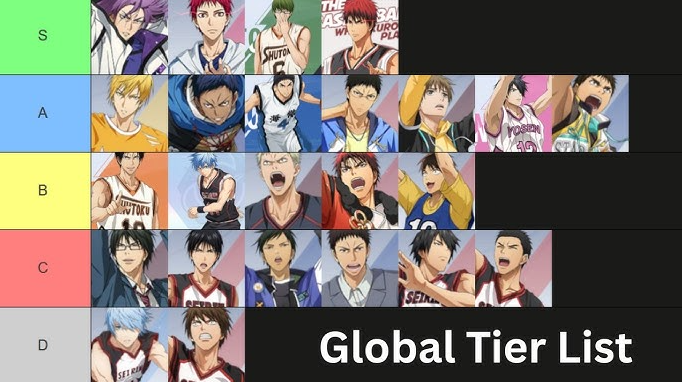
VI. Street Rivals Tier List: Best Characters Ranked
No Street Rivals tier list should be treated like law.
The game is highly skill-based, variants keep releasing, and team composition changes character value. A recent high-rank Global community analysis made exactly that point while ranking characters around overall scoring, defense, utility, movement, and impact in higher-level play.
With that warning out of the way, this is how I would approach the current 2026 Global environment.
A. SS-Tier Meta Characters
SP Seijuro Akashi belongs in the top conversation because his combination of playmaking, pressure, deceptive scoring, and defensive disruption gives an experienced player answers in almost every possession. Even base Akashi remains highly technical, and high-ranked Global discussion continues to rate his predictive play and scoring options very highly.
Perfect Ryota Kise also has an obvious case for the elite bracket. The Perfect Kise event brought the character into the international ecosystem as a limited high-end unit, and the whole Perfect Copy identity gives him extraordinary versatility.
Shintaro Midorima remains one of the most oppressive pure scorers when protected properly. High-level Global players have continued to rate him among the strongest competitive characters because of his three-point pressure, deceptive dribble options, and ability to stretch defenders absurdly far away from the basket.
Teppei Kiyoshi deserves elite status for a completely different reason. He can rebound, score inside, create tricky timing situations, and contribute to team offense rather than functioning as a stationary rebound bot. Recent Global high-rank analysis has placed him among the strongest overall characters because a good Kiyoshi can control both possession and tempo.
B. S-Tier Competitive Characters
Seijuro Akashi, Tatsuya Himuro, strong Aomine variants, ZONE Kagami, Atsushi Murasakibara, and specialized Midorima variants all fit comfortably into high competitive play depending on account investment and team composition.
Aomine is especially attractive for players who enjoy creating their own offense. His anime identity already revolves around unpredictable isolation scoring, and Street Rivals converts that into a character who rewards mechanical confidence.
ZONE Kagami brings much more two-way pressure than a basic beginner scorer.
Murasakibara remains one of the easiest characters to understand strategically: own the paint, rebound, punish weak interior attempts, and force the opponent to find another way to score.
C. Best A-Tier Characters
This is where I put strong characters that can absolutely win high-level matches but are either more dependent on the team, easier to game-plan against, or less universally dominant.
Yukio Kasamatsu is a fantastic example. High-rank Global discussion praises his speed, stealing pressure, dribbling, passing, and scoring flexibility.
Kazunari Takao, Tetsuya Kuroko, Mitsuhiro Hayakawa, Kosuke Wakamatsu, Taisuke Otsubo, and Shoichi Imayoshi can all provide serious value in the right hands.
Kuroko is the perfect example of why tier lists can be misleading.
His personal scoring may look less intimidating than an ace character, but an experienced Kuroko player who understands court awareness, passing, and Misdirection can completely change how a team functions.
D. Characters for Beginners and F2P Players
For beginners, I value easy execution and useful fundamentals more than maximum theoretical power.
Hyuga teaches spacing and shooting.
Kagami teaches inside attack and defensive jumping.
Mitobe teaches center positioning.
Izuki and Furihata teach passing.
Kuroko teaches you to look at teammates instead of staring at your own character.
Several new-player events have also historically provided substantial free progression and even opportunities to obtain high-value characters, although exact Rookie/Freshman Training rewards can change over time and between versions.
Do not reroll a perfectly good account because somebody put your favorite character in A tier.
Street Rivals rewards mastery.
VII. Best Street Rivals Characters for Each Position
A. Best Point Guard
For pure competitive ceiling, SP Seijuro Akashi is my pick.
He combines playmaking, ball control, deception, and defensive threat in a way that rewards players who think ahead.
Base Akashi is still excellent if you do not have the SP version.
For a cheaper practical option, Kasamatsu is extremely fun because his speed and stealing pressure can make careless ball handlers miserable. Current high-rank Global discussion considers him one of the strongest non-premium guard choices.
B. Best Shooting Guard
Shintaro Midorima is still the SG I least enjoy defending.
Not because every shot is automatically going in, but because his presence changes where I am allowed to stand.
That is more valuable than raw shot percentage.
If a shooter forces a defender two extra steps outside, the entire floor becomes easier for teammates.
C. Best Small Forward
Perfect Ryota Kise is the obvious premium answer in the current environment.
Versatility is incredibly valuable in 3v3 because you cannot bring five specialists. A character who can threaten from different areas and adapt to matchups becomes disproportionately useful.
For players without the advanced variant, base Kise can still be enjoyable and flexible.
D. Best Power Forward
For a two-way physical threat, ZONE Taiga Kagami is one of my favorite choices.
He can pressure the rim while still contributing meaningfully to blocks and rebounds.
Aomine is the pick if you care much more about individual shot creation.
Those two characters represent two very different PF philosophies: Kagami overwhelms with athletic force, while Aomine makes defenders guess.
E. Best Center
I give the overall edge to Teppei Kiyoshi because he provides more offensive creativity without giving up the fundamental jobs of a center.
If you want straightforward defensive dominance, however, Atsushi Murasakibara is still exactly what you expect.
Put him near the basket.
Make the opponent regret coming inside.
VIII. Generation of Miracles Characters in Street Rivals
A. Tetsuya Kuroko
Kuroko is technically the Phantom Sixth Man connected to the Generation of Miracles, and his Street Rivals identity is built around support rather than conventional superstar scoring.
He is strongest when teammates understand him.
A random team that refuses to move makes Kuroko look weak.
A coordinated team turns his passing and misdirection into constant open shots.
If you play him, stop worrying about MVP every match.
Your job is to make everybody else harder to defend.
B. Taiga Kagami
One correction worth making: Taiga Kagami is not actually a member of the Generation of Miracles.
He is Seirin’s ace and the player who grows into their great rival.
Street Rivals still naturally groups him near them because of his power level.
Kagami is a rim attacker first. His Air Walk identity is officially highlighted in the game’s store description, and his stronger variants push his athleticism even further.
Do not become the Kagami player who dunks every possession.
Use the threat of the dunk to create something else.
C. Ryota Kise
Kise is built for players who hate being one-dimensional.
His Copy identity gives him adaptability, while Perfect Ryota Kise represents the much stronger version of that fantasy.
Perfect Kise was officially promoted as a limited international character during the 2026 Perfect Ace event.
He is expensive to build compared with simple starter characters, so F2P players should make sure they actually enjoy his playstyle before throwing every saved diamond at him.
D. Shintaro Midorima
Midorima creates panic.
A normal shooter threatens around the arc.
Midorima makes defenders think about shots from places that should not be reasonable.
Recent high-level Global discussion has continued to rate him extremely highly due to his shooting consistency, fake options, movement tools, and ability to pressure the defense from huge range.
The downside is obvious.
If your teammates refuse to screen, pass, or rebound, even the best shooter becomes easier to contain.
E. Daiki Aomine
Aomine is for players who love isolation.
He can create offense in situations where a normal character would simply pass out.
That makes him fantastic in solo queue, but it also creates bad habits.
Owning Aomine does not mean you must attempt to beat all three defenders every possession.
The best Aomine players use isolation because the defense gives it to them, not because they are emotionally committed to showing everyone their combo package.
F. Atsushi Murasakibara and Seijuro Akashi
Murasakibara and Akashi sit on opposite ends of basketball control.
Murasakibara controls space.
Akashi controls decisions.
Against Murasakibara, you think twice before entering the paint.
Against Akashi, you think twice before dribbling or throwing a lazy pass.
That psychological pressure matters.
A good defender does not need ten blocks if the opponent becomes so afraid of getting blocked that they stop taking good shots.
IX. Street Rivals Best Teams and Lineups
A. Best 3v3 Team Compositions
The safest 3v3 structure is:
One primary creator + one reliable scorer + one rebound/defensive anchor.
For example:
Akashi + Midorima + Kiyoshi.
That lineup has creation, outside scoring, rebounding, interior presence, and enough flexibility to avoid becoming one-dimensional.
Another option would be:
Kasamatsu + Perfect Kise + Murasakibara.
You trade some specialized shooting for speed, versatility, and stronger paint control.
The names can change.
The roles should not.
B. Best Offensive Lineup
If I wanted maximum scoring pressure, I would build around a strong playmaker and two characters who threaten different areas.
Something like:
SP Akashi + Midorima + Perfect Kise
is frightening because defenders cannot simply pack the paint or sell out against one scorer.
Midorima creates long-range gravity.
Kise provides flexible attack.
Akashi manipulates the possession.
The danger is rebounding. An ultra-offensive lineup has to convert efficiently because it may not dominate missed shots.
C. Best Defensive Lineup
For defense, I want:
ZONE Kagami + Akashi/SP Akashi + Murasakibara or Kiyoshi.
You get perimeter disruption, help defense, blocking, rebounding, and physical interior protection.
The goal is not to chase steals constantly.
Good defense is making every shot uncomfortable.
D. Best F2P Team
The best F2P team is not a fixed trio because free characters and beginner campaigns can change.
Instead, I recommend building around what the account gives you efficiently:
One accessible guard such as Izuki/Kasamatsu-style playmaking.
One dependable scorer such as Hyuga or another character you can develop cheaply.
One rebounder such as Mitobe, Hayakawa, Wakamatsu, or another center/PF you can realistically upgrade.
A fully developed affordable character is often more useful than a premium character sitting at a half-finished talent level.
E. Character Synergy and Team Roles
Ask these questions before entering 3v3:
Who handles the ball?
Who takes the important shots?
Who rebounds?
Who guards the opposing ace?
What happens when the first scoring option is shut down?
If your answer to all five questions is “me,” your lineup has a problem.
X. Street Rivals Character Builds and Skill Upgrades
A. How to Build Characters Correctly
Build around a job.
Do not randomly increase every stat because bigger numbers look nice.
A center does not need to become a mediocre three-point shooter if those resources could turn them into an elite rebounder.
A shooting guard should not sacrifice their core scoring strength just because you lost one match to a steal-heavy team.
The global game includes leveling, Ascension, Training, Talent progression, and additional build systems that improve character-specific performance. Basic leveling increases stats such as Close-Range Shot, Mid-Range Shot, Layup, Strength, and Vertical.
Start with your character’s identity.
Then specialize.
B. Talent Upgrade Priorities
Do not level talents in menu order.
Prioritize the abilities you actually use.
For a scorer:
Unlock the move that creates space.
Then upgrade the branch that makes your reliable shot harder to contest.
Then improve the fallback option that punishes defenders for anticipating the first move.
For a defender:
Improve your core block, rebound, steal, or movement tools before investing heavily in flashy offense.
A talent that affects every possession is worth more than an Ultimate enhancement you activate once.
C. Best Abilities and Traits
Abilities should reinforce your role.
PG: movement, passing, interception, steal, ball control.
SG: three-point scoring, interference resistance, movement, shot creation.
SF: mid-range, drive, movement, balanced defensive stats.
PF: dunk/layup, strength, vertical, rebound, block.
C: rebound, strength, block, box-out effectiveness, close-range finishing.
These are not universal commandments.
A three-point Kuroko build, for example, can work very differently from a traditional support setup. High-rank Global players have specifically discussed specialized three-point Kuroko builds as legitimate competitive options.
That is why copying one online build without understanding it can be dangerous.
D. Potential Builds for Different Positions
Potentials are where long-term specialization becomes expensive.
Do not build five completely unrelated sets in your first week.
Start with one position family.
If you main interior characters, prioritize a potential foundation usable across rebounders and defenders.
If you main perimeter scorers, build around the scoring and movement stats those characters share.
If you main guards, look for value that carries between your preferred playmakers.
The biggest F2P mistake is spreading potential resources across too many unrelated characters.
You end up with ten “usable” players and zero scary ones.
E. Awakening and Character Progression
Awakening represents another major layer of character power, especially for premium players whose strongest mechanics may depend on deeper investment.
That creates an important gacha lesson:
Owning the character is only step one.
Before pulling, ask how expensive they are to make functional.
A cheaper character at high development can outperform a prestigious unit that you cannot afford to finish.
This becomes increasingly important in high-ranked play.
XI. Street Rivals Gacha and Recruitment Guide
A. How the Recruitment System Works
Street Rivals uses multiple recruitment/gacha systems.
At launch, the Global game included a Rookie Gacha for new accounts plus limited character banners and Generation of Miracles-style treasure recruitment. The Rookie Gacha was documented with a guaranteed player within 30 attempts, while some limited systems used Luck Points and featured guarantees. Exact rules can change between banners, so always read the current banner details before spending.
That last sentence will save you a lot of pain.
Never assume two banners have identical pity.
B. Rookie Gacha and Beginner Banners
The Rookie Gacha exists to build your early roster.
Use it to cover positions rather than obsessing over one perfect pull.
You need someone who can score.
You need defense.
You need rebounding.
You need a character you actually enjoy controlling.
Beginner events have also historically provided a large amount of early recruitment and progression material, so do not spend premium currency impulsively on your first hour.
C. Which Characters Are Worth Pulling
Pull for one of three reasons:
The character is your favorite.
The character fills a serious weakness.
The character is strong enough to justify long-term investment.
Those reasons are much better than:
“I watched a tier-list video and the thumbnail had a red arrow.”
For competitive players, versatile premium units such as advanced Akashi and Perfect Kise naturally offer strong value.
For anime fans, pulling your favorite can be the better decision.
You are going to spend dozens of hours controlling this character.
Enjoyment matters.
D. How to Use Recruit Vouchers and Diamonds
Use dedicated vouchers before diamonds whenever possible.
Diamonds are flexible.
A voucher tied to one recruitment pool is not.
Burn the restrictive currency first and preserve the flexible currency for future limited banners, resource events, or high-value purchases.
Also watch for spending events.
Experienced players commonly recommend avoiding random early diamond spending because timed campaigns can reward reaching spending milestones. Community launch advice emphasized precisely this kind of resource patience.
E. When to Save Resources for Future Banners
Save when:
Your current team already works.
The active character overlaps heavily with somebody you built.
You cannot afford the development cost after obtaining the unit.
A favorite character is likely to arrive later.
The current banner has poor value for your role.
Street Rivals is much easier as a F2P player once you stop treating unused diamonds like an emergency.
XII. Street Rivals Reroll Guide
A. Is Rerolling Worth It?
Rerolling can help, but it is not mandatory.
Street Rivals is not an idle RPG where your starting SSR determines whether your account survives.
Mechanical skill matters too much.
If rerolling takes you ten minutes and gives you a serious chance at your favorite, fine.
If you have restarted for six hours because somebody on Discord told you one account is 3% more optimal, just play basketball.
B. Best Characters to Reroll For
If the current banner allows it, prioritize premium units with strong long-term utility.
An elite point guard is particularly valuable because playmaking affects every lineup.
A strong center is also safe because rebounding never stops being useful.
Premium scorers are great, but scorers are usually the easiest role for the game to power-creep.
I generally value:
Elite creator > elite versatile two-way character > elite center > pure scorer.
Unless the pure scorer is your favorite.
Then pull the character you actually want.
C. Fast Street Rivals Reroll Method
The exact account-delete flow can change depending on platform and login method, but the basic reroll process is straightforward:
Complete the mandatory tutorial.
Claim launch/new-player/event rewards.
Use the available beginner and limited pulls.
Check whether you received your target.
If not, reset using the account/server options currently provided by your client and repeat.
Do not bind a throwaway reroll to an account you intend to keep until you are satisfied.
Also check whether simply changing servers creates a fresh profile before repeatedly deleting application data.
D. When to Keep or Restart an Account
Keep if you have:
A premium character you enjoy.
A balanced starter roster.
Good early resources.
A useful free Miracle/new-player reward path.
Restart only if the opening is genuinely awful or you are specifically chasing one favorite.
Community reports around the Global launch noted that Freshman Training could provide a free Generation of Miracles character after several days of normal progression, which reduces the need for extreme rerolling, although new-player rewards can change with future versions.
XIII. Street Rivals Character Progression Guide
A. How to Level Up Players
Do not level everybody.
Global beginner documentation identifies Honey Lemon as a primary character-leveling material, with upgrades improving several base basketball statistics.
Your first goal should be one strong character for your preferred role.
Then build a second role.
Then a third.
A concentrated account reaches competitive strength faster than an account that gives every character equal love.
B. Ascension and Promotion
Characters hit level caps and need Ascension to continue progressing.
Global launch documentation describes Promotion Cards being used to raise the Ascension Tier and extend a character’s level ceiling, while also improving base statistics.
This makes Promotion Cards more valuable than they initially look.
Save them for actual mains.
C. Upgrading Talents and Skills
Talent progression changes how a character feels, not just how hard they hit.
Some branches add movement.
Some unlock follow-ups.
Some create alternative shots.
Some strengthen defensive reactions.
That means a low-investment version of a character may not play anything like the completed build shown in a montage.
Before pulling a premium unit because you love one specific combo, verify how deep in their talent tree that combo sits.
D. Training Manuals and Upgrade Materials
Training Manuals, Ability Materials, Promotion Cards, currencies, and character-specific progression resources all compete for your attention.
This is why free codes are useful even when their rewards look small.
Twenty training manuals are boring compared with a new character.
But once you are upgrading three serious characters, boring resources become exactly what you need.
E. Efficient Resource Management
My rule is:
Build three characters deeply before building ten characters badly.
One guard.
One wing/scorer.
One interior player.
That gives you enough role flexibility for most early situations.
Only expand after those characters can actually compete.
XIV. Street Rivals 3v3 and Ranked Match Guide
A. Understanding the Competitive 3v3 Meta
3v3 revolves around space.
Every character affects space differently.
Midorima stretches it.
Murasakibara compresses it.
Akashi manipulates it.
Kuroko disappears inside it.
Kagami attacks through it.
Kiyoshi controls it around the rim.
That is the easiest way to understand team-building.
Do not ask only, “Who deals the most damage?”
Ask, “What does this character force the defense to do?”
B. Choosing the Right Position
Play the role matching your personality.
If you love controlling possessions, PG.
If you want to shoot, SG.
If you want flexibility, SF.
If you enjoy athletic interior play, PF.
If getting a rebound feels as satisfying as scoring, C.
Global Street Rivals officially uses those five standard basketball roles, and understanding them is essential to building balanced teams.
C. Offensive Team Strategies
The easiest offense is drive-and-kick.
Threaten the basket.
Force help.
Pass outside.
If nobody helps, finish.
If they help, your teammate shoots.
The second useful concept is screening.
A screen forces defenders to communicate.
If they switch badly, you create a mismatch.
If both chase the ball handler, the screener is free.
If neither steps up, shoot.
You do not need complicated anime tactics to create good basketball.
D. Defensive Rotations and Help Defense
Help defense should be short and purposeful.
Do not permanently abandon a shooter because your teammate got beaten once.
Step into the lane.
Force the driver to change direction.
Recover.
Against elite inside threats, the center may need early help.
Against Midorima, helping too deep can be suicide.
Know who you are leaving open.
E. Tips for Climbing the Ranked Ladder
Three habits will raise your win rate faster than buying another character.
Pass sooner.
Jump later.
Stop blaming teammates during the possession.
You can complain after the game if you really want.
During the game, adjust.
If your teammate never passes, focus on rebounding and defense.
If your center cannot rebound, help box out.
If your shooter is getting doubled, become the secondary scoring option.
Ranked climbing is mostly adaptation.
XV. Street Rivals Shooting, Dunking, and Scoring Tips
A. How to Create Open Shots
An open shot is created before the Shoot button.
Use:
Changes of direction.
Screens.
Drive threats.
Pass-and-cut movement.
Pump fakes.
Teammate gravity.
If your defender is standing directly in front of you, the solution is usually not “upgrade shooting more.”
Create space.
B. Three-Point Shooting Strategies
Three-point specialists should move without the ball.
Standing still at the arc makes the defender’s job incredibly easy.
Move laterally.
Cut behind screens.
Change sides.
Force the defender to watch both you and the ball.
Midorima becomes truly horrible to guard when the whole team understands this.
High-ranked Global players have specifically praised his ability to combine huge shooting pressure with deceptive movement and fake options.
C. Dunking and Inside Scoring
Dunks are strongest when they are one branch of your offense.
If Kagami can:
Dunk.
Fake the expected dunk.
Pass.
Take an alternative finish.
Then defenders have a problem.
If Kagami can only dunk, defenders have a timing exercise.
Do not become a timing exercise.
D. Skill Combos and Special Moves
Start with short combos.
One setup move.
One scoring branch.
One counter branch.
Once you know those perfectly, add another route.
Trying to memorize ten highlight-reel combos before understanding why they work usually creates a player who can perform impressive animations against training dummies and nothing against humans.
E. How to Avoid Getting Blocked
Watch the defender.
Most new players stare at their own dribble animation.
Instead, watch whether the defender has committed.
Are they inside your body?
Are they too far away?
Did they jump?
Are they recovering from a steal attempt?
That information tells you when to finish.
Also pass occasionally.
Nothing makes a blocker less comfortable than realizing you may not shoot.
XVI. Street Rivals Defense, Blocking, and Rebounding Guide
A. How to Guard Different Character Types
Against shooters: stay attached without overcommitting to every fake.
Against drivers: protect the lane and make them use their secondary option.
Against dunkers: learn the animation.
Against pass-first guards: watch both the ball and passing lanes.
Against Kuroko: maintain awareness instead of relying only on his visual presence.
Against versatile characters like Perfect Kise: do not guess too early.
Different matchups require different defensive distance.
That is why one universal guarding habit does not work.
B. Block Timing and Positioning
Stand where the scorer has to pass through your defensive space.
Then wait.
Block timing should react to the release—not the idea that the opponent might shoot.
High-level scorers are waiting for panic jumps.
Make them prove they are shooting.
C. Stealing and Interception Tips
Stealing is about probability.
Good moments include:
A predictable dribble.
A ball handler facing pressure.
A player holding the ball too long.
A passing lane you clearly read.
Bad moments include:
Every second of the match.
Missing a steal is not harmless.
You lose defensive position.
D. Rebounding Techniques
Rebounding starts before the shot misses.
Locate your opponent.
Get between them and the rim.
Hold position.
Read the bounce.
Jump.
Players who only look at the basketball usually get boxed out.
Players who look at bodies win position.
E. Defending Strong Meta Characters
Against Midorima, deny comfort before the shot.
Against Akashi, move the ball quickly and avoid predictable dribbles.
Against Kiyoshi, respect multiple interior branches instead of jumping on the first animation.
Against Murasakibara, pull him away from the basket when possible.
Against Perfect Kise, make him show you which option he is using rather than defending every possibility simultaneously.
Against isolation Aomine, defend the destination rather than chasing every animation.
The strongest characters punish impatience.
XVII. Street Rivals Codes and Free Rewards
A. Latest Street Rivals Redeem Codes
This section needs an important date check.
As of August 11, 2026, the most recent weekly Global code I could verify was KBSR260808, but that code was scheduled to expire on August 9, so I would not call it active now. Several older code pages incorrectly continue listing codes such as KBSR314, KBSR313, KBSR312, and KBSRLAUNCH311 even though their published expiration dates were back in April.
The long-running codes still widely reported for the international version are:
KRKSGIFT — originally distributed as an official launch gift and reported to reward 200 Gold plus one Miracle Treasure Coupon. The official launch campaign itself promoted KRKSGIFT.
SHADOWLIGHT — still reported by current code trackers as a long-running code, although availability can differ by server.
KNBSR2026 — likewise still reported by current code trackers, with server/version restrictions possible.
I would try those three first.
Do not waste time repeatedly entering the April launch countdown codes.
B. How to Redeem Street Rivals Codes
The current redemption route is:
Open Event Hall.
Choose the Benefit section.
Open Gift Code or Gift Code Redeem.
Enter the code exactly.
Tap Redeem Password.
This route is consistently documented across current Street Rivals code guides.
C. Code Rewards, Diamonds, Gold, and Training Materials
Street Rivals codes have distributed several types of rewards, including:
Gold.
Diamonds.
Training Manuals.
Ability Materials.
Ability Vouchers.
Wish Gacha Coupons.
Miraculous/Miracle Treasure Coupons.
For example, launch-era codes included combinations of Diamonds, Gold, Training Manuals, Ability Materials, and recruitment coupons.
None of these individually breaks your account.
Together they reduce the grind.
Always redeem free resources.
D. Why Street Rivals Codes May Not Work
There are five common reasons:
The code expired.
The code belongs to another server.
The code was limited to NA or SEA.
You already redeemed it.
You entered it incorrectly.
Weekly social codes can expire extremely fast. Recent 2026 code patterns have sometimes lasted only a day or two.
If you are reading this weeks after publication, assume the temporary code list has changed.
E. Where to Find New Street Rivals Gift Codes
Check the official Street Rivals Facebook, Instagram, YouTube, and other Global social channels.
The Google Play listing links directly to the official Facebook, YouTube, TikTok, Instagram, and international game site.
I would especially check around:
Maintenance.
New-character releases.
Collaborations.
Follower milestones.
Tournaments.
Major holidays.
Version updates.
The game has repeatedly used short-duration social codes around these events.
XVIII. Street Rivals F2P Guide and Essential Beginner Tips
A. Best F2P Characters to Invest In
The best F2P character is one you can actually finish.
That sounds obvious, but players forget it the moment a flashy limited banner appears.
Characters like Hyuga, Izuki, Mitobe, Hayakawa, Wakamatsu, Kasamatsu, Kuroko, and other accessible roster options can provide real competitive value when properly developed.
Even current high-rank Global discussion emphasizes that lower-tier characters can beat premium choices when the skill difference is large enough.
Street Rivals is not a spreadsheet simulator.
B. How to Spend Diamonds Efficiently
My F2P diamond rules are simple.
Do not use diamonds on everything the game offers.
Do not chase every new character.
Do not spend because you are ten pulls deep and “already committed.”
Save until you can reach meaningful pity or guarantee thresholds.
Prioritize characters that fit your main role.
Keep an emergency reserve for limited events.
And remember that obtaining a character without enough resources to build them can leave you with an expensive bench ornament.
C. Daily and Weekly Progression Priorities
Your daily routine should focus on high-value repeatable rewards.
Do Daily Tasks.
Claim check-in rewards.
Complete active events.
Collect free stamina/activity resources if applicable.
Push Growth objectives.
Use training opportunities.
Play enough PvP to maintain progression rewards.
Global beginner documentation identifies Daily Tasks, Growth Tasks, Daily Check-ins, and Event Hall campaigns as key recurring sources of coins, gems, training materials, ability materials, and recruitment resources.
Consistency beats one giant grind session every two weeks.
D. Common Beginner Mistakes to Avoid
Mistake one: Ball hogging.
You are not Aomine in real life.
Pass.
Mistake two: Upgrading everybody.
Resources disappear faster than you expect.
Mistake three: Jumping at every fake.
Good scorers notice within one possession.
Mistake four: Steal spam.
You are giving away positioning.
Mistake five: Ignoring rebounding.
A missed enemy shot is not a defensive stop until your team secures the ball.
Mistake six: Blindly following tier lists.
Meta strength matters, but skill compatibility matters too.
Mistake seven: Spending diamonds immediately.
Future banners exist.
Mistake eight: Taking contested shots because your character is “a shooter.”
Being a shooter does not make bad shots good.
Mistake nine: Playing Ranked before understanding your character.
Training Mode exists for a reason.
E. Best Ways to Improve Skills in Training Mode
Practice one thing at a time.
Do not enter Training Mode and randomly perform skills for fifteen minutes.
Session one:
Learn every scoring animation.
Session two:
Practice drive branches.
Session three:
Practice spacing and maximum ranges.
Session four:
Practice defensive timing.
Session five:
Practice a complete possession sequence.
For example, if you main Midorima, do not only practice the shot.
Practice the fake that makes the shot open.
If you main Kagami, do not only practice the dunk.
Practice what you do after the defender starts waiting for the dunk.
If you main Kuroko, do not only test passes.
Practice where you need to stand for those passes to matter.
F. How to Build a Competitive Account Without Overspending
A competitive F2P account is built through specialization.
Pick your primary position.
Build one strong character.
Build a second character who covers a different matchup.
Build one interior option.
Develop reusable Potential sets.
Save diamonds.
Claim every free reward.
Do not chase cosmetics before your core account is healthy unless cosmetics are genuinely what you enjoy most.
Most importantly, improve your actual basketball decisions.
The game can sell you better characters.
It cannot sell you court awareness.
A whale who refuses to pass still creates bad offense.
A premium center who cannot time rebounds still loses the board.
A maxed Akashi who throws predictable passes still gets intercepted.
Street Rivals becomes much more fun once you understand this, because progression stops feeling like a simple race to own the newest unit.
Your account gets stronger, but so do you.
Conclusion
Street Rivals works because it does not rely entirely on the Kuroko’s Basketball license to carry it.
The anime gives the game its personality. Seeing Kuroko disappear through Misdirection, Kagami explode toward the rim, Midorima threaten ridiculous three-pointers, Aomine improvise around defenders, Murasakibara dominate the paint, Kise copy impossible techniques, and Akashi control the court is exactly what fans want. The official international version was clearly designed around preserving those signature abilities and anime story moments.
But the reason I would keep playing after the nostalgia wears off is the basketball underneath.
Street Rivals makes passing matter.
Positioning matters.
Rebounding matters.
Help defense matters.
Timing matters.
Knowing when not to press a button matters.
That gives the game much more depth than its flashy anime presentation initially suggests.
For new players, my biggest recommendation is to forget about building the “perfect” account during your first day. Push Story Mode, learn the controls, unlock the basic systems, pick a role, and develop one character properly. Global progression guides confirm that Story Mode and early growth objectives are tied closely to feature unlocks and resource income, so that early foundation is more useful than spending your first evening endlessly rerolling.
Once you understand the game, then start thinking seriously about meta picks.
Current premium options such as SP Akashi and Perfect Kise naturally attract attention, while characters such as Midorima and Kiyoshi continue to earn respect in higher-level Global discussions. But the Street Rivals meta is not static. Global launched only on March 11, 2026, and within a few months it had already moved through new variants, seasonal updates, and even the Gintama collaboration.
So build intelligently rather than reactively.
If you are F2P, save diamonds until a banner genuinely improves your account or gives you a character you love. Develop reusable Potential sets. Do not dump upgrade materials into every new player. Make sure you can afford the talents and Awakening investment needed to turn a premium character into the version that actually appears in high-ranked gameplay.
On the court, keep things even simpler.
Move before you shoot.
Pass before the double-team fully arrives.
Do not jump at the first animation.
Box out before chasing the rebound.
Help on defense without forgetting your own assignment.
Use your character’s special abilities to create basketball advantages rather than pressing them simply because they are available.
And when Ranked starts getting frustrating, go back into Training Mode.
There is always something to clean up.
Maybe your block timing is early.
Maybe you are forcing threes.
Maybe you are holding the ball too long.
Maybe you never use your secondary scoring branch.
Maybe you are so focused on stopping the enemy ace that their teammate keeps scoring uncontested.
Those are fixable problems.
That is ultimately what makes Street Rivals a surprisingly rewarding competitive game. The roster and gacha systems give you long-term progression, but your own decisions still determine whether those characters actually work.
You can have the Generation of Miracles on your account.
You still have to play basketball.