Bleach Soul Resonance Tier List Guide: Best Characters, Meta Teams, Reroll Picks, and Who’s Actually Worth Building
If you’ve been searching for a real bleach soul resonance tier list, you’ve probably already run into the same problem I did: a lot of lists throw every SSR into a neat ladder, call it “updated,” and move on without really explaining why certain characters sit at the top or when a lower-ranked unit can still carry your account. That’s not super useful in a game like Bleach: Soul Resonance, because this meta moves every time a major patch lands, and the gap between “good on paper” and “great in actual content” can be huge depending on your team, your weapon, your stamps, and whether you care more about story PvE, Trial Tower, or PvP. Current 2026 coverage from Pocket Gamer already reflects that shifting environment, with their latest update specifically noting the addition of Soi Fon and placing a pretty stacked group of characters in the top tier.
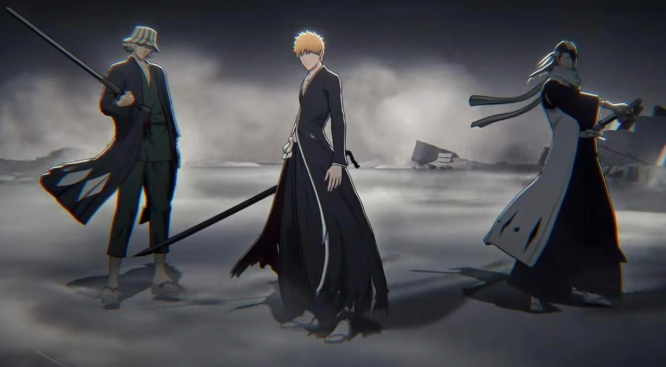
I. Overview of Bleach: Soul Resonance Tier Lists
A real bleach soul resonance tier list ranks more than just raw SSR power. The good ones try to account for damage, support value, control, survivability, team fit, and long-term meta usefulness across PvE and PvP. Pocket Gamer’s current list is probably the clearest mainstream example of that approach right now, because even though it presents a simple S/A/B/C structure, the actual top bracket includes a mix of pure DPS monsters, controllers, and utility-heavy units like Kisuke rather than only glass-cannon attackers.
Players also tend to rely on a pretty consistent set of sources. The user-facing mainstream side is led by sites like Pocket Gamer and Pocket Tactics, while utility-focused platforms like BlueStacks and OSLink tend to offer supporting guides on rerolls, builds, and teams. BlueStacks’ launch-era tier list highlighted Ichigo Bankai, Kisuke, Kaname, Byakuya, and Yachiru as top priorities at global launch, which shows how much the meta has evolved since then. OSLink’s older tier list focused on “consistent damage, utility, and reliability,” which is exactly the kind of wording you expect from a practical account-building guide.
Community discussion is the other half of the story. Reddit threads from the current meta period show players arguing over things like Gin vs Toshiro, whether Kisuke and Aizen are in a tier of their own, whether Nelliel has surpassed some older staples in endgame contexts, and whether Soi Fon is actually strong enough or just fun but under-supported right now. That matters because community discourse often picks up the cracks in mainstream tier lists faster than static guide pages do.
And yes, updates keep reshaping rankings constantly. Pocket Gamer’s current page ties the latest tier shift directly to the Soi Fon patch. Reddit commentary points to earlier meta waves driven by Kenpachi, Aizen, and Gin, with one player even framing the game as following a rough “one character every three weeks” pattern in 2026. That kind of cadence naturally creates recurring “new tier list” moments.
So the first rule for using any Bleach: Soul Resonance tier list is simple: read it with a timestamp in mind. A launch list and an April 2026 list are not the same thing, and pretending they are is how players end up building yesterday’s meta.
II. S+/S-Tier Core Meta Units
The top meta cluster in current mainstream coverage is pretty clear. Pocket Gamer’s current S tier includes Sosuke Aizen, Gin Ichimaru, Soi Fon, Ichigo Kurosaki - Bankai, Nelliel Tu Odelschwanck, Kisuke Urahara, Mayuri Kurotsuchi, and Toshiro Hitsugaya. That is already a strong sign of consensus, because it mixes the names that keep showing up again and again in both guide sites and player debate.
If you want the most commonly accepted “best unit” headline, Bankai Ichigo still has a very strong claim. Pocket Gamer flat-out says he is the best character in their current tier list and specifically calls out his Hollow release and Getsuga Tensho as the reason. That tracks with older BlueStacks coverage too, which described him as the launch unit with overwhelming damage and mobility. Even when the rest of the meta shifts around him, he keeps being the benchmark people compare new DPS units against.
That said, the live community conversation is much less unanimous about him being the uncontested top DPS than a simple guide page might suggest. Recent Reddit discussion repeatedly argues that Gin is now one of the strongest or even the strongest DPS in practical play, especially at more realistic investment assumptions like B0/W1. Multiple players describe Impale as absurdly efficient, animation-cancellable, and capable of huge off-field damage, which is exactly the kind of thing that turns a unit from “strong” into “meta-defining.”
Aizen also remains one of the most important centerpiece units in the game. Even when players disagree about whether he is the single best damage dealer, they keep treating him as one of the most universally useful and team-defining picks. Reddit threads repeatedly refer to him as a unit who can carry “color” teams or act as the central driver for certain spirit-based setups, while Pocket Gamer keeps him in the absolute top bracket. That combination of broad usefulness and strong independent performance is exactly what S+ territory looks like in practice.
Kisuke is another top-tier unit whose strength is not always captured by simple damage rankings. Community comments describing Kisuke and Aizen as in a tier of their own reflect the fact that utility-heavy units often get more valuable the harder content becomes. BlueStacks also labeled Kisuke the best support at launch because of his teamwide buffs. So while he may not headline clickbait “best DPS” videos, he absolutely belongs in the core meta conversation.
Toshiro, Nelliel, and Soi Fon round out the top end in different ways. Toshiro is often discussed as a monster in the right team shell, especially alongside Aizen. Nelliel has gained a lot of respect in endgame discussions, to the point where some players argue she outperforms Aizen in certain late-game contexts. Soi Fon is the newest controversial addition: Pocket Gamer put her straight into S tier, but current Reddit discussion says she is good, fun, and potentially future-rising rather than obviously broken today.
So if I were separating S+ from regular S right now from a player perspective, I would put Bankai Ichigo, Aizen, Gin, and Kisuke in the “meta-defining” bucket first, then treat Toshiro, Nelliel, and Soi Fon as elite but slightly more context-dependent. That is not a universal truth, but it fits the current mix of guide-site rankings and live player discussion.
III. A-Tier Strong Alternatives
A-tier in Bleach: Soul Resonance is not fake tier. These are not “bad but usable” characters. These are the units that are often very strong, sometimes amazing, but either slightly less universal, more team-dependent, or simply overshadowed by a more warped top bracket. Older BlueStacks launch coverage gave a good example of this kind of volatility by placing characters like Kaname, Byakuya, Yachiru, and others extremely high in the early game, even though later lists shifted around them once newer units arrived.
From the outline’s A-tier names, Kenpachi, Byakuya, Yoruichi, Kaname, Rangiku, Ikkaku, and Yachiru all make sense as strong alternatives rather than automatic centerpiece units in the current environment. BlueStacks at launch treated Byakuya and Kaname as premium priorities, and community conversation still treats characters like Yoruichi and Rangiku as valuable support or utility slots rather than throwaways. The difference now is that newer characters have raised the ceiling.
This is also the tier where content specificity starts mattering a lot. Byakuya, for example, may not be the face of the current universal meta, but AoE-centric or wave-oriented situations can still make a character like him look much stronger than a strict overall tier chart suggests. The same goes for units who are especially good at smoothing rotation flow, setting up control, or handling a specific kind of PvE encounter even if they are not the absolute strongest boss melters. That is one of the reasons tier arguments never fully die in games like this. Close units trade places depending on the question you ask.
For F2P and non-whale players, A-tier is often where the real account value lives. Most players do not have the luxury of building every S/S+ headline unit immediately, and a stable A-tier core with the right synergy can outperform a sloppy account built around one premium carry and a bunch of dead weight. That is why launch-era reroll and team guides still matter a bit: they remind you that strong but not god-tier characters can still provide huge returns if they fit your account better.
IV. B/C-Tier and Niche Picks
B-tier and C-tier units are where players often either become too dismissive or way too sentimental. The healthier answer is somewhere in the middle. Characters like Sajin, Rukia, Chad, Shikai Ichigo, Orihime, Uryu, and Ururu can still matter, especially early, especially if they fill support or sustain gaps, and especially if your account is young enough that any built unit is better than an unbuilt “future project.” That general logic matches how Pocket Gamer frames lower tiers: some non-SSR or weaker SSR options are still worth attention because they get maxed sooner or provide specific role value.
The important thing is not to confuse “usable” with “worth deep investment.” Lower-tier units can still help you clear story, pad a team, or cover a missing role in the short term. But the closer you get to harder endgame content, the more the gap in scaling, kit value, and team synergy starts to matter. That is why most serious players warn against overbuilding low-impact units unless you genuinely love the character or specifically need them for a temporary role.
And honestly, that is fine. Tier lists are not there to stop you from playing favorites. They are there to stop you from pretending your favorite is the most efficient investment when the game clearly has stronger options. Those are different questions.
V. PvE vs PvP Tier Lists
One of the fastest ways to misunderstand a bleach soul resonance tier list is to assume one ranking covers every mode equally. It doesn’t. PvE and PvP reward different things, and endgame PvE can be just as selective as PvP once tower-style content starts forcing sharper team requirements.
In general story PvE and broader adventure content, universal damage and easy-to-use support remain king. That is why units like Bankai Ichigo, Aizen, Kisuke, and Gin look so strong across broad rankings. They bring either obvious carry power or obvious utility without needing strange conditions to function. BlueStacks’ launch team recommendations already leaned in that direction, highlighting broad-value units rather than overly narrow specialists.
Endgame PvE, especially Trial Tower-style mono or color-locked content, is where things get more interesting. Reddit players specifically call out that Toshiro kind of needs Aizen to really shine in some contexts, and discussions around Aizen-centric spirit teams or Nelliel outperforming Aizen in certain endgame scenarios show how much tower-style optimization can reshuffle perceived rankings. A character who looks merely “good” in general content can become a monster when the endgame mode actually matches their ecosystem.
PvP, meanwhile, values a different set of traits: burst, crowd control, invincibility windows, fast rotation, and how smoothly a unit can seize tempo. That is one reason why community perceptions of units like Gin and Soi Fon can be so intense. A unit does not need to be the best in all PvE content to feel oppressive in the arena if their kit turns short windows into kills.
So if you are building for one specific mode, do not blindly follow a generic overall list. Ask what that mode actually rewards first.
VI. Reroll and Beginner Tier Guidance
If you are rerolling, you want the least complicated answer possible: aim for a unit who will stay valuable for a long time. That is exactly why the usual reroll targets keep clustering around Bankai Ichigo, Aizen, Gin, Kisuke, Toshiro, and Nelliel. Pocket Gamer’s top bracket and the surrounding meta discussion make those names very hard to ignore. BlueStacks’ reroll guide also reinforces the idea that top-tier launch units are the best early targets because they give the highest return on account start efficiency.
For pure safety, Bankai Ichigo and Aizen remain excellent reroll anchors. For practical current power, Gin is arguably even more attractive than some older reroll guides would suggest, especially given how aggressively the live playerbase talks about his damage. For support-minded players who want long-term account flexibility, Kisuke is still one of the smartest targets.
That said, not everyone needs to chase a perfect reroll forever. If you land a slightly weaker top-end unit but one that slots naturally into the rest of your roster, it can still be correct to keep the account. The whole point of rerolling is to improve your start, not to make yourself miserable chasing one mathematically ideal outcome while the game’s meta keeps evolving anyway.
VII. F2P-Focused Tier Logic
For F2P players, the tier list matters more because resources are tighter and mistakes hurt longer. In that context, the smartest targets are units who provide high value at low or realistic breakthrough levels, rather than characters who only become absurd after heavy investment. That is one reason the Reddit discussion around B0/W1 matters so much. Players explicitly argue that Gin looks incredible even at low-investment assumptions, which is exactly the kind of trait F2P accounts should care about.
The first build priorities should be the units that either define your account or hold your teams together. In practice, that points back to the same small core: Bankai Ichigo, Aizen, Gin, Kisuke, then elite but more mode-sensitive options like Toshiro or Nelliel depending on what else you own.
The resource trap to avoid is obvious: don’t overinvest in low-impact characters just because they are easier to build in the short term. Temporary convenience is not the same as efficient long-term progression.
VIII. Role-Based Rankings
If you break the roster down by role, the rankings get even clearer.
For best DPS, the names that keep surfacing are Bankai Ichigo, Gin, Aizen, and Toshiro. Pocket Gamer’s list and current Reddit DPS arguments support that core pretty strongly, even if the exact order depends on the speaker.
For best supports/controllers, Kisuke and Aizen are the obvious standouts, with launch-era BlueStacks coverage also giving respect to control-oriented units like Yoruichi and support-friendly utility options. Community comments consistently describe Kisuke and Aizen as exceptionally central to strong teams, which tells you their value is not just theoretical.
For best sustain or tank-like value, the category is weaker and less glamorous. The current meta conversation is much more focused on damage, control, and team-driving mechanics than on dedicated tanking. That relative scarcity is part of why support kits that also buff damage feel so valuable.
IX. Synergy and Team Compositions
A huge part of the modern bleach soul resonance tier list conversation is not just who is strongest individually, but who makes everyone else better. The clearest recurring synergy example is Toshiro + Aizen. Reddit discussion repeatedly treats Toshiro as a unit whose value jumps heavily when paired with Aizen, especially in more demanding content. That is the kind of relationship that can make a unit look average on one account and monstrous on another.
Aizen-centric spirit teams are another obvious meta shell. Multiple player comments frame Aizen as the unit who can “carry the color” or act as the central engine of specific team archetypes, which is exactly why his ranking stays so high even when newer DPS units arrive.
Mono-team logic matters more in Trial Tower and harder content than many beginners realize. A unit who is merely strong in neutral content can become much stronger when the mode pushes you toward a specific roster identity. That’s one reason why Nelliel, Toshiro, and other not-quite-universal monsters can spike hard in the right environment.
X. Update-Specific Tier Shifts
This game’s tier-list history already has obvious “eras.” There was the global launch era, where BlueStacks’ list made a lot of sense for a fresh and limited roster. Then the meta shifted through Aizen and Gin discussions, later through Kenpachi debates, and most recently through the Soi Fon patch that Pocket Gamer updated for in early April 2026.
That’s why every major patch spawns a new wave of “updated tier list” content. The roster is still young enough that one or two new releases can meaningfully alter team structures and role expectations. Soi Fon is a perfect example: a major site placed her straight into S tier, while the community is still debating whether she is merely good now or truly meta-defining later once her ecosystem improves.
XI. What Counts as S+ in 2026
Some lists don’t separate S+ from S at all, but players usually do it mentally anyway. The criteria for S+ are pretty intuitive: universal viability, team-defining kit value, great scaling, and the ability to stay relevant across multiple content types. By that standard, the strongest current candidates are Bankai Ichigo, Aizen, Gin, and Kisuke, with Nelliel and Toshiro pushing into the discussion depending on how heavily you value specific endgame contexts.
That is also why S+ arguments tend to get heated. Once a unit is already elite, the question stops being “are they strong?” and becomes “how universal are they, really?” That’s a much messier discussion.
XII. Weapons, Stamps, and Gear Priority
This is the part many simple tier charts gloss over: character rankings often assume some baseline of proper gear. Community discussion explicitly references rating units around B0/W1, and one Reddit commenter even points out that serious tier-list sites usually compare units under realistic assumptions like B0W1 rather than whale-maxed fantasies. That tells you weapon access matters a lot.
The same goes for stamps and other artifact-style progression systems. Even if every guide does not spell out the exact stamp set in its tier chart, the practical truth is simple: top units need appropriate gear context to show why they are top units. A list that ignores that can make a kit look weaker or stronger than it really is on your account.
So if you are comparing two units who feel close, ask yourself which one you can actually support properly. That often matters more than one tier-letter difference.
XIII. Community and Creator Tier Lists
The official-ish guide pages and the community spreadsheets don’t always agree, and that’s normal. Pocket Gamer gives you a clean, current mainstream list. BlueStacks gives you a launch-oriented practical framework. OSLink leans toward utility and consistency. Reddit gives you live arguments, experience-based takes, and constant re-ranking whenever a new unit lands.
There are also creator-driven list formats like YouTube “top 10” videos and community tier-maker charts, which are useful mostly because they show where the playerbase’s attention is drifting, even when they are less rigorous. The value there is not authority. It is pattern recognition. If many different players keep centering the same names, that usually means something.
XIV. Early-Game vs End-Game Tiering
A lot of units feel stronger in early content than they do later. Launch-era lists naturally favored characters who were broadly strong with the limited roster available, which is why BlueStacks could reasonably put units like Byakuya, Kaname, Yachiru, and others near the top. As the game matured, harder content and more specialized team structures reshuffled that value.
Endgame, especially tower-style content, tends to reward units with sharper synergy, stronger scaling, and cleaner role definition. That’s why players now talk about Aizen-centric teams, Toshiro dependency, and Nelliel’s endgame strength in ways that wouldn’t have mattered much at launch.
XV. How to Use Tier Lists Responsibly
The healthiest way to use a bleach soul resonance tier list is as a guideline, not a religion. Close calls really are close sometimes. Community debates over Ichigo vs Toshiro, Gin vs everyone, or Nelliel vs Aizen in endgame exist because the game is not always simple enough for one permanent answer.
You also have to factor in your own roster, your available gear, your breakthrough level, and your preferred content. A tower specialist is not automatically the best story carry. A PvP terror is not automatically the best F2P first build. A top support is not automatically your best reroll if you have no carry behind them.
Most importantly, watch for updates before making big investment decisions. The game is still in the phase where one new character or one balance pass can noticeably alter the rankings. If you build like the meta is frozen, you will waste resources.
If I had to boil the current bleach soul resonance tier list down to one practical takeaway, it would be this: the safest top-end investments right now are still Bankai Ichigo, Aizen, Gin, and Kisuke, with Toshiro, Nelliel, and Soi Fon sitting right behind them as elite but slightly more context-sensitive picks. That read fits the current mainstream guide ranking, the older launch-era support material, and the live community arguments better than pretending one chart can settle everything forever.
For beginners and rerollers, that means you should prioritize a top-tier unit who will stay relevant instead of chasing a cute but replaceable start. For F2P players, it means avoiding resource traps and building units that give value at realistic investment levels. And for everyone else, it means remembering that mode, synergy, and gear matter just as much as the raw letter grade beside a character’s name.