DRAGON BALL GEKISHIN SQUADRA: A Player’s No-BS Tier List, Roles Guide, and “Who Should I Main?” Breakdown
If you’ve spent even a weekend in DRAGON BALL GEKISHIN SQUADRA, you already know the vibe: it’s Dragon Ball chaos, but trimmed down into a 4v4, objective-heavy, teamfight-first kind of experience. It’s not “just brawl until someone rage quits”—the game really rewards smart rotations, timing your engages, and building a squad that actually makes sense together. (Yes, I know, we all want to run four DPS because it feels cool. No, it doesn’t end well.)
At its core, this game plays like a tactical MOBA-style brawler where your character pick matters, but your team’s role balance matters even more. The devs have leaned hard into role identity—Damage, Tank, and Technical aren’t just labels, they’re basically a “do you want to win or do you want to freestyle?” choice in draft.
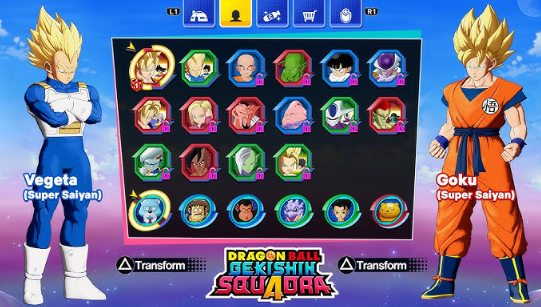
I. What Is DRAGON BALL GEKISHIN SQUADRA (and why it feels different)
DRAGON BALL GEKISHIN SQUADRA is a free-to-play 4v4 team battler built around quick skirmishes, lane pressure (depending on mode/map), and objective control that forces fights instead of letting people “farm forever.” It’s developed by Ganbarion and published by Bandai Namco, and the live-service cadence is real—seasons and patches keep the ecosystem moving.
From a player perspective, the biggest “aha” moment is realizing this isn’t a traditional Dragon Ball arena fighter. You’re not here to flex perfect combos for three minutes straight. You’re here to:
win fights at the right time (not every time),
keep the map from collapsing,
secure objectives,
and force favorable teamfights with role synergy.
If you’ve ever played a team game where one person insists on solo hero plays while the enemy squad moves like a pack of wolves, you know exactly what I mean.
II. Tier System Explanation and How I Rank Characters
I’m using a simple, practical tier system that matches how people actually talk about strength:
S-Tier: Meta-defining. If someone on your team can play these well, your draft already looks scary.
A-Tier: Strong and reliable. Slightly less oppressive, but still excellent picks.
B-Tier: Solid, situational, or harder to pilot. Works great with practice or the right comp.
C-Tier: Struggles. Either outclassed, too niche, or punished hard by current meta.
My ranking criteria is basically:
impact + consistency + versatility + team synergy + ease of execution.
I also care a lot about the “ranked reality” factor—what works when teammates are random and coordination is imperfect. Some characters are monsters in coordinated squads but feel miserable in solo queue vibes.
And yes, patches matter. This game is actively updated, and new seasons can introduce new heroes or shift balance.
III. Roles: Damage, Tank, Technical (and what they’re really supposed to do)
Damage role – “I delete health bars”
Damage characters are your kill pressure. But the best Damage picks aren’t just “big numbers.” They also:
threaten objectives,
punish overextensions,
and force enemy Tanks to respect space.
A great Damage player doesn’t just chase kills. They make the map unplayable for the enemy backline.
Tank role – “I decide where the fight happens”
Tanks are your tempo setters. They:
start fights on your terms,
soak pressure so your Damage can free-fire,
and control space during objective moments.
A good Tank feels like a bouncer at a club: “No, you’re not walking through here.”
Technical role – “I win fights before they start”
Technical characters are the glue. They bring:
heals,
shields,
slows,
knockbacks,
zoning,
and “annoying stuff” that makes the enemy team tilt.
If Damage is the sword and Tank is the shield, Technical is the chess player quietly deciding the outcome.
IV. S-Tier Characters (Meta-Defining and Must-Play)
This is the “if you learn these, you’ll always have a good pick” category. These characters either dominate fights, control space insanely well, or provide game-warping utility.
A. Super Saiyan Goku – the “I’m everywhere” burst king
If you want the classic Dragon Ball fantasy—speed, pressure, burst, clutch plays—Super Saiyan Goku scratches that itch. In my experience, what makes him feel S-tier isn’t just damage. It’s the mobility + burst timing combo. He can show up to fights fast, punish sloppy positioning, and still slip away when things go sideways.
How to play him without throwing:
Don’t start every fight. Let your Tank initiate, then you dive.
Track enemy crowd control—if you jump in blind, you explode.
In objective fights, your job is often to delete the enemy Technical first. If their healer/support lives, fights get messy.
Best teammates: Tanks who can lock targets down, plus a Technical who can keep you alive during your “go in” window.
B. Super Saiyan Vegeta – tanky hybrid who still hurts
Vegeta’s strength is that he plays like a “bully bruiser.” He’s not as slippery as Goku, but he’s harder to remove and still brings real threat. In teamfights, he’s excellent at holding space—the enemy can’t just ignore him, because he’ll chunk people who step wrong.
Why he’s S-tier right now (in practice):
He doesn’t need perfect conditions to be useful.
He can frontline and punish mistakes.
He’s a great “second threat,” which is huge in 4v4. If your team has only one Damage source, the enemy just focuses it and you’re cooked.
C. Super Saiyan Kale (Berserk) – weak early, terrifying late
Kale is the definition of “don’t let the game go long.” Early on, she can feel awkward—she needs time, space, and decent team structure. But once she hits her power moments, her teamfight presence becomes absurd.
The Kale rule:
If you’re playing Kale and your team is down early, don’t panic. Your job is to stall intelligently, take safe fights, and hit your scaling window.
How people throw on Kale:
forcing early fights when you’re not online yet,
chasing solo kills instead of grouping,
forgetting that your team still needs objective control while you scale.
D. Krillin – best support healer with nasty map control
Yes, it’s funny. Yes, it’s also real. Krillin is one of those characters that makes you realize the devs didn’t design this game around “power levels,” they designed it around “team value.”
Krillin’s healing and utility make teamfights feel unfair when played well. And the scary part? His value doesn’t require insane mechanics. You just need good positioning and game sense.
Krillin’s win condition:
keep your Damage alive long enough to do their job,
deny enemy engages with control,
and be present at every important fight.
If your Krillin is always late to objectives, your team loses. If your Krillin is always early, your team suddenly looks coordinated even if nobody is talking.
E. Super Saiyan Trunks (Teen) – the “always good” balanced pick
Trunks is one of my favorite “I don’t know what the enemy will draft” picks. He’s reliable, he combos well, and he fits into most comps without feeling like he needs special babysitting.
What makes Trunks S-tier in real matches:
he contributes in every phase of the game,
he doesn’t rely on gimmicks,
and he has enough flexibility to adapt mid-match.
When you’re climbing and you need consistency, Trunks is the kind of character that keeps you sane.
F. Frieza (First Form) – technical ranged control that wins space
Frieza (First Form) is the kind of character that turns parts of the map into “nope zones.” He’s not about flashy solo kills—he’s about area control, harassment, and turning enemy engages into bad decisions.
If you like playing the villain who ruins everybody’s fun, this is your guy.
Key tip: Play Frieza like you’re setting traps. You’re constantly asking, “Where do they want to go?” and then you make that spot painful.
G. Dabura – oppressive area control when teams clump
Dabura is disgusting when the enemy team likes grouping (which… they do, because it’s 4v4). He punishes tight formations and makes objective fights miserable.
You’ll even see players talking about Dabura in community spaces because of how annoying he can be in fights that matter.
Dabura’s ideal scenario:
objective spawns,
everyone groups,
your Tank starts the fight,
you drop control and watch the enemy scramble.
V. A-Tier Characters (Strong alternatives and flexible options)
A-tier is full of characters that feel amazing when you understand their job. They’re not always as oppressive as S-tier, but they can absolutely carry games.
A. Super Uub – sustained damage and combo pressure
Uub is one of those “you’re not dead yet?” characters. He thrives in extended fights and punishes enemies who blow cooldowns too early. In a lot of games, he feels like the steady engine that keeps your team winning fights back-to-back.
B. Full Power Bojack – mid-game burst pressure
Bojack is a momentum character. If you get ahead, he helps you stay ahead. He’s great for teams that want to play aggressively, control tempo, and force fights before scaling characters come online.
C. Baby (Young Body) – tanky harassment with synergy potential
Baby is annoying in a way that makes opponents play worse. He’s good at sticking to people, disrupting plans, and creating space for your Damage to do work. He’s not always the star of the scoreboard, but he’s often the reason your team wins fights.
D. Android 17 – shielding/healing support with consistent debuffs
Android 17 is the kind of pick that makes your frontline feel unkillable and your Damage feel confident. If you like enabling teammates and controlling the pace of fights, 17 is a strong A-tier comfort pick.
E. Super Saiyan 2 Caulifla – frontliner with scaling
Caulifla sits in that spot where she can function early but also becomes more threatening later. She’s good when you need a second bruiser-type threat who can’t be ignored.
F. Cooler (Final Form) – big tank with retaliation energy
Cooler’s value is straightforward: he’s durable and punishes people for hitting him wrong. Great for players who like being the “anchor” that holds the line.
G. Piccolo – balanced damage with flexible engagement ranges
Piccolo is a classic “honest” character. He doesn’t feel unfair, but he rarely feels useless. He’s great for players who want a toolkit that can adapt based on enemy comp.
H. Cell (Perfect Form) – adaptive sustain tank
Cell is annoying because he refuses to die if you mismanage fights against him. He’s strong when your team understands how to play around sustain: take smart fights, don’t overchase, and punish cooldown windows.
VI. B-Tier Characters (Situational and balanced)
B-tier isn’t “bad.” It’s “you need a reason.”
A. Son Gohan (Kid) – beginner-friendly foundation
Kid Gohan is a solid early learning pick. He teaches fundamentals without demanding insane mechanics. If you’re new, he’s a safe place to build game sense.
B. Android 18 – single-target burst with mobility
18 can delete people, but she’s often matchup-dependent. If the enemy has heavy control or strong peel, she can feel frustrating.
C. Hit – mobility monster with burst + support angles
Hit is high ceiling. In the right hands, he’s terrifying. In average hands, he’s “why are you always alone behind their team?”
D. Super Saiyan Gotenks – AoE burst chaos
Gotenks can do big plays, but consistency can be an issue depending on map and enemy comp.
E. Gamma 1 & Gamma 2 – sustained damage, higher difficulty
These characters often get listed as good but “harder than they look.” If you like technical execution and you’re willing to grind mastery, they can pay off.
F. God of Destruction Toppo – durable tank focus
Toppo’s job is clear: be a wall. The downside is that some meta comps can kite him or ignore him better than you’d like.
VII. C-Tier Characters (Underperformers you’ll regret in ranked)
C-tier picks aren’t unplayable, but they’re usually either:
too easily countered,
too low impact compared to alternatives,
or too dependent on perfect coordination.
A. Zamasu – struggles into ranged and higher tempo fights
In a lot of team games, Zamasu feels like he wants fights to happen in a specific way. But the enemy doesn’t have to cooperate. And when they don’t, you feel it.
B. Majin Buu (Good) – limited outside healing niche
If Buu is your team’s only plan, you’re probably going to have a rough time. He can work in specific setups, but he’s not the kind of pick you rely on to climb consistently.
VIII. Game Modes and Strategy: How to actually win matches
No matter the mode, the universal truth is: objectives decide games. Kills matter because they create objective windows—not because kill count is the goal.
Early game: don’t sprint into 2v4 deaths
The first few minutes are about information and positioning:
learn what the enemy comp wants to do,
avoid feeding their strongest spike,
and set up for the first major objective fight.
Mid game: the “one fight decides everything” phase
This is where people throw the most. One bad engage, one wasted ultimate, one split spawn—suddenly you’re losing map control and can’t safely contest.
Mid game is where Tanks and Technical players become gods:
Tanks decide the engage,
Technical decides whether your engage is survivable.
Late game: teamfight discipline
Late game fights aren’t about “who hits harder.” They’re about “who messes up less.”
Stay grouped when it matters.
Don’t chase one low HP enemy into a trap while your team loses objective.
Track big cooldowns like your life depends on it (because it does).
IX. Team Building and Squad Composition (what actually works)
If you want the “safe, reliable” formula for most matches:
Tank + 2 Damage + Technical
Why? Because:
Tank creates space and starts fights
Damage converts space into kills
Technical keeps the machine running and denies enemy plans
Examples of strong archetypes
Dive + sustain: Tank initiates, Goku/Trunks dives, Krillin keeps everyone alive.
Control + burst: Frieza/Dabura control zones, your Damage picks off trapped enemies.
Scaling comp: Kale + a stable frontliner + a strong support to survive until late.
The biggest mistake in random matchmaking is running:
3 Damage + 1 Damage disguised as Technical
…and then wondering why every fight feels impossible.
X. Beginner character guide (who feels good when you’re learning)
If you’re new, prioritize characters who:
don’t require perfect mechanics,
have clear roles,
and contribute even when you’re not popping off.
Beginner-friendly picks:
Trunks (Teen): balanced, forgiving, always useful
Krillin: teaches positioning and team awareness
Vegeta: durable and impactful even with small mistakes
Kid Gohan: stable learning pick (if you’re still building fundamentals)
What you should avoid early:
characters that require perfect engage timing (you’ll feel useless),
or high-mobility assassins that bait you into bad habits.
XI. Combat mechanics that separate “okay” from “actually climbing”
Here are the habits that win games:
1) Don’t fight 1v2 unless you’re buying time
If you’re stalling so your team can secure something elsewhere, cool.
If you’re doing it because you’re bored, you’re feeding.
2) Win the “second” fight, not just the first
A lot of teams can win one fight. The strong teams:
reset properly,
re-group,
and win the next objective fight too.
3) Stop using ultimates “because they’re up”
Ults should create:
objective wins,
guaranteed kills,
or fight-winning advantages.
If your ultimate doesn’t do one of those, you probably wasted it.
4) Protect your Technical player
If your Krillin or Android 17 gets deleted at the start of every fight, your whole team collapses. Peel for them like they’re the win condition—because they are.
XII. Matchups and counter-picking (quick, practical version)
If the enemy comp is clump-heavy, Dabura becomes a nightmare.
If the enemy relies on one carry, Goku dive pressure can break them.
If your team is running fragile Damage picks, a strong Tank + support setup is non-negotiable.
If the enemy has oppressive control, consider safer, more consistent Damage like Trunks instead of “all-in” assassins.
XIII. Resource optimization and who to invest in first
If you’re choosing a main to invest time/resources into, pick someone who stays relevant across patches and modes. In my experience, that’s usually:
Trunks (reliable)
Krillin (support value ages well)
Vegeta (frontline stability is always useful)
Goku (if you’re confident mechanically)
And if you’re the kind of player who loves late-game dominance, Kale can be worth it—just accept that you’ll have games where early pressure feels rough.
XIV. Patch updates and meta evolution (why your tier list changes)
This game has an active seasonal structure, and new seasons can bring updates, balance changes, and new heroes—meaning tier lists are living documents, not stone tablets.
My advice? Don’t obsess over perfection. Pick a small roster:
1 Tank you trust
2 Damage you enjoy
1 Technical you can flex into
That way, when patches hit, you’re adapting, not panicking.
DRAGON BALL GEKISHIN SQUADRA is at its best when you treat it like a real team game: pick roles that complement each other, fight around objectives, and stop trying to 1v4 the universe because “it’s Dragon Ball.” If you want a simple climbing plan:
Learn one reliable S/A-tier pick in your preferred role
Add one flex pick for bad matchups
Play objectives like they’re the whole game (because they are)
Build comps that make sense: Tank + 2 Damage + Technical
Remember: the meta shifts—skill and teamwork outlast tier lists
If you’re asking me for the “safe” top-core right now: Goku, Vegeta, Trunks, Krillin is a ridiculously stable foundation, and you can slot in Dabura/Frieza when you want control-heavy teamfight wins.